

What if living near your office no longer matters, especially in Atlanta?
Since 2020 remote work has pushed buyers and renters toward larger homes, yards, and reliable gigabit internet (very fast fiber).
Suburbs from Alpharetta and Roswell to East Cobb saw sharp price gains while some Midtown condos cooled.
At the same time inner suburbs like Decatur and Brookhaven turned into hybrid hubs where walkability and space meet.
This post shows how demand shifted across OTP markets, what features now carry premiums, and how neighborhoods are being reshaped by work-from-home life.
Key Market Shifts Driven by Remote Work
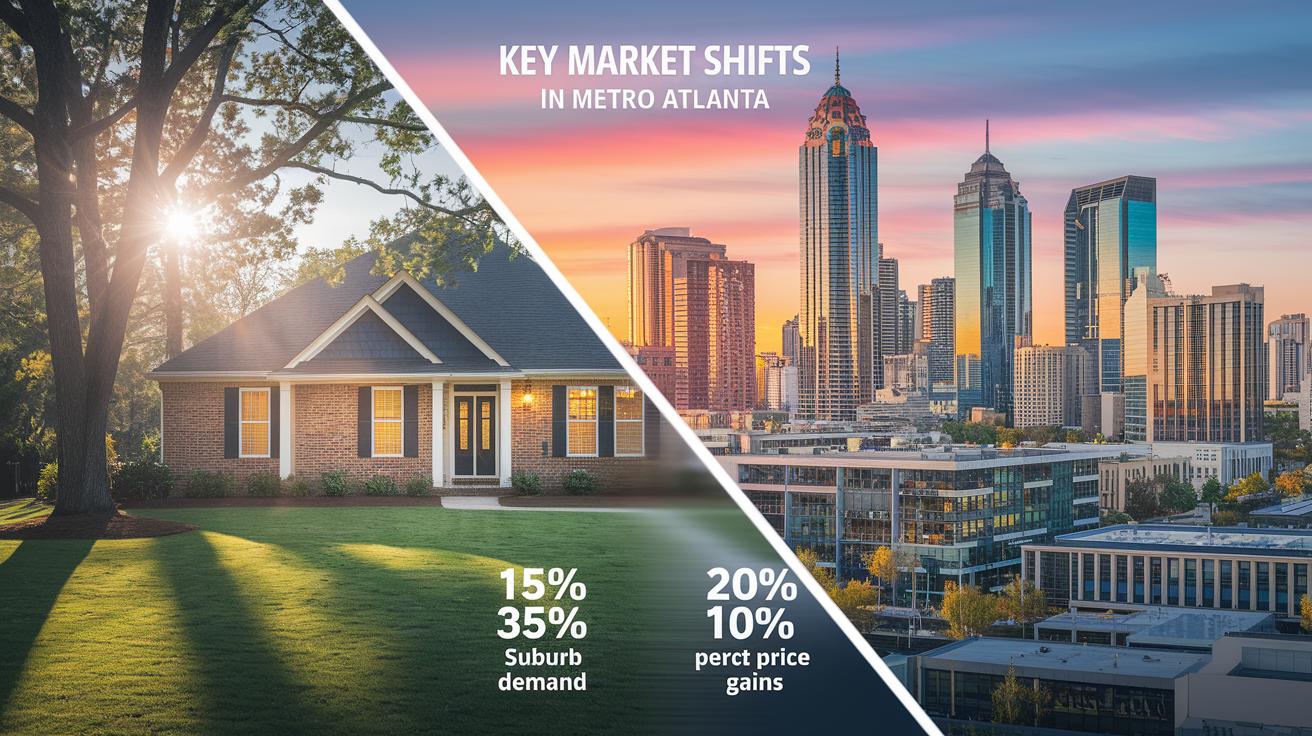
Remote work flipped Metro Atlanta’s housing demand on its head. From 2020 through 2024, single-family suburban interest jumped somewhere between 15 and 35 percent above what anyone saw before the pandemic. Urban condos and rentals? They lagged by 5 to 20 percentage points during the same stretch. Median prices in suburban spots climbed 20 to 40 percent by 2022. Places like Alpharetta and Roswell kept hitting the high end of that range. Downtown Atlanta rental rates dropped 5 to 15 percent in 2020 and 2021, then bounced back. But the sales market had already moved permanently toward bigger single-family homes. If your property had a dedicated home office, three or more bedrooms, and reliable gigabit internet, you could ask 5 to 15 percent more than a similar home without those things.
The biggest demand changes reshaping Atlanta housing right now:
Home office necessity. Buyers and renters want a dedicated workspace or a room they can convert. Extra bedrooms and built-in desk nooks suddenly matter a lot more.
Larger lot sizes. People will pay more for yards, patios, and outdoor breathing room. Quarter-acre lots or any kind of private outdoor area sell faster.
Reduced downtown proximity premium. If you’re only commuting two or three days a week instead of five, living close to Midtown or Buckhead isn’t as critical. Home searches spread out geographically.
Suburban mixed-use hubs. Neighborhoods where you can walk to retail, dining, and coworking but still have space and quiet became popular with hybrid workers.
Internet infrastructure as a must-have. Fiber availability and multiple broadband options turned into a non-negotiable, right up there with school ratings for a lot of buyers.
For buyers, these changes mean tougher competition in suburbs that check all three boxes: space, connectivity, and a flexible commute. Renters are looking at a split market. Downtown apartments are offering concessions and better lease terms, while suburban single-family rentals have tighter vacancy and steeper rents. Knowing which product type fits your work pattern and space needs is how you figure out whether you’ll benefit from urban flexibility or suburban appreciation.
Migration and Relocation Patterns Affecting Atlanta
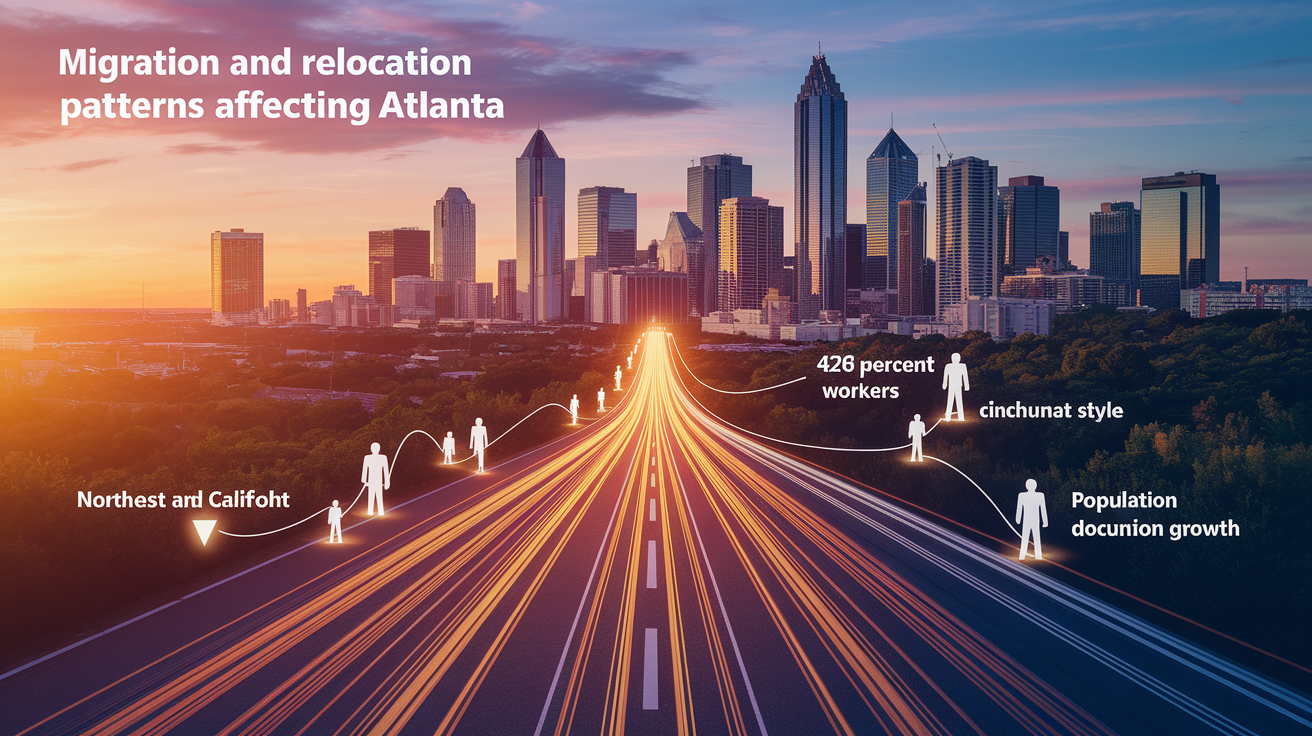
Remote work opened the door for a wave of people moving into Atlanta, which sped up population growth and changed who’s coming here and why. Workers from pricier metros, especially the Northeast and California, relocated to capture lower cost of living while keeping their remote salaries. That’s different from before 2020, when most people moving here had corporate relocations or local job offers. Now roughly 26 percent of Atlanta residents work remotely. That’s a big buyer pool prioritizing home layout and neighborhood perks over being close to a specific employer campus. Interstate migration kept demand strong even as new apartment and single-family supply ramped up, absorbing inventory and keeping occupancy steady across most submarkets.
Moves within the metro got more intense too. Households that used to rent small condos in Midtown or Buckhead traded up to single-family homes in inner suburbs like Brookhaven and Decatur. They wanted home office space and yards without completely leaving the intown vibe. The typical intracity move stretched 10 to 30 miles from the old address. Buyers were willing to take a 20 to 45 minute commute two or three times a week instead of a daily 60-plus-minute grind.
Millennial remote workers with young families drove a lot of this suburban shift. Cutting out the daily commute freed up time for childcare and school pickups, making family-friendly suburbs with top-rated schools newly attractive. Where pre-pandemic buyers might have gone for walkability and nightlife, post-2020 buyers weighted square footage, school ratings, and yard size more heavily. This group’s purchasing power and willingness to bid competitively on well-configured homes kept upward pressure on suburban inventory, even while urban rental concessions signaled softer demand downtown.
Neighborhood‑Level Impacts Across Atlanta
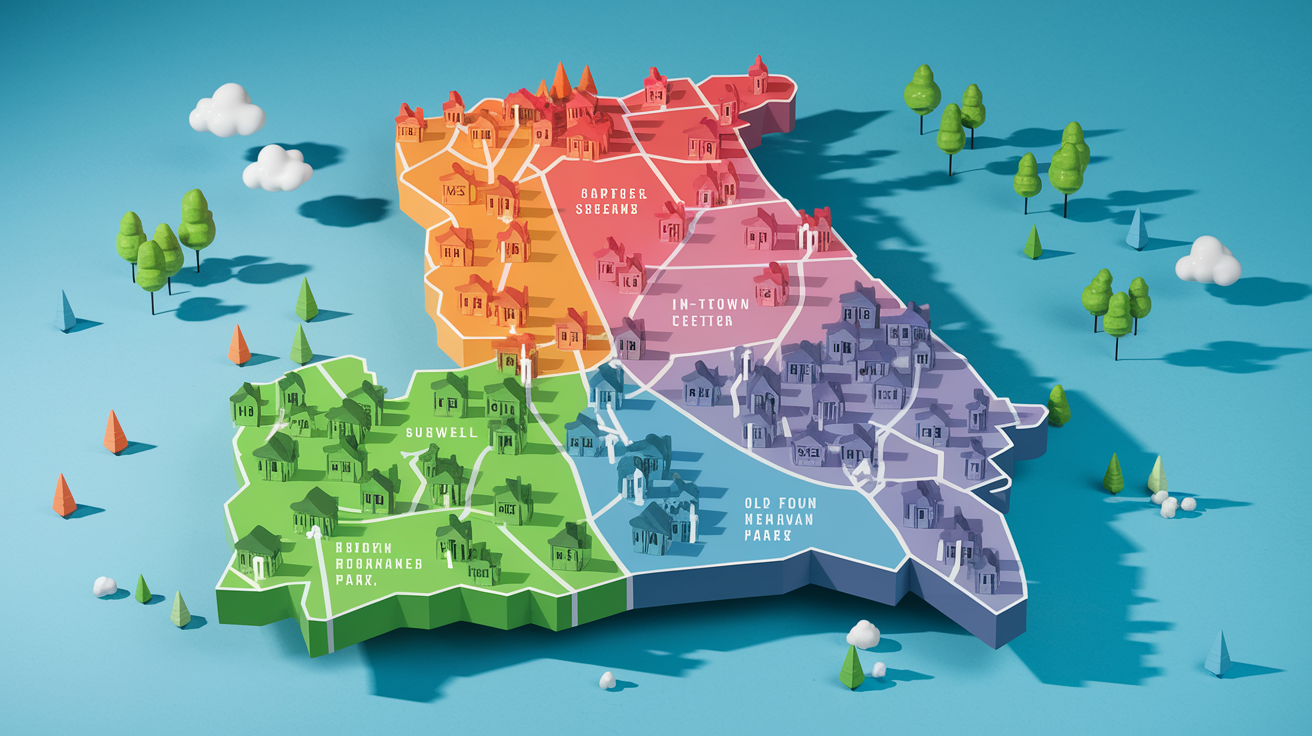
Remote work didn’t hit all Atlanta neighborhoods the same way. Suburban corridors got more household formation and bidding intensity. Urban pockets saw mixed results depending on their condo mix, lifestyle perks, and remaining employer density.
Suburban Growth Areas
Alpharetta, Johns Creek, Roswell, Suwanee, and East Cobb saw some of the sharpest demand spikes. These areas had larger lots, highly rated schools, and established retail and dining, making them perfect for families no longer stuck near a downtown office. Price appreciation in these suburbs often beat metro averages. Single-family homes moved faster and got multiple offers even as inventory climbed. Alpharetta ZIP codes 30005 and 30022, for example, saw days on market drop and median sale prices land in the upper band of the metro’s 20 to 40 percent pandemic appreciation range. Buyers in these suburbs usually wanted three-plus-bedroom homes with dedicated office space, two-car garages, and yards. They were fine with a 30 to 40 minute drive to Midtown or Buckhead for occasional in-office days.
In‑Town Neighborhood Adjustments
Midtown, Buckhead, Old Fourth Ward, and Inman Park kept demand for lifestyle and walkability, but smaller condos lagged while townhomes and single-family homes in these spots stayed competitive. Midtown rental rates softened in 2020 and 2021 as young professionals moved to roomier settings, then recovered by 2022 as travel, dining, and entertainment came back. Buckhead’s luxury single-family market stayed solid, drawing buyers who wanted both urban amenities and private outdoor space. Old Fourth Ward and Inman Park saw continued interest from hybrid workers wanting a shorter commute on in-office days and proximity to restaurants and parks, but condo inventory moved slower than suburban single-family product. West Midtown attracted attention for its blend of industrial-chic lofts and new mixed-use developments, appealing to creative professionals working remotely who still valued an urban feel.
Hybrid‑Lifestyle Communities
Neighborhoods like Decatur, Smyrna, and Brookhaven came out as hybrid-lifestyle winners. These inner suburbs offered walkable town centers, coworking spaces, local retail, and quick highway access to major employment nodes. Decatur’s downtown square and MARTA access kept it competitive for buyers wanting a blend of suburban space and urban convenience. Brookhaven’s mix of single-family homes and new condo towers attracted remote workers looking for green space and easy access to restaurants, gyms, and parks. Smyrna’s growth near the Battery complex and Truist Park gave it a mixed-use anchor that appealed to younger buyers wanting entertainment and dining within walking distance of home. These communities captured buyers unwilling to go all the way out to the outer suburbs but no longer needing to live in the urban core.
| Neighborhood | Change Observed |
|---|---|
| Alpharetta / Johns Creek | Price appreciation at upper metro range; faster sales; increased competition for large lots |
| Midtown | Rental softening 2020–2021, recovery by 2022; condo sales slower than townhomes |
| Decatur / Brookhaven | Strong hybrid-buyer demand; competitive bidding for single-family homes; steady rental occupancy |
| East Cobb / Roswell | Elevated demand for family-sized homes; lower days-on-market; migration from intown areas |
Pricing Patterns and Market Dynamics Since Remote Work Expansion

Suburban single-family home price appreciation beat urban condo growth across most of Metro Atlanta between 2020 and 2024. Suburban corridors routinely logged double-digit year-over-year increases during the 2020 to 2022 surge. Urban condos had weaker performance in 2020 and 2021, with some downtown micro-markets seeing rent declines of 5 to 15 percent and slower price gains or flat appreciation. By 2022 and into 2023, urban rental markets bounced back as travel and in-person work resumed, but single-family price momentum in suburbs stayed structurally higher. Properties with three or more bedrooms, dedicated home offices, and yards had the steepest appreciation. One and two-bedroom condos without flexible space lagged.
Bidding competition got fierce for larger homes meeting remote-work criteria. Buyers who previously might have purchased a 1,500-square-foot condo in Buckhead instead competed for 2,500-square-foot single-family homes in Alpharetta or Brookhaven, often paying 5 to 15 percent premiums for features like built-in office nooks, fiber internet, and private outdoor areas. This tightened inventory in desirable suburban ZIP codes, dropping days on market and pushing list-to-sale price ratios above metro averages. Downtown rental recovery was uneven. High-rise apartments in Midtown and Downtown saw occupancy stabilize by 2022, but landlords used concessions, flexible lease terms, and included utilities to attract tenants. That signaled softer underlying demand compared with pre-pandemic levels.
Rental market swings mirrored the commuter pattern shift. As fewer workers commuted daily, demand for downtown apartments softened while suburban single-family rentals tightened. Build-to-rent communities in outer suburbs captured remote workers wanting space and flexibility without homeownership, driving suburban rental rates up 4 to 8 percent annually in high-demand areas. Urban landlords adjusted by offering month-to-month leases and furnished units to attract mobile remote professionals, but absorption rates stayed slower than in suburbs with yards and parking.
The biggest pricing drivers since remote work took off:
Home office configuration. Homes with a dedicated office or convertible bonus room appreciated faster and sold at premiums.
Lot size and outdoor space. Properties offering yards, patios, or green access commanded higher prices and tighter inventory.
Broadband availability. Gigabit fiber or multi-provider internet became baseline. It affected both sale prices and rental rates.
Commute flexibility. Hybrid workers accepted longer one-way commutes (20 to 45 minutes) in exchange for more space, broadening the competitive pricing zone beyond traditional intown boundaries.
Expert Insight and Forward‑Looking Projections

Economists, brokers, and urban planners expect hybrid work to stick around as a structural feature of Atlanta’s labor market. That’ll keep demand elevated for larger suburban homes and home-office-ready properties. Industry projections suggest 3 to 8 percent annual price appreciation through 2026 in high-demand suburban corridors, assuming interest rates stabilize and employment stays steady. Analysts think neighborhoods offering a combo of strong digital infrastructure, family amenities, and reasonable commute access to major employment nodes will keep outperforming the metro average. Build-to-rent single-family communities and mixed-use suburban developments are expected to grow, capturing remote workers who value flexibility and lifestyle proximity over downtown density. Urban condo markets are forecast to recover selectively, with value and convenience driving renewed interest in neighborhoods that pair housing with coworking, dining, and entertainment.
Most market watchers see the permanence of remote work as a settled question. A lot of employers and employees have adopted long-term hybrid arrangements, creating lasting demand for homes that work as both residence and workplace. The location premium shifted from pure proximity to offices toward configuration and connectivity. Home office quality and broadband are now primary drivers alongside schools and outdoor space. Experts caution, though, that return-to-office mandates, interest rate volatility, and corporate relocations introduce downside risk. If major employers reverse hybrid policies or local job losses speed up, demand concentration could shift back toward urban cores, slowing suburban appreciation and re-tightening downtown rental markets.
For renters, the outlook suggests continued flexibility downtown, with landlords offering concessions and short-term leases to compete. For owners, the consensus is that properties configured for remote work will keep pricing power, especially in suburbs with limited new supply. Buyers targeting appreciation should look at neighborhoods showing 10 to 20 percent vacancy improvement versus pre-pandemic levels or rent growth of 4 to 8 percent annually. Those are signs that demand is still structurally strong. The key to navigating this market is matching your work pattern, space needs, and commute tolerance to neighborhoods where those priorities line up with current supply and pricing trends.
Final Words
We jumped straight into the market shifts: rising suburban values in places like Alpharetta and Roswell, rental demand moving between Midtown and Buckhead, and why buyers now want home offices and bigger lots.
Then we mapped migration patterns, neighborhood winners and losers, pricing gaps between single-family homes and condos, and what local experts expect next.
Altogether, this paints a clear picture of how remote work trends are changing atlanta housing demand — more people leaning toward suburbs and mixed‑use hubs. With a quick pre‑approval and a checklist (commute, HOA, office needs), you’ll be ready.
FAQ
Q: How has remote work changed housing demand in Atlanta?
A: Remote work has shifted Atlanta housing demand toward suburbs, with many areas seeing double-digit price gains (often 10–20%), and notable rental interest moving away from Midtown toward Buckhead and select suburbs.
Q: Which Atlanta suburbs have seen the biggest growth?
A: Suburbs like Alpharetta, Roswell, Marietta and Sandy Springs have led growth, showing higher sales volumes and price appreciation as remote workers seek larger homes, yards, and easier access to I-285 and I-75.
Q: How has rental demand shifted in Midtown, Buckhead, and Old Fourth Ward?
A: Rental demand in Midtown dipped as some renters moved to suburbs; Buckhead stayed steadier, while Old Fourth Ward saw a mixed recovery tied to return-to-office timing and new rental supply.
Q: What home features are remote buyers prioritizing in Atlanta?
A: Remote buyers prioritize a dedicated home office, faster internet, larger lots or yards, attached garages, and mixed-use suburban hubs that combine shops, co-working, and easy errands.
Q: Where are new residents coming from and why are they choosing Atlanta?
A: New residents often arrive from high-cost metros like New York, Los Angeles and Chicago, choosing Atlanta for lower housing costs, bigger homes, and a mix of city amenities with suburban space.
Q: What do these remote-work trends mean for Atlanta buyers and renters?
A: For buyers, expect more competition and higher budgets in popular suburbs; renters may see uneven urban rent recovery—opportunities in some intown units but rising costs near top suburban schools and hubs.
Q: How have single-family home prices changed compared with condos since remote work grew?
A: Single-family homes in remote-friendly suburbs have outpaced condo appreciation, with stronger bidding on larger homes, while condos lag with slower price growth and spotty rental demand.
Q: What practical steps should Atlanta buyers or sellers take now?
A: Buyers and sellers should highlight home-office features, get pre-approval, price competitively for suburbs, check HOA rules, and schedule showings accounting for I-285 traffic and rush-hour commutes.
Q: Will suburban demand continue, or is this a short-term shift?
A: Experts generally expect suburban demand to continue—driven by hybrid work, more mixed-use development, and lasting interest in home-office-ready properties—though job growth and interest rates will shape the pace.