

Think you can’t buy a home in Atlanta without a huge down payment? Think again.
Georgia Dream pairs a 30-year fixed first mortgage (same monthly principal and interest) with deferred, 0% second-mortgage help that often starts at $7,500 and rises to $10,000–$12,500 for teachers, nurses, public safety, military, or buyers with disabilities.
This guide shows Atlanta first-time buyers how to qualify in 2024-2025, including county income and purchase price limits, credit and loan rules, lender steps, required documents, and the quick next steps to get pre-approved.
Georgia Dream Program Overview: How Atlanta First-Time Buyers Qualify in 2024–2025

Georgia Dream is a down payment assistance program run by the Georgia Department of Community Affairs (DCA) that helps residents across the state cover upfront costs when buying their first home. If you’re buying in Atlanta, the program pairs a 30-year fixed-rate first mortgage with cash assistance to cut down what you need to bring to closing. Instead of scrambling to save 3% to 6% of the purchase price for a down payment and closing fees, you can tap into assistance that typically starts at $7,500, with higher amounts available for certain groups.
The program targets first-time homebuyers or people who haven’t owned a home in the past three years. Atlanta-area counties like Fulton, DeKalb, Gwinnett, Cobb, Clayton, Henry, and Cherokee all participate, though income caps and purchase price limits shift depending on county and household size. You have to use a Georgia Dream participating lender to access the program. And you’ll need to complete an approved homebuyer education course before closing.
As of 2024, standard assistance typically lands at $7,500 for buyers who meet the baseline criteria. Enhanced tiers offer $10,000 to $12,500 for public protectors (police, firefighters), educators, nurses, healthcare workers, active military, and households where someone lives with a disability. Assistance comes as a deferred second mortgage with 0% interest, so you won’t make monthly payments on that piece. But the loan comes due when you sell, refinance, or stop living in the property.
Key Atlanta-specific factors to qualify in 2024–2025:
- Household income has to fall below county-specific maximums, which change by household size and run higher in Atlanta metro counties than rural Georgia.
- Purchase price can’t exceed DCA limits for your county and loan type, which gives you room for Atlanta’s higher home prices.
- Minimum credit score requirements range from 620 to 660 depending on whether you’re using FHA, VA, USDA, or conventional financing.
- You need first-time buyer status or a 3-year ownership gap unless you qualify for a targeted-area or veteran exception.
Eligibility Rules for Atlanta Applicants

Income limits for Georgia Dream are set by household size and tied to the area median income in your county. In Fulton and DeKalb, a household of three might see an income cap around $120,000, while a single person’s limit could be closer to $85,000. Gwinnett, Cobb, and other Atlanta metro counties publish their own tiers each year. You’ll need to confirm the exact figure for your household size and county with a participating lender or the DCA website. These caps run higher in metro Atlanta than in many rural Georgia counties because of the cost of living and home prices near I-285.
Purchase price limits also vary by county and loan type. Conventional loans may allow higher maximums than FHA in some Atlanta counties. VA or USDA loans follow separate agency caps. Credit score minimums depend on your loan choice. FHA-backed Georgia Dream products often accept 620, while conventional programs typically require 640 to 660. You must occupy the property as your primary residence within 60 days of closing and plan to stay for at least the initial restriction period tied to your assistance.
Core eligibility criteria:
- Meet county-specific household income limits for your household size.
- Stay under the maximum purchase price for your county and loan type.
- Hit the minimum credit score required by your lender and loan program (usually 620 to 660).
- Qualify as a first-time buyer or show no home ownership in the past 3 years, unless a veteran or targeted-area exception applies.
- Complete an approved 8 to 12-hour homebuyer education course and submit the certificate before closing.
Available Assistance Options and Program Tiers

Georgia Dream organizes assistance into three main tiers. The standard tier provides up to $7,500 in down payment and closing cost help for any buyer who meets the income, credit, and purchase price requirements. This covers a meaningful chunk of the typical 3% down payment on a conventional loan or the upfront closing fees that often catch first-time buyers off guard.
The Protectors, Educators, and Nurses (PEN) tier offers up to $10,000 to $12,500 for police officers, firefighters, teachers, nurses, and other healthcare workers. Active-duty military members also qualify for this enhanced level. The Choice tier provides the same enhanced amounts for buyers living with a disability or families that include a member with a disability. Both enhanced tiers require documentation of employment or disability status. Your lender will confirm eligibility when you apply.
All assistance is delivered as a 0% interest deferred second mortgage recorded against the property. You won’t make monthly payments on the second mortgage, but the balance comes due in full if you sell, refinance your first mortgage, or move out before the forgiveness period ends. Some recent program versions forgive the loan incrementally over five to ten years, meaning 20% per year disappears if you stay in place. But exact forgiveness schedules can shift with funding rounds, so verify the current terms with your lender.
| Assistance Tier | Amount | Eligibility Group |
|---|---|---|
| Standard | Up to $7,500 | All first-time buyers meeting income and credit criteria |
| PEN (Protectors, Educators, Nurses) | Up to $10,000–$12,500 | Public safety, teachers, healthcare workers, active military |
| Choice | Up to $10,000–$12,500 | Buyer or household member living with a disability |
Approved Lenders and Their Role in the Process

Georgia Dream can only be accessed through participating lenders trained in the program’s guidelines and approved by the DCA. These lenders handle your first mortgage application, verify your income and credit, and submit the combined loan package to Georgia Dream for final approval. You can’t apply directly to the state. The lender acts as the gatekeeper and coordinator for both your primary loan and the down payment assistance.
Choosing the right lender matters because each one sets its own credit overlays, processing timelines, and fee structures within the program’s framework. Some lenders specialize in FHA loans paired with Georgia Dream, while others focus on conventional products with higher credit minimums. Ask each lender about their typical approval turnaround, how many Georgia Dream files they close per month in Atlanta, and whether they charge extra processing fees for bundling the assistance. The DCA maintains a list of approved lenders on its website. You can filter by county to see who operates in Fulton, DeKalb, or whichever Atlanta-area county you’re targeting.
Step-by-Step Application Guide for Atlanta Buyers
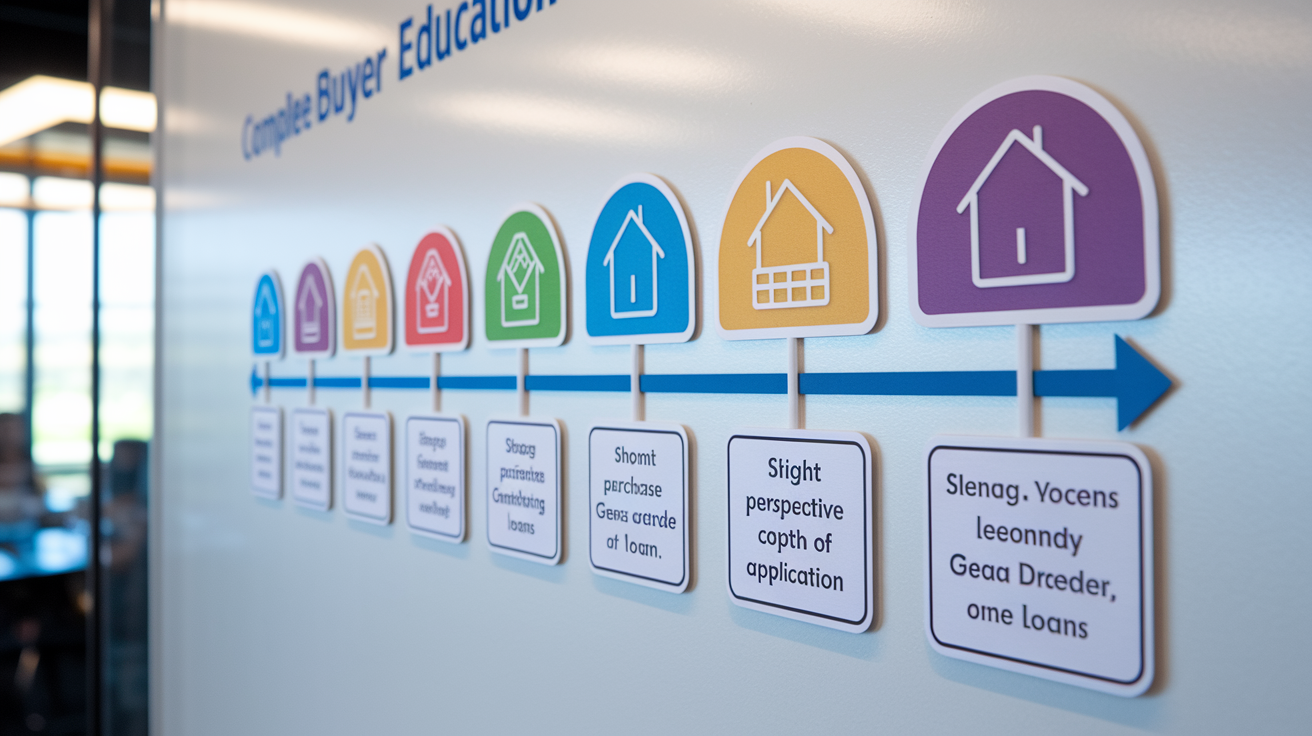
Applying for Georgia Dream in Atlanta follows a clear sequence that starts before you even shop for a home and ends at the closing table. Your timeline from start to finish typically runs 60 to 90 days, depending on how quickly you gather documents and how busy your lender is.
Complete homebuyer education. Register for an approved 8 to 12-hour course online or in person, finish the curriculum, and download your certificate. Many Atlanta buyers knock this out in a weekend.
Choose a Georgia Dream participating lender. Contact at least two lenders, compare their credit requirements and fees, and select one to start your pre-approval.
Get pre-approved for your first mortgage. Submit income, asset, and credit documentation so the lender can issue a pre-approval letter stating your maximum loan amount and confirming you meet Georgia Dream eligibility.
Shop for a home within program limits. Work with a buyer’s agent to find properties under the county purchase price cap and suitable for owner occupancy.
Submit a purchase contract. Once your offer is accepted, provide the signed contract to your lender so they can order the appraisal and begin final underwriting.
Lender submits Georgia Dream application. Your lender packages your income verification, credit report, homebuyer education certificate, and purchase contract, then sends it to DCA for approval of the down payment assistance.
Close on both loans. At closing, you’ll sign documents for your first mortgage and the deferred second mortgage that represents the assistance. The assistance funds disburse to cover your down payment or closing costs, and you move in.
Each step depends on the one before it. Gathering your W-2s, pay stubs, and bank statements early keeps things moving. Delays usually happen when buyers submit incomplete documentation or when appraisals take longer than expected in competitive Atlanta neighborhoods.
Required Documentation for Submission

Your lender and the DCA need a clear financial picture before approving your Georgia Dream application. Missing documents are the most common cause of delays. Start collecting these items as soon as you decide to apply.
Government-issued photo ID (driver’s license or passport) for all borrowers on the loan. Social Security card or verification for each borrower to confirm your Social Security number. Last 30 days of pay stubs showing year-to-date earnings, plus W-2s for the most recent two years if you’re a W-2 employee. Federal tax returns (Form 1040) for the past two years, including all schedules, if you’re self-employed or report income beyond wages. Bank and asset statements for the last two to three months covering all checking, savings, and investment accounts. Purchase contract signed by both buyer and seller, along with any addenda or amendments. Homebuyer education certificate showing completion of an approved course.
If you receive child support, Social Security, disability income, or bonuses, bring documentation showing the amount and consistency over the past year. Divorced borrowers should have a copy of the divorce decree, especially if it affects income or obligations. Your lender will tell you if additional items are needed based on your specific situation, but starting with this core list gets you 90% of the way there.
Program Restrictions and Important Limitations

Georgia Dream requires you to occupy the property as your primary residence within 60 days of closing and maintain that occupancy for the life of the assistance loan. If you move out, rent the property, or convert it to a vacation home before the forgiveness period ends, the deferred second mortgage comes due in full. You’ll need to repay the entire assistance amount, which can be a surprise if you thought it was a grant.
Selling or refinancing your first mortgage also triggers repayment. If you sell the home three years after closing and your assistance hasn’t fully forgiven yet, the remaining balance comes out of your sale proceeds before you see any equity. Refinancing to grab a lower interest rate means paying off the second mortgage at the same time, so you’ll need cash or enough equity to cover it. Some buyers wait until the forgiveness period ends to refinance, avoiding that repayment.
The property itself has to meet DCA guidelines. Single-family homes, townhouses, and condos are allowed, but the condo project must appear on an approved list. Manufactured homes have separate rules. The home must pass an appraisal showing it meets minimum property standards. You can’t use Georgia Dream to buy investment properties, second homes, or fixer-uppers that need major structural work before you move in.
How Georgia Dream Compares to Other Atlanta Down Payment Programs

Atlanta and surrounding counties offer additional down payment programs that work differently from Georgia Dream. In some cases you can layer them together if the rules allow. The City of Atlanta’s Homebuyer Assistance Program provides up to $15,000 in forgivable grants for buyers purchasing in targeted neighborhoods, with income caps typically lower than Georgia Dream and stricter credit requirements. That program focuses on revitalizing specific ZIP codes, so your property location determines eligibility more than your occupation or disability status.
Fulton County and DeKalb County each run their own assistance initiatives, often funded by HUD or local housing trust funds. These programs may offer $5,000 to $10,000 in assistance structured as grants rather than loans, meaning no repayment if you stay five years. Income limits tend to be tighter, and purchase price caps lower. But the grant structure is appealing if you qualify. Some lenders allow you to combine a county grant with Georgia Dream assistance, effectively stacking $7,500 from the state with $10,000 from the county. But you’ll need approval from both program administrators and your lender must confirm the property and your debt-to-income ratio can support it.
| Program | Assistance Type | Max Amount | Key Requirement |
|---|---|---|---|
| Georgia Dream | Deferred second mortgage (0% interest) | $7,500 to $12,500 | First-time buyer or 3-year gap; statewide income and purchase caps by county |
| City of Atlanta Homebuyer Assistance | Forgivable grant | Up to $15,000 | Purchase in targeted ZIP codes; lower income caps; 5-year occupancy for full forgiveness |
| Fulton County DPA | Grant (no repayment if occupancy maintained) | $5,000 to $10,000 | Fulton County purchase; income limits stricter than Georgia Dream; 5-year stay requirement |
Final Words
You’ve walked through how the Georgia Dream program works for Atlanta first-time buyers: who qualifies, the assistance tiers, and the role of approved lenders.
We also covered the seven-step application, the documents you’ll need, program limits, and quick comparisons with other Atlanta down-payment options.
Use this georgia dream program guide for atlanta first-time buyers to firm up your budget, call an approved lender, and finish your homebuyer education. Small steps. Big difference. You’re closer than you think.
FAQ
Q: What is the Georgia Dream program and who is it for?
A: The Georgia Dream program provides down payment assistance to Georgia residents, mainly first-time buyers or those who haven’t owned a home in three years, including Atlanta applicants meeting county income and price limits.
Q: How much assistance does Georgia Dream offer in 2024–2025?
A: The Georgia Dream assistance typically offers a standard $7,500 down payment, with enhanced tiers around $10,000–$12,500 for certain qualifying groups in eligible counties.
Q: Who qualifies for enhanced assistance tiers?
A: Enhanced assistance applies to groups like protectors (police, fire, EMS), eligible educators, nurses, and households with a disabled member, provided they meet county income and purchase-price rules.
Q: What are the main eligibility rules for Atlanta applicants?
A: Atlanta applicants must meet county income caps, purchase price limits, basic credit minimums, first-time or three-year non-ownership status, and complete an approved homebuyer education course.
Q: How do approved lenders fit into the Georgia Dream process?
A: Approved lenders submit Georgia Dream loan packages, verify income and documents, and guide Atlanta buyers through program rules; you must work with a participating lender to use the program.
Q: What are the exact application steps for Atlanta buyers?
A: The Georgia Dream application steps are pre-approval, finish homebuyer education, find a house, sign the purchase contract, lender submits your file, lender compliance and underwriting checks, and closing.
Q: What documents are required for submission?
A: Required documents include photo ID, recent pay stubs, W-2s or tax returns, bank statements, the signed purchase contract, and your homebuyer education certificate.
Q: Are there property or repayment restrictions I should know?
A: Program rules require the home be your primary residence, may impose a second-mortgage repayment trigger, set occupancy timelines, and enforce county purchase-price and use restrictions.
Q: How does Georgia Dream compare to other Atlanta down payment programs?
A: Georgia Dream usually offers deferred second-mortgages and mid-range assistance with statewide reach, while some city programs provide grant funds, different caps, or alternative income requirements.
Q: How long does it usually take to close using Georgia Dream?
A: Closing with Georgia Dream often takes about 30 to 60 days, similar to a conventional purchase, depending on lender processing, underwriting, and how quickly you provide required documents.
Q: Can repeat buyers qualify if they sold a home recently?
A: Repeat buyers qualify if they haven’t owned a home in the past three years; some exceptions may apply for specific household situations, so check local program rules.