

Want to trade walking distance to coworking for a bigger home office and cheaper rent?
Not all Atlanta neighborhoods are built the same for remote workers.
This guide compares internet (fiber and cable), coworking access, and everyday lifestyle so you can pick the right spot.
We’ll show which areas, Midtown and Buckhead for coworking, Johns Creek and Cumming for roomy home offices, fit a hybrid or fully remote life.
By the end you’ll know what to check before you lease: ISP options, walkability, and commute tradeoffs.
Core Comparison of Atlanta Neighborhoods Best Suited for Remote Workers
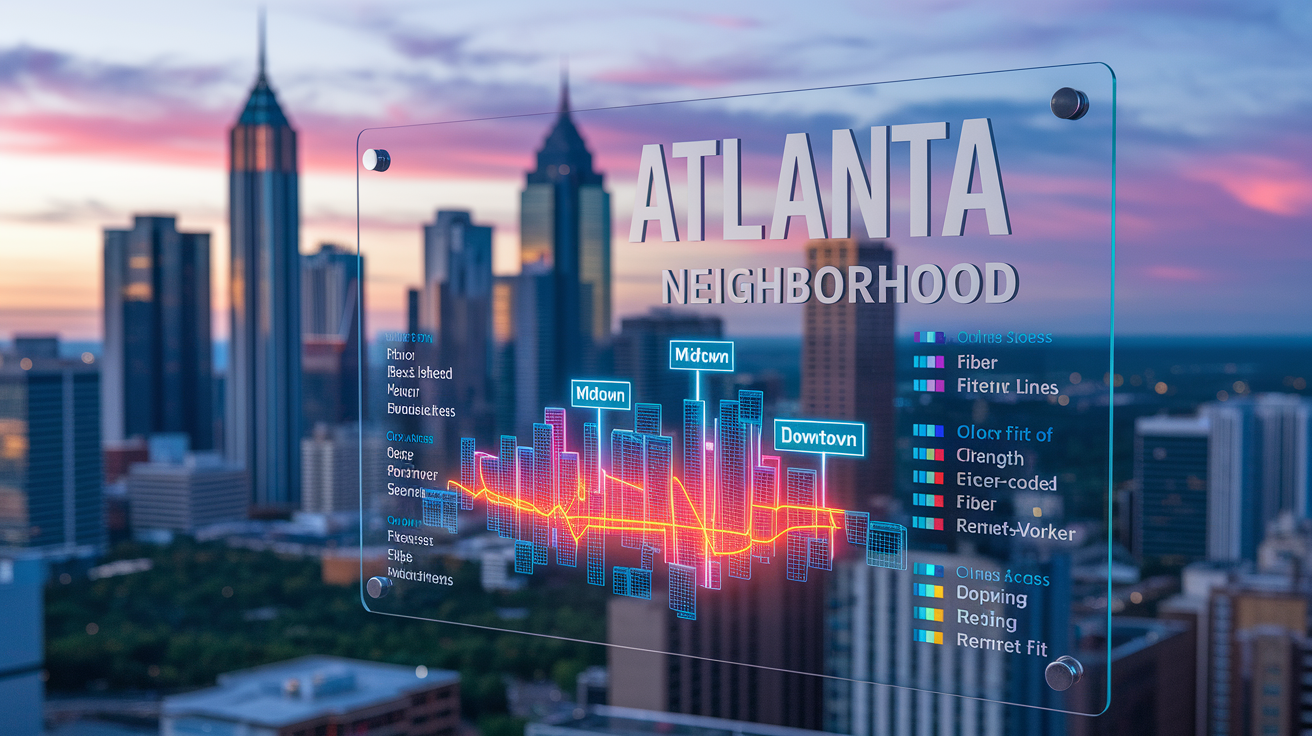
Picking the right Atlanta neighborhood when you work remotely comes down to three things: your internet setup, how often you actually need to leave your house for workspace, and whether the area fits the life you’re building. Some neighborhoods nail all three. Others give you more space and quiet in exchange for fewer coworking spots nearby.
Buckhead, Midtown, and West Midtown own the coworking scene. You’ve got everything from 21st-floor premium offices to creative studios in old industrial buildings. Fiber’s strong, and if your home internet acts up or you just need a change of scenery, backup workspace is minutes away. Cumming and Johns Creek work differently. Coworking’s sparse, but fiber infrastructure is solid and homes are big enough that most people set up a proper office and never leave.
It’s really about what matters more to you: walking to professional community and third-place work spots, or a quiet street with room for a real desk and lower rent. The chart below shows how eight Atlanta neighborhoods compare when you’re judging them purely on remote-work readiness.
| Neighborhood | Internet Strength | Coworking Access | Remote-Worker Fit |
|---|---|---|---|
| Buckhead | Strong fiber and cable, 100+ Mbps widely available | High density: Atlanta Tech Village, Roam, Serendipity Labs | Excellent for hybrid schedules and networking; premium cost |
| Midtown | Excellent fiber coverage, enterprise-grade options | Very high: Switchyards, Peachtree Offices, Industrious | Best for workers who blend remote and in-person collaboration |
| West Midtown | Good fiber availability, improving coverage | Moderate: MODEx, The Bakery CoWork, CreateATL | Strong for creatives; lower costs than Buckhead/Midtown |
| Downtown | Reliable commercial-grade fiber | Moderate: Switchyards Downtown, Pittsburgh Yards | Good for occasional coworking; central commute access |
| Old Fourth Ward | Good fiber and cable, some dead zones remain | Low to moderate; relies on nearby Midtown options | Solid for fully remote workers who value BeltLine access |
| Decatur | Strong residential fiber and cable availability | Low; short drive to Midtown coworking hubs | Excellent for hybrid workers using MARTA; walkable downtown |
| Cumming | Fiber-forward; marketed as “wired for speed” | Very low; nearest options in Alpharetta | Ideal for fully remote with dedicated home office; family-friendly |
| Johns Creek | Strong fiber infrastructure, upscale ISP options | Very low; drive to Buckhead or Alpharetta needed | Best for established remote professionals; safe, quiet, spacious |
Internet Connectivity and Fiber Availability Across Atlanta Neighborhoods
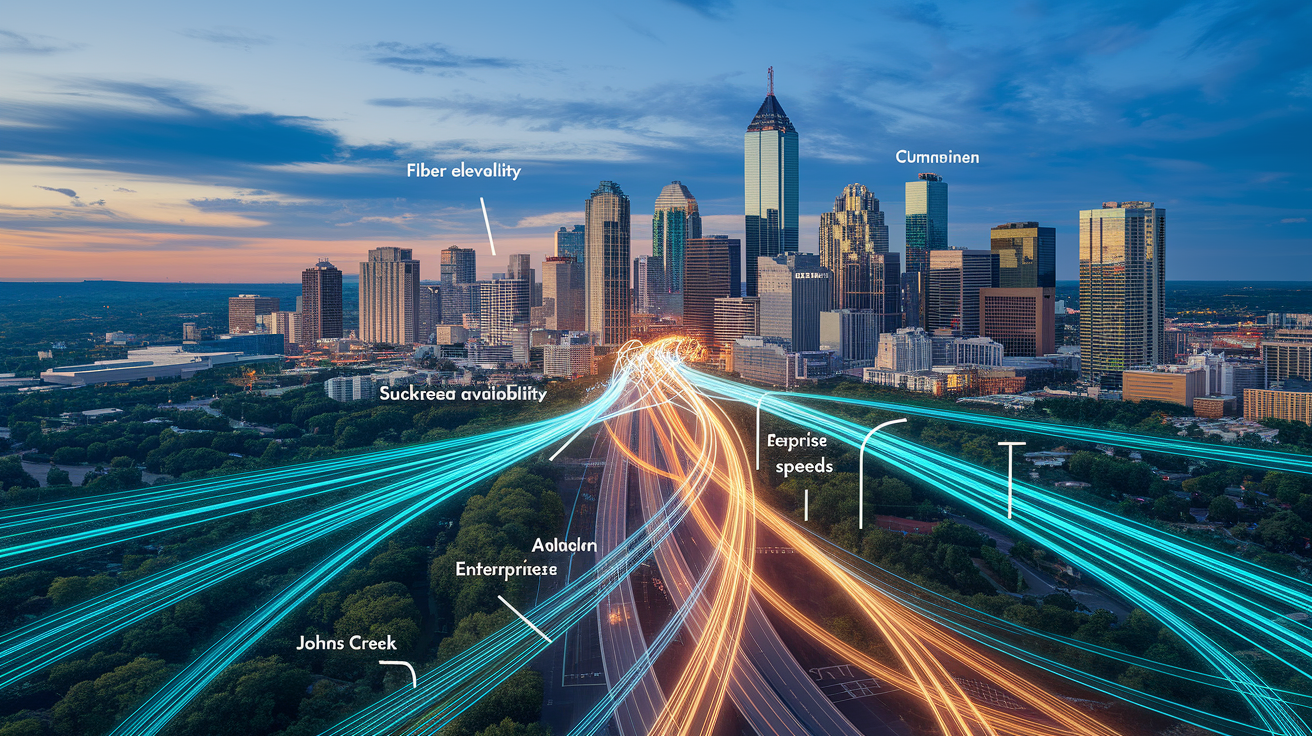
Internet reliability isn’t negotiable if you work from home. Atlanta’s fiber map has clear winners. Buckhead and Midtown get dense fiber coverage with multiple ISP options, which means faster repairs and better pricing. West Midtown and Old Fourth Ward have caught up fast as creative industries and new development moved in, though some blocks still have gaps. Check ISP availability before you sign a lease.
Suburban fiber zones like Cumming, Alpharetta, and Johns Creek actually market themselves to remote workers and tech people. You’ll often see faster advertised speeds at lower monthly costs than what you’d pay in Midtown, and the infrastructure handles enterprise-level upload speeds. That matters if you’re moving large files, doing video production, or running client calls all day. The catch is less ISP competition. Some suburban areas give you one or two fiber providers instead of the three or four you’d find closer to the city.
Top 5 Atlanta neighborhoods for fastest and most reliable home internet:
Buckhead. Multiple fiber and high-speed cable providers. You can get enterprise SLAs for a home office. Upload and download speeds stay symmetrical, which helps when video’s a big part of your day.
Midtown. Fiber penetration is excellent across residential and mixed-use buildings. Google Fiber and AT&T fiber both show up on most blocks. Congestion stays low even during peak hours.
Alpharetta. Tech corridor infrastructure with advertised gigabit fiber almost everywhere. The area markets itself to work-from-home professionals and startup founders.
Cumming. Forsyth County fiber rollout focused on residential areas. You’ll see “wired for speed” positioning. Cost runs lower than urban fiber plans.
Johns Creek. Upscale residential fiber installations come standard in newer developments. Customer service and reliability from major ISPs tend to be strong.
Coworking Space Access and Membership Options by Atlanta Neighborhood

Coworking density clusters tightly around Buckhead, Midtown, and West Midtown’s creative corridors. Living within 15 minutes of one of these zones changes your flexibility if you need professional workspace outside your house regularly. Buckhead and Midtown spaces lean premium: 21st-floor views, curated coffee programs, concierge services. Pricing reflects that. West Midtown trades some polish for creative community and lower monthly costs, pulling in media professionals, designers, and freelancers who care more about collaboration than corner offices.
Price variation is real. Hot desks in Buckhead or Midtown run $250 to $350 per month. The same access in West Midtown or near Pittsburgh Yards drops closer to $150 to $200. Dedicated desks follow a similar pattern: $450 to $550 in premium locations, $300 to $400 in emerging neighborhoods. Private offices start around $500 for a single-person setup and climb past $1,500 for team rooms with windows and conference access. Day passes give you a low-commitment test. Most spaces charge $25 to $50 for drop-in access, though some membership-only clubs need a sponsor or guest invitation.
The ranking formula here weighs both quality and reliability: Rating × log(1 + Review Count). A 4.7-star space with over 1,000 reviews earns more trust than a perfect 5.0 rating based on 20 reviews. That distinction matters when you’re comparing a polished coworking chain to a newer creative studio. Membership perks vary. Some spaces bundle meeting room hours and printing. Others charge separately. Confirm what’s included before you commit to a monthly plan.
| Space Name | Neighborhood | Rating | Weighted Score | Price Tier |
|---|---|---|---|---|
| The Gathering Spot ATL | West Midtown | 4.7★ | 34.45 | Premium (members-only) |
| Atlanta Tech Village | Buckhead | 4.8★ | 27.05 | Mid to High (startup-focused) |
| Roam Buckhead | Buckhead | 4.8★ | 25.49 | High (premium amenities) |
| Switchyards Downtown | Downtown | 4.5★ | 23.65 | Mid (event-friendly, central location) |
| Serendipity Labs | Buckhead | 4.9★ | 22.42 | Premium (21st floor, executive amenities) |
| MODEx Studio | West Midtown | 4.8★ | 20.97 | Mid (creative/production focus) |
Walkability, Transit, and Commute Alternatives for Remote and Hybrid Workers
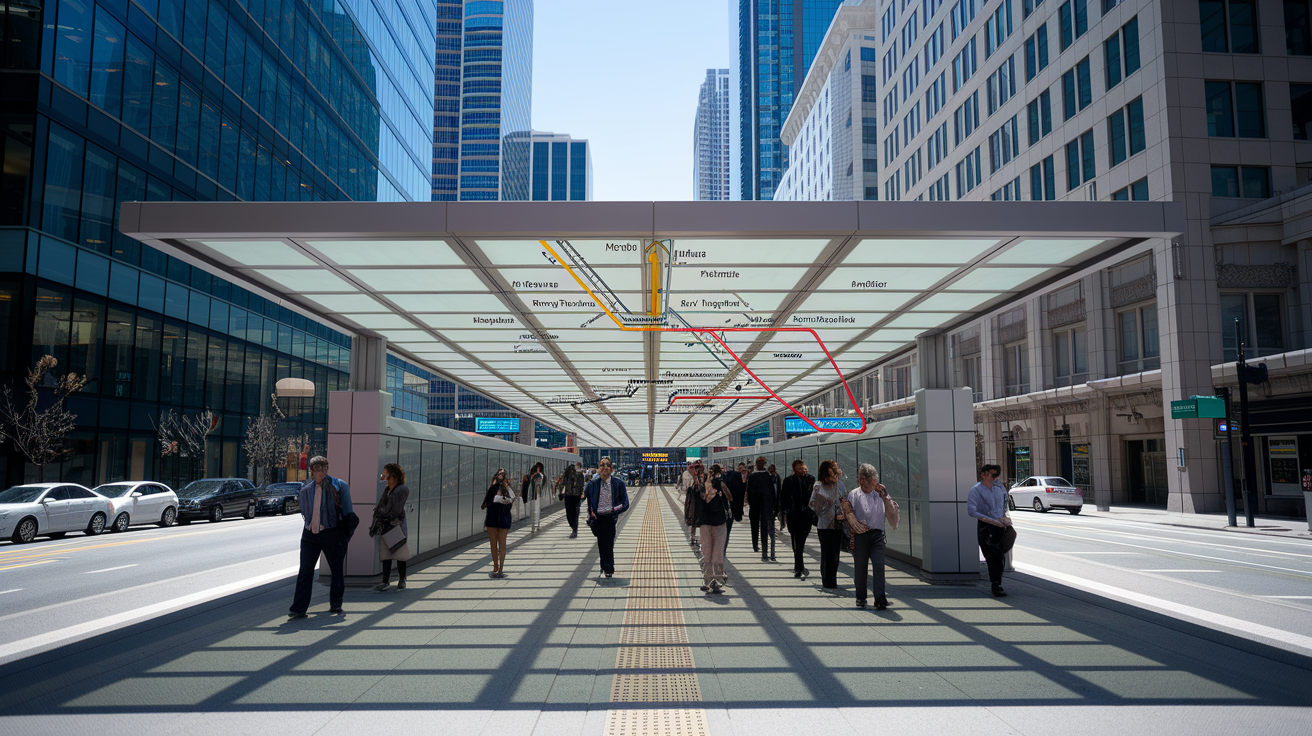
Walkability and transit access matter most when you’re mixing remote work with occasional office visits, client meetings, or coworking days. Midtown and Decatur lead on MARTA connectivity. Both offer train access that turns a 45-minute drive into a 20-minute rail ride during rush hour. Buckhead packs dense amenities within a few blocks of many residential buildings, but parking costs climb fast if you need a car for hybrid commutes or evening plans.
Suburban areas work differently. You get square footage and quiet streets, but public transit thins out or disappears. Lilburn, Tucker, and Decatur sit in the middle for hybrid workers. Drives to urban job centers stay short, and you still get some bus or rail access plus residential neighborhoods with space for a home office. If your hybrid schedule is one or two days per week in an office, these areas let you skip both city parking costs and long rural commutes.
Best Atlanta neighborhoods for hybrid commuting and transit access:
Decatur. Walkable downtown square, direct MARTA rail to Midtown and Downtown, frequent bus service to Emory and CDC.
Midtown. Multiple MARTA stations, bike-friendly streets, walkable to Piedmont Park and coworking hubs.
Buckhead. Dense retail and dining within walking distance, but limited rail access. Bus routes serve major corridors.
Tucker. Affordable with reasonable drive times to I-285 and city centers. Some bus routes available.
Lilburn. Quick highway access off I-85 and Highway 78. No rail, but manageable drives for 1–2 day hybrid schedules.
Coffee Shops, WiFi Cafés, and Third-Place Work Spots by Neighborhood

Café work culture changes sharply across Atlanta. Neighborhoods with walkable downtowns and creative populations like Athens, Gainesville, West Midtown, and Decatur support a thick network of third-place work spots where you can park for a few hours with a laptop and decent WiFi. These areas pull in remote workers who don’t want to pay for full coworking memberships but need reliable outlets, good coffee, and a scenery change when home-office fatigue kicks in.
Creative corridors near West Midtown and Cabbagetown lean hard into this café-as-workspace model. Spaces designed for freelancers, artists, and small teams often stay open late, stock power strips at every table, and don’t pressure you to leave after one drink. Suburban neighborhoods and some residential parts of Buckhead lack this density. Cafés exist, but they’re built for quick errands rather than four-hour work sessions. If café hopping is part of your routine, confirm the neighborhood supports that before you move in.
Six Atlanta neighborhoods with strong café work cultures:
Decatur. Walkable square with multiple independent coffee shops. WiFi’s reliable and seating’s built for longer stays.
West Midtown. Creative businesses and coworking-adjacent cafés. Outlets are standard. Quieter mid-morning hours.
Athens. College-town energy with Jittery Joe’s and similar spots built for students and remote workers. Late hours and live music.
Midtown. High café density near Piedmont Park and Peachtree Street. Expect busier crowds and shorter table availability.
Gainesville. Walkable downtown with lakefront vibe. Local coffee shops cater to remote professionals and retirees.
Virginia-Highland. Neighborhood feel with independent cafés. Mix of families and freelancers. WiFi’s reliable but seating gets tight during weekend brunch.
Housing Costs, Rental Pricing, and Cost-of-Living Differences for Remote Workers
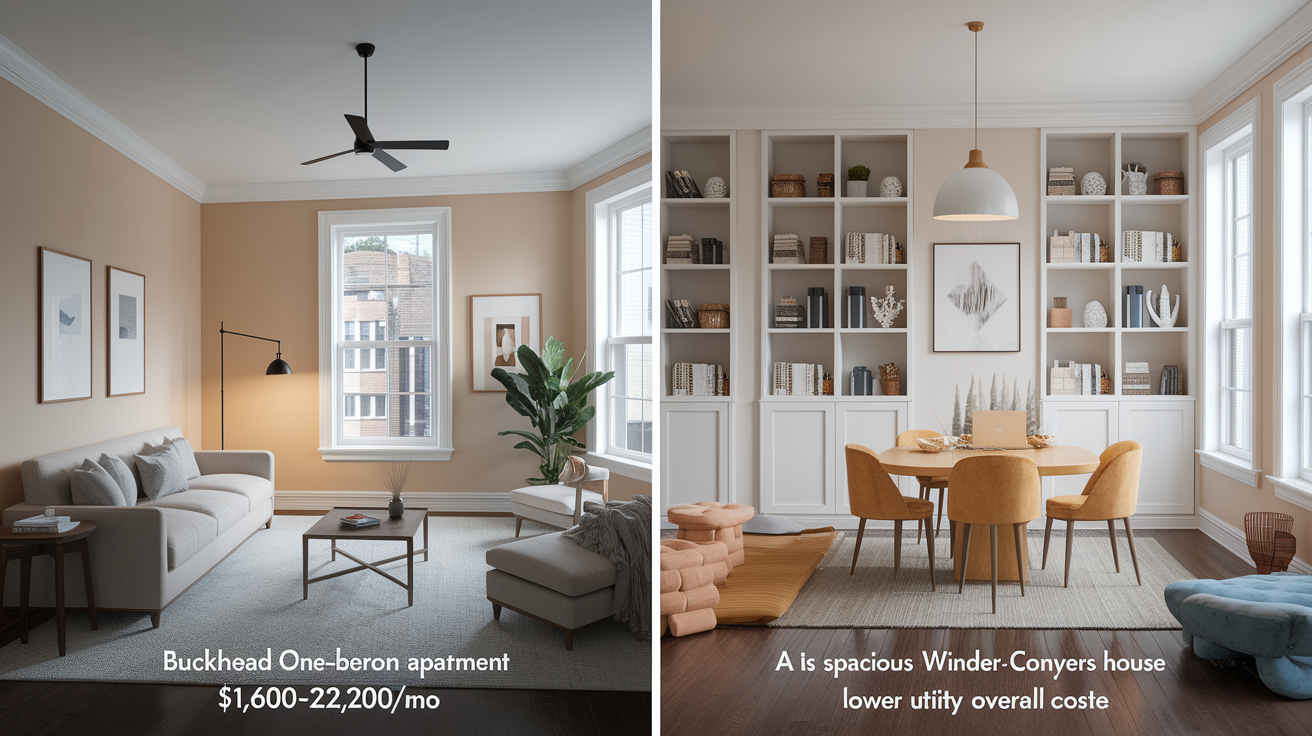
Housing costs shift hard when you compare urban Atlanta neighborhoods to outer suburbs. Buckhead and Midtown one-bedroom apartments start around $1,600 to $2,200 per month, and you’re paying for location density more than square footage. That same budget in Winder or Conyers gets you a full house with a yard, a garage, and a dedicated room for a home office. If you’re fully remote and rarely need in-person coworking or client visits, that space-for-cost swap becomes really attractive.
Johns Creek sits at the opposite end of the suburban spectrum. Upscale homes with higher price points, but you’re buying into top-rated schools, low crime, and fiber-ready infrastructure designed for professionals working from home. Loganville and Monroe land in the middle: slightly longer drives to urban job centers, but larger lots, bonus rooms perfect for office conversion, and housing costs well below metro averages. These areas also tend to bundle utilities like trash and water into HOA dues or base rent, which simplifies budgeting when you’re managing remote work expenses.
Studio and one-bedroom apartments in West Midtown and Old Fourth Ward run $200 to $400 less per month than comparable Buckhead units, and you still get walkable access to BeltLine trails, coworking spaces, and café culture. For remote workers who want urban amenities but need to control costs, emerging creative neighborhoods deliver the best balance. Just confirm your specific building or block has strong internet before signing. Some older conversions still lag on fiber upgrades.
| Neighborhood | Relative Cost Level | Space for Home Office | Notes |
|---|---|---|---|
| Buckhead | High | Limited in apartments; larger in houses | Premium location costs; smaller unit sizes in high-rises |
| Midtown | High | Bonus rooms rare; studios tight | Pay for walkability and coworking proximity |
| West Midtown | Moderate to High | Some lofts offer flex rooms | Lower than Buckhead; creative vibe; improving fiber |
| Decatur | Moderate | Good in houses; tight in small apartments | Walkable downtown; hybrid-friendly transit access |
| Cumming | Moderate | Excellent; bonus rooms common | Fiber-forward; family-oriented; larger lot sizes |
| Winder / Conyers | Low to Moderate | Very spacious; dedicated offices standard | Best cost-per-square-foot; longer drives to coworking |
Safety, Quiet Streets, and Neighborhood Vibe for Productive Remote Work

Neighborhood vibe and street noise affect remote-work productivity in ways that don’t show up on a fiber coverage map. Cumming and Johns Creek rank consistently as safe, family-friendly areas with quiet residential streets. Perfect if your workday includes frequent video calls or deep focus tasks. Emerging creative neighborhoods like West Midtown and Cabbagetown carry more varied noise profiles. Some blocks stay quiet during business hours. Others sit near event venues, breweries, or busy truck routes that can mess with calls or recording work.
Old Fourth Ward and parts of Midtown sit near the BeltLine, which brings foot traffic, weekend crowds, and occasional street performances. That energy appeals to some remote workers who want a lively neighborhood feel. Others find it distracting during core work hours. If you know you’re sensitive to noise, visit the specific block at 10 a.m. on a Tuesday and again at 2 p.m. on a Saturday before you commit to a lease.
Five Atlanta neighborhoods known for quiet streets and low-distraction environments:
Johns Creek. Safe, suburban feel. Minimal through traffic. Designed for families and professionals working from home.
Cumming. Low crime, wide streets, newer developments with sound-insulated homes.
Decatur (residential sections). Quiet tree-lined blocks outside the downtown square. Family neighborhoods with minimal commercial noise.
Loganville. Small-town vibe with space between houses. Very low traffic and street noise.
Tucker (residential pockets). Affordable and calm. Older neighborhoods with established trees and minimal turnover.
Lifestyle, Parks, Dining, and Recreation in Remote-Work-Friendly Neighborhoods

Remote work blurs the line between where you live and where you spend non-work hours, which makes neighborhood lifestyle amenities more important than they’d be if you were commuting to an office. Midtown offers the densest concentration of parks, restaurants, and evening activities. Piedmont Park sits walkable from most apartments, and you can choose from dozens of dining options without getting in a car. The BeltLine adds another layer of recreation and social access, connecting Old Fourth Ward, Inman Park, and Virginia-Highland with trails, public art, and weekend markets.
Athens and Gainesville shift to a smaller-city lifestyle model. Both have walkable downtowns with local restaurants, live music venues, and arts programming that supports creative professionals and remote workers looking for community outside work hours. Gainesville adds lake access. Lake Lanier sits minutes away for kayaking, paddleboarding, or a midday break by the water. Athens leans into college-town energy with Jittery Joe’s, independent bookstores, and a music scene that attracts remote workers who want cultural density without Atlanta metro traffic.
Suburban neighborhoods like Johns Creek and Cumming prioritize parks, greenways, and family recreation over nightlife. Autrey Mill Nature Preserve and Sawnee Mountain offer hiking and outdoor breaks during lunch hours, and these areas support wellness-focused routines: farmers markets, yoga studios, running trails. They fit well with flexible remote schedules. The tradeoff is fewer spontaneous dinner options and longer drives for concerts, galleries, or late-night work sessions at a café.
Five neighborhoods with top recreation and dining access for work-life balance:
Midtown. Piedmont Park, BeltLine trail access, highest restaurant density, walkable to theaters and live music venues.
Decatur. Compact downtown square with independent dining, weekend farmers market, family-friendly parks.
Gainesville. Lake Lanier recreation, walkable downtown cafés, outdoor-focused lifestyle with lower cost of living.
Athens. Live music and arts culture, college-town dining variety, walkable neighborhoods near UGA campus.
Old Fourth Ward. BeltLine connectivity, Ponce City Market dining hall, Historic Fourth Ward Park, evening event programming.
Matching Atlanta Neighborhoods to Remote-Worker Personas

Different remote-worker profiles prioritize different neighborhood features. Tech professionals and startup founders cluster near Atlanta Tech Village in Buckhead, where 300+ startups share coworking space, mentorship networks, and investor access. This group values professional density over residential quiet, and Buckhead’s premium coworking options, fast fiber, and proximity to enterprise clients justify higher housing costs. The same crowd also gravitates toward Alpharetta for suburban fiber infrastructure and direct access to North Fulton’s tech corridor.
Creative professionals (designers, video producers, freelance writers, media creators) thrive in West Midtown’s creative corridor. Spaces like MODEx Studio, CreateATL, and The Bakery CoWork offer lower membership costs, flexible hourly rentals, and communities built around collaboration rather than enterprise sales. These neighborhoods support café work culture, late studio hours, and event programming that blends networking with creative showcases. Housing costs run lower than Buckhead, which matters when project income fluctuates month to month.
Hybrid workers who split time between home and an office prioritize transit access and moderate commute times. Decatur, Lilburn, and Tucker offer the best balance. MARTA rail or reasonable drive times to Midtown and Downtown, lower housing costs than urban cores, and residential neighborhoods with space for a dedicated home office. This group needs reliable internet at home and occasional coworking access but doesn’t want to pay Buckhead prices or sit in OTP traffic three days a week.
Six remote-worker personas matched to recommended Atlanta neighborhoods:
Tech founders & startup employees. Buckhead (Atlanta Tech Village proximity), Alpharetta (fiber infrastructure, North Fulton tech corridor).
Creative professionals & freelancers. West Midtown (MODEx, CreateATL), Athens (arts culture, café work spots), East Atlanta Village (independent creative community).
Hybrid workers (1–3 days in office). Decatur (MARTA access), Midtown (walkable coworking), Tucker (affordable, reasonable drive times).
Fully remote with families. Cumming (fiber-forward, top schools, safe streets), Johns Creek (upscale suburban, spacious homes).
Digital nomads & short-term remote workers. Midtown (coworking density, furnished rentals, walkable lifestyle), Buckhead (premium short-term options, day-pass coworking).
Budget-conscious remote workers prioritizing space. Winder (low cost, large yards), Conyers (affordable, home-office-ready houses), Loganville (quiet, bonus rooms standard).
Final Words
Choosing a spot comes down to priorities: reliable fiber and home speed, proximity to coworking and cafes, and the kind of neighborhood vibe you want. Buckhead and Midtown win for coworking density; Cumming and Johns Creek are fiber-forward suburbs; Decatur and West Midtown hit that hybrid, walkable sweet spot. Use the quick tables above to compare internet, coworking access, commute, and cost.
This Atlanta neighborhoods for remote workers internet coworking and lifestyle comparison aims to help you pick the right mix for your workday and life — and you can find a fit that keeps you productive and content.
FAQ
Q: Which Atlanta neighborhoods have the best internet for remote workers?
A: The Atlanta neighborhoods with the best internet for remote workers are Midtown, Buckhead, Alpharetta, Cumming, and Johns Creek, offering strong fiber presence and reliable speeds commonly meeting or exceeding the 100 Mbps recommendation.
Q: Where are Atlanta’s main coworking clusters and top spaces located?
A: Atlanta’s main coworking clusters are Buckhead, Midtown, West Midtown, and Downtown, hosting top spaces like The Gathering Spot ATL, Atlanta Tech Village, Roam Buckhead, and Switchyards Downtown for tech and creative communities.
Q: How much do coworking memberships and day passes typically cost in Atlanta?
A: Coworking memberships in Atlanta usually run: hot desks $150–$350/month, dedicated desks $300–$550/month, private offices $500–$1,500+/month, and day passes about $25–$50.
Q: Which suburbs are most “fiber‑forward” for home office reliability?
A: The suburbs most “fiber‑forward” are Alpharetta, Cumming, and parts of Johns Creek, offering stronger home‑internet reliability and less broadband congestion than many dense urban corridors.
Q: Which neighborhoods are best for hybrid workers who need transit options?
A: The best neighborhoods for hybrid workers who need transit are Midtown and Decatur, with MARTA access; Lilburn and Tucker also work well for hybrid commutes outside I‑285 traffic patterns.
Q: Where are the quiet, safe neighborhoods best suited for focused remote work?
A: The quiet, safe neighborhoods best for focused remote work include Cumming, Johns Creek, and select Decatur pockets, known for lower noise, family‑friendly streets, and consistent neighborhood calm.
Q: Which areas have the best coffee shops and third‑place workspots?
A: The areas with the best coffee shop and third‑place options include West Midtown (creative cafés), Cabbagetown, Gainesville, Athens, and Midtown/BeltLine clusters with reliable Wi‑Fi and work‑friendly seating.
Q: How should I choose an Atlanta neighborhood based on my remote‑worker persona?
A: You should choose a neighborhood by matching your needs: tech pros to Buckhead/Atlanta Tech Village, creatives to West Midtown, hybrid commuters to Decatur/Lilburn, and families to Johns Creek or Cumming.
Q: What minimum internet speed do remote workers in Atlanta need?
A: The minimum internet speed remote workers in Atlanta should target is about 100 Mbps for smooth video calls and cloud work; faster upload helps if you upload large files or host meetings.
Q: Are urban coworking hubs more expensive than suburban options in Atlanta?
A: Urban coworking hubs in Buckhead and Midtown are generally pricier—often 20–30% higher—than emerging West Midtown or suburban spaces that trade central location for lower membership costs.
Q: How can I check home internet reliability before moving to a neighborhood?
A: You can check home internet reliability by confirming fiber availability with ISPs, asking neighbors or local Facebook groups, checking provider coverage maps, and running speed tests during peak hours if possible.
Q: Which neighborhoods offer the best work‑life balance with parks, dining, and recreation?
A: Neighborhoods offering top work‑life balance include Midtown/BeltLine for dining and parks, Gainesville for Lake Lanier access, and Athens for music and arts—great for after‑work recreation and short weekend escapes.