

Is Atlanta finally headed toward a calmer housing market, or is that wishful thinking?
Expect a modest bump in inventory—roughly 8–15% over the next 12 months—pushing months of supply from about 2.5 toward 2.8–3.5 by spring 2026.
That means more choices for buyers and slightly longer selling timelines, but not a full flip to a buyer’s market.
New construction in Cherokee, Forsyth and Gwinnett plus steadier mortgage rates should drive the change.
Bottom line: less frenzy, still competitive in popular ZIP codes.
Forward-Looking Inventory Forecast for the Next 12 Months

Metro Atlanta housing inventory will probably grow somewhere between 8 and 15 percent over the next twelve months. That’ll push months of supply from today’s 2.5 to 3.0 range up toward 2.8 to 3.5 months by spring 2026. Still a seller-leaning market by historical standards, but buyers will see more choice and sellers can expect slightly longer timelines. This won’t be a dramatic flip. More like a slow, steady climb as new construction keeps delivering, more owners feel comfortable listing, and mortgage rates ease just enough to bring hesitant move-up sellers back.
Several things point to this modest inventory rise. New construction permits remain elevated across the metro, with single-family starts holding steady and a wave of multifamily completions expected to land over the next year. Seller behavior is also shifting. Owners who locked in 3 percent mortgages in 2020 and 2021 have been sitting tight, but life changes, job transfers, downsizing needs, and market stabilization are gradually pulling more listings onto the market. Mortgage rates hovering in the mid to high sixes, rather than climbing back above seven, also reduce the fear that waiting will cost sellers even more affordability later.
Demand is holding firm. Atlanta’s job market continues to draw new residents, especially in tech, logistics, and healthcare corridors. That incoming buyer pool will absorb much of the new supply, preventing inventory from ballooning to the four-plus months that would signal a true buyer’s market. Expect a market that feels less frantic than 2021 or 2022, but still competitive in desirable ZIP codes.
The primary drivers behind the projected inventory increase:
New construction delivery: Single-family and townhome completions in Cherokee, Forsyth, and Gwinnett counties will add several thousand units to the for-sale pool.
Rate-related seller confidence: Slightly lower or stable mortgage rates reduce the psychological barrier for current homeowners who need to move.
Investor pullback: Institutional and small investors have retreated since 2022, meaning fewer all-cash buyers competing with traditional buyers and more properties cycling back onto the resale market.
Life-cycle turnover: After three years of suppressed mobility, pent-up moves, divorces, retirements, and relocations are starting to normalize, pushing more homes onto the market organically.
Current Inventory Levels in Atlanta
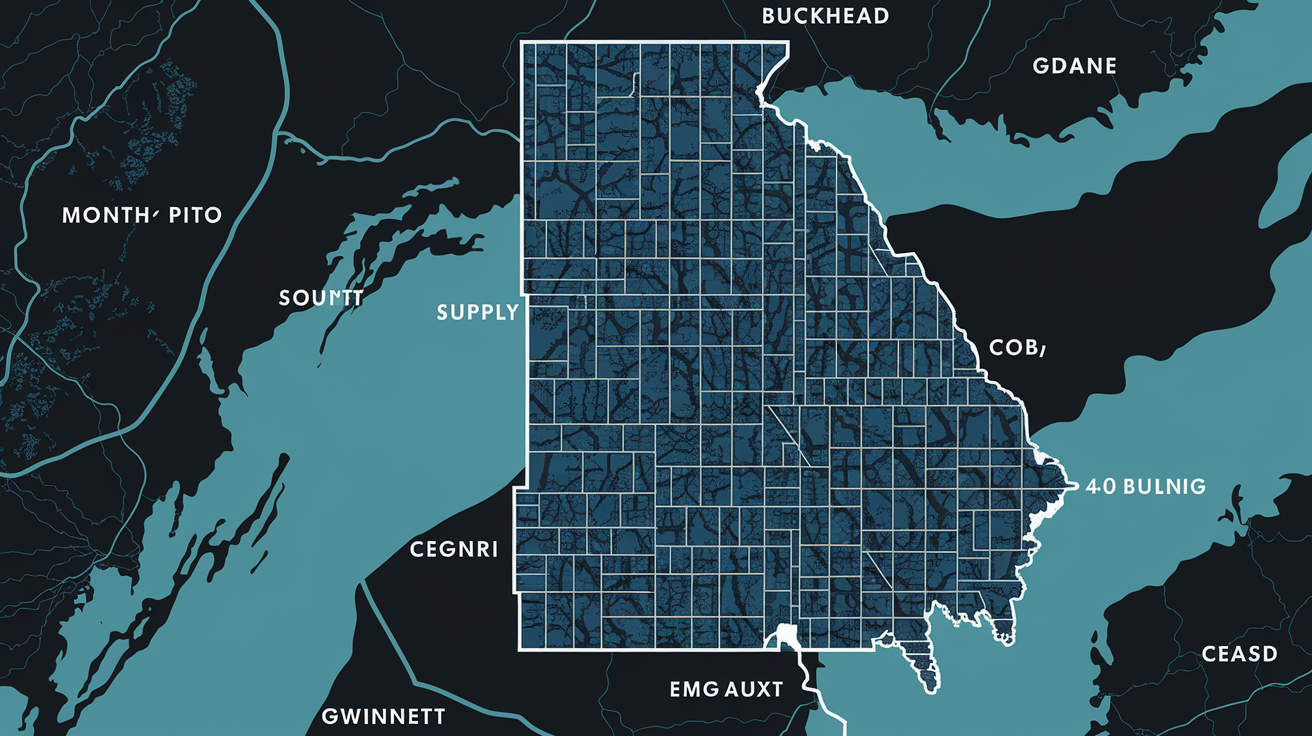
As of late 2024 and early 2025, metro Atlanta is carrying roughly 2.5 to 3.0 months of housing supply. A modest but meaningful recovery from the sub-two-month lows of 2021 and 2022. Active listings across the metro range from about 12,000 to 15,000 homes at any given moment, depending on the season and exact count date. That’s still tight by historical norms, but it represents a year-over-year increase of around 10 to 15 percent compared to the same period in 2023. Buyers today see more choice than they did two years ago, but the market hasn’t returned to the four to five months of supply typical of pre-pandemic Atlanta.
The distribution of inventory is uneven across the metro. Intown neighborhoods and premium suburban pockets like Buckhead and Sandy Springs remain tighter, often closer to two months of supply. Outer counties and newer master-planned communities in Cherokee, Forsyth, and parts of Gwinnett carry three months or more. That spread matters because a buyer shopping inside the Perimeter will still face multiple-offer situations on well-priced listings, while a buyer looking in Canton or Cumming may have time to tour several homes and negotiate calmly.
| County | Months of Supply | Year-over-Year Change |
|---|---|---|
| Fulton (Intown) | 2.0–2.5 | +8% |
| Cobb | 2.8–3.2 | +12% |
| Gwinnett | 3.0–3.5 | +15% |
| Cherokee | 3.5–4.0 | +18% |
| Forsyth | 3.2–3.8 | +14% |
Historical Inventory Trends Over the Past Decade

Atlanta’s housing inventory story over the past ten years has been one of steady tightening, a pandemic-driven collapse, and a slow, uneven recovery. From 2014 through 2019, metro Atlanta typically carried between 3.5 and 4.5 months of supply. Enough to keep the market balanced with modest annual price growth in the 3 to 6 percent range. Buyers had time to tour homes, sellers priced competitively, and the market felt predictable. That baseline changed abruptly in 2020.
When the pandemic hit and mortgage rates dropped below 3 percent, inventory cratered. By late 2020 and throughout 2021 and early 2022, months of supply fell to 1.0 to 1.8 months across much of the metro. Homes sold in days, often with waived contingencies and prices well above ask. New listings were snatched up before they could accumulate into meaningful inventory. The result was the tightest seller’s market in Atlanta’s modern history, with cumulative price appreciation of 30 to 50 percent from 2019 to mid-2024 depending on the neighborhood.
Recovery began slowly in late 2022 as mortgage rates climbed and some buyers stepped back. By 2023 and into 2024, inventory started to rebuild, climbing back toward two to three months of supply. That’s still below the long-term average, but it represents real improvement for buyers who had been locked out entirely during the frenzy years. The key turning points:
2020–2021: Inventory collapse to historic lows as pandemic demand and ultra-low rates drained the market.
Mid-2022: Rate shock above 6 percent cooled buyer urgency and allowed inventory to stabilize, then slowly grow.
2023–2024: Gradual inventory rebuild, with new construction and returning sellers pushing months of supply back toward two to three months in most submarkets.
Economic and Demographic Factors Influencing Inventory

Atlanta’s housing supply over the next year will be shaped as much by job growth and population trends as by mortgage rates. The metro continues to attract corporate relocations and expansions, with major employers in technology, logistics, healthcare, and financial services adding thousands of jobs annually. Companies like Microsoft, NCR, and Northside Hospital have committed to expanding their Atlanta footprints, and that job growth pulls in new residents who need housing. When demand stays strong, inventory can grow without prices collapsing, because incoming buyers absorb the new supply.
In-migration remains a defining feature of Atlanta’s market. The metro has been one of the nation’s fastest-growing regions for the past decade, driven by affordability relative to coastal cities, a robust airport, and a diverse economy. That population growth keeps baseline housing demand elevated, which limits how much inventory can accumulate even when interest rates or economic uncertainty slow the market elsewhere. As long as people keep moving to Atlanta, sellers will have a buyer pool waiting, and inventory will rise gradually rather than flooding the market.
Mortgage rate expectations also play a major role in seller behavior. When rates climbed above 7 percent in late 2022 and into 2023, many homeowners with sub-4 percent mortgages chose to stay put rather than trade up into a higher payment. That “lock-in effect” suppressed inventory for nearly two years. Now, with rates stabilizing in the mid to high sixes and economists forecasting modest easing over the next year, some of that reluctance is lifting. Sellers who delayed moves for job, family, or lifestyle reasons are starting to list again. They know rates won’t return to pandemic lows but also aren’t likely to spike dramatically higher in the near term.
New Construction and Development Pipeline

Metro Atlanta remains one of the most active homebuilding markets in the Southeast, and that construction pipeline will be a major contributor to inventory growth over the next twelve months. Single-family permits across the metro have held relatively steady, with builders focusing on suburban counties where land is available and buyer demand for new homes remains strong. Cherokee, Forsyth, Gwinnett, and parts of Cobb and Paulding counties continue to see new subdivisions break ground, adding hundreds of homes per quarter to the for-sale inventory pool. Those homes take six to twelve months from permit to completion, so permits issued in late 2024 and early 2025 will hit the market throughout 2025 and into early 2026.
Multifamily construction is also reaching a peak delivery phase. Apartment and condo projects that started in 2022 and 2023 are now completing, especially along transit corridors, in Midtown, and in mixed-use developments near job centers. While most of those units are rentals, the sheer volume of new multifamily supply can indirectly ease pressure on the for-sale market by giving renters who might otherwise stretch to buy a home more rental options. In some cases, condo conversions or for-sale townhome components within larger projects will add directly to the ownership inventory.
Expected contributions from new construction:
Single-family completions: Roughly 10,000 to 15,000 new single-family homes will deliver across the metro over the next year, concentrated in northern and eastern suburban counties.
Townhome and attached product: Builders are responding to affordability pressure by shifting toward townhomes and smaller-lot homes, especially in Gwinnett, Cobb, and South Fulton, adding mid-priced inventory.
Infill and redevelopment: Inside the Perimeter, infill projects in neighborhoods like the Upper Westside, Chamblee, and along the BeltLine will add smaller volumes of higher-priced homes that compete with resale listings.
Build-to-rent: Some builder activity is shifting toward build-to-rent single-family communities, which won’t add to for-sale inventory but may reduce investor competition for resale homes.
Seasonal Patterns Affecting Inventory

Atlanta’s housing market follows a predictable seasonal rhythm, and those patterns will influence how inventory levels look at different points over the next year. Historically, inventory hits its low point in December, January, and February, when fewer sellers want to deal with showings during the holidays and cold weather. Listings then start to climb in March and April, peak in May and June as families aim to move before the school year starts, and gradually taper off again through the fall. Even if the overall trend is upward, buyers shopping in winter will see less inventory than buyers shopping in late spring.
For sellers, listing in April, May, or early June typically brings the largest buyer pool and the fastest sales. If you list in July or August, you’ll still find buyers, but competition among sellers is higher because more homes are on the market at once. Listing in November or December often means your home sits longer, unless it’s priced very competitively or located in a high-demand neighborhood. Buyers who shop off-season can sometimes find motivated sellers willing to negotiate more, especially if a home has been listed since summer without selling.
Neighborhood-Level Inventory Differences
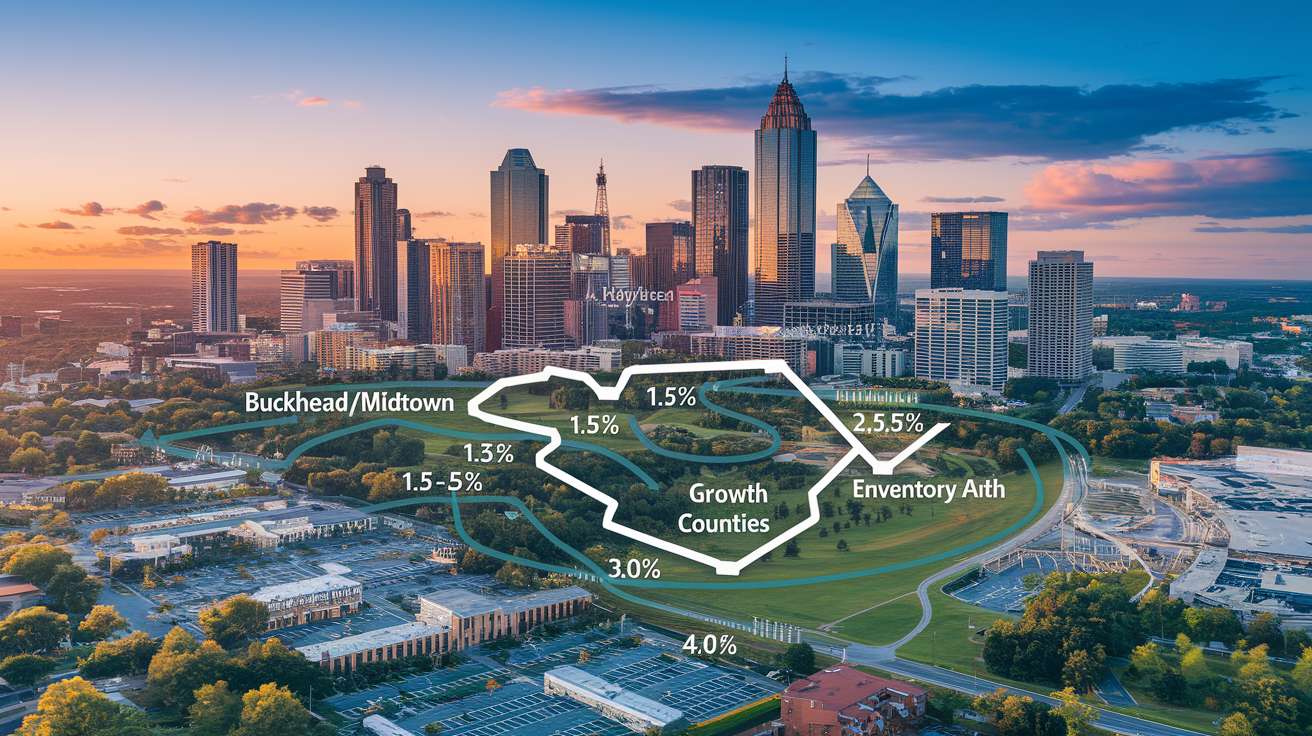
Inventory levels across metro Atlanta vary widely depending on location, price point, and local development patterns. Intown neighborhoods like Buckhead, Midtown, Virginia-Highland, and Decatur consistently run tighter than the metro average, often carrying closer to 1.5 to 2.5 months of supply even as the overall market loosens. Those areas attract strong demand from buyers who want walkability, proximity to jobs, and established amenities, and new supply is constrained by limited land and zoning. A well-priced home in Buckhead or near the BeltLine can still draw multiple offers and sell in under two weeks.
Suburban markets show more variation. Established suburbs like Sandy Springs, Roswell, and Alpharetta tend to fall somewhere in the middle, with two to three months of supply and a mix of move-up buyers and families prioritizing schools. Farther out, counties like Cherokee, Forsyth, and Paulding often carry three to four months or more, especially for new construction and larger homes. Those areas offer more choice and longer decision windows for buyers. But they also mean sellers need to price carefully and market actively to stand out.
Emerging neighborhoods tied to infrastructure projects are seeing localized inventory shifts. Areas near planned MARTA expansions, BeltLine extensions, or new commercial developments, like Chamblee, Doraville, the Upper Westside, and parts of East Point and Hapeville, are experiencing both rising demand and new construction. That can create short-term inventory spikes followed by rapid absorption as buyers recognize future value.
| Area | Current Inventory Level | Expected Trend |
|---|---|---|
| Buckhead / Midtown | 1.5–2.5 months | Stable to slight increase |
| Suburban Core (Sandy Springs, Alpharetta) | 2.5–3.0 months | Modest increase |
| Growth Counties (Cherokee, Forsyth, Gwinnett) | 3.0–4.0 months | Noticeable increase |
| Emerging Corridors (Chamblee, Upper Westside) | 2.0–3.0 months | Variable, tied to project delivery |
What the Forecast Means for Buyers and Sellers

For buyers, a modest increase in inventory over the next twelve months means more homes to choose from, more time to make decisions, and slightly better odds of negotiating price or concessions. You won’t have the overwhelming selection of a true buyer’s market, but you also won’t face the same pressure to waive inspections or offer 10 percent over ask just to compete. Focus your search on neighborhoods where inventory is already climbing, like parts of Gwinnett, Cherokee, or Forsyth. Expect to have a realistic shot at negotiating 1 to 3 percent off the list price if a home has been on the market for 30 days or more. Get fully pre-approved, not just pre-qualified, so you can move quickly when you find the right home, because desirable listings will still attract competition.
Sellers will need to adjust expectations. The days of listing a home on Thursday and accepting the best of five offers by Sunday are mostly over, except in the tightest intown submarkets. Plan for your home to sit on the market for 20 to 45 days rather than under two weeks, and price within 1 to 3 percent of recent comparable sales to attract early showings. Homes that sit longer than 30 days without an offer often need a price adjustment or better marketing. Invest in basic updates, deep cleaning, and staging if your home needs help competing with new construction or recently renovated listings, because buyers in a slightly looser market will compare more carefully.
Practical considerations for buyers:
Target neighborhoods with three-plus months of supply for the best negotiating leverage and selection.
Expect 30 to 60 days from offer to close, with slightly longer windows for inspection and appraisal contingencies to play out.
Be ready to negotiate seller concessions, like repair credits or closing cost help, especially on homes that have been listed for more than a month.
Practical considerations for sellers:
List between April and June to catch peak buyer traffic and seasonal demand.
Price competitively from day one, within 1 to 3 percent of comps, to generate showings and offers before inventory climbs further.
Prepare your home as if competing with new construction. Turnkey presentation matters more in a market with more choice.
Final Words
Inventory looks likely to rise modestly over the next year, driven by more new listings, steady job growth, and a busy construction pipeline. Months of supply around 2.5–3.0 mean the market will loosen a bit but stay relatively balanced. Mortgage rates easing slightly could bring a few more buyers and sellers back.
Neighborhoods will still differ—inner-city areas stay tight while many suburbs show more choice.
Overall, this atlanta housing inventory outlook next 12 months points to more options without big price swings. That’s a practical, positive setup if you’re planning a move.
FAQ
Q: What is the real estate outlook for 2026 in Atlanta and what will the housing market look like in early 2026?
A: The real estate outlook for 2026 in Atlanta and early 2026 is modest inventory growth (5–10%), with new listings up about 8–12% and rates easing slightly—moving the market toward balance, though tight pockets and strong demand remain.
Q: Are home prices in Atlanta dropping?
A: Home prices in Atlanta are mostly flattening rather than sharply dropping; some suburbs see small declines while core areas stay supported by low supply, so outcomes will vary by neighborhood and price tier.
Q: What is the hardest month to sell a house?
A: The hardest month to sell a house is December (and often January), when buyer traffic falls for holidays and winter; late spring and early summer usually bring faster sales, higher traffic, and stronger offers in Atlanta.