

Think buying in Atlanta is out of reach?
You might qualify for first-time buyer help if your household income and credit fit program rules.
Most local programs use HUD’s AMI (Area Median Income) to set income caps — commonly 80% to 120% of AMI — and many lenders expect a credit score around 640–660.
This post shows where those cutoffs usually land across Fulton, DeKalb, Cobb and Gwinnett, what documents you’ll need, and the quick steps to check if you qualify.
Quick Eligibility Check for Atlanta First-Time Homebuyer Programs

Most Atlanta homebuyer programs use the same basic requirements. Your household income needs to hit Area Median Income limits that HUD publishes every year. Credit scores usually need to be 640 to 660, though some programs accept lower. You’ll show stable work history, typically two years in the same field or with the same employer, and you can’t have owned a home in the past three years. That’s the federal definition of first-time buyer. The property has to sit inside eligible Atlanta city limits or approved counties, and you’re living there as your main home.
You’ll also complete a HUD-approved homebuyer education course before closing. It’s not optional. Lenders check for the certificate, and program staff review it during your application. Some programs cap how much cash or liquid assets you can hold at closing, often around $25,000, to make sure help goes to buyers who actually need it.
Here’s what most Atlanta programs look for:
- Household income at or below 80 to 120% AMI, depends on the program.
- Minimum credit score between 640 and 660.
- Steady employment for at least two years.
- No homeownership in the past 36 months. Exceptions exist for repeat buyers in target areas.
- Property within city limits or approved metro counties, used as your primary home.
Income Limits for Atlanta Homebuyer Programs

Income limits connect directly to HUD’s Area Median Income figures, which get updated each spring. Programs set caps as percentages of AMI. Could be 80%, 100%, or 120%. Those percentages shift your maximum income up or down based on how many people live in your household. A single buyer faces a lower dollar cap than a family of four. Georgia Dream often sets limits around $86,000 for a household of one or two and closer to $105,000 for larger families. But those numbers move as AMI adjusts year to year.
Invest Atlanta and PATH use similar formulas. Some programs target lower earners by capping eligibility at 80% AMI, around $68,000 for a two-person household in recent years. Others, like certain Georgia Dream tiers, accept buyers earning up to 120% AMI, which can push limits past $100,000 for bigger households. Always confirm current year figures with the program administrator or your lender. Outdated numbers waste your time.
| Program Name | Income Limit Basis | Max Income Range |
|---|---|---|
| Georgia Dream | Varies by county and household size | ~$86,000–$105,000 |
| Invest Atlanta (HOME Atlanta 4.0) | 80% AMI typical | ~$68,000–$85,000 |
| PATH Program | Program-specific AMI thresholds | Varies by metro area |
| Atlanta Housing DPA | 80% AMI | ~$68,000–$85,000 |
Credit Score & Debt Requirements

Georgia Dream generally asks for a minimum credit score around 640, though some lenders prefer 660 to cut their risk. Invest Atlanta programs often set the floor at 660. If your score sits below those marks, you’ll need to spend a few months paying down late accounts, disputing errors, or adding positive payment history before you apply. Medical debt usually doesn’t count unless a court judgment exists, which gives you breathing room if hospital bills tanked your score.
Debt to income ratio measures your monthly debt payments against your gross monthly income. Most Atlanta programs cap DTI between 45% and 50%. So if you earn $5,000 a month, your total debt payments can’t exceed roughly $2,250 to $2,500. That includes student loans, car note, credit cards, future mortgage payment. Lenders calculate DTI two ways. Front end is housing costs only. Back end is all debt. Both must stay below the program’s thresholds.
Key numbers:
- Minimum credit score: 640 to 660 depending on program.
- DTI cap: typically 45 to 50% of gross monthly income.
- Medical debt: ignored unless a judgment appears.
- Bankruptcy: must be at least four years past discharge. Some programs allow shorter waits.
Residency, Employment, and First-Time Buyer Status

Atlanta assistance programs define “first-time buyer” the way the federal government does. You haven’t owned a home in the past three years. If you sold a house four years ago, you qualify again. Some programs carve out exceptions for repeat buyers purchasing in designated revitalization zones, but those exceptions are narrow and require administrator approval.
Residency rules vary. Most programs require you to occupy the home as your primary residence for a minimum period, often five to ten years, or repay the assistance if you move or sell early. A few programs, like Invest Atlanta’s forgivable loans, erase the debt entirely after you hit the occupancy milestone. Employment history matters because lenders need proof of stable income. Two consecutive years in the same job or field is standard. Gaps for school, medical leave, or military service often get exceptions if you document them properly.
You’ll also need to show you’ve lived or worked in metro Atlanta for at least six months to a year before applying. That includes Fulton, DeKalb, Cobb, Gwinnett, and surrounding counties. Citizenship or permanent legal residency is required. Programs don’t assist undocumented buyers or those on temporary visas.
Property Requirements and Purchase Price Limits

Eligible properties must meet program rules on location, type, and condition. Most Atlanta assistance targets single family homes, townhomes, and condos within city limits or approved metro counties. A few programs, like Georgia Dream, allow two to four unit properties as long as you occupy one unit as your primary home. Mobile homes and co-ops usually don’t qualify.
Purchase price caps protect programs from subsidizing luxury homes. Georgia Dream sets county by county limits, often ranging from $250,000 in rural areas to $450,000 in metro Atlanta. Invest Atlanta’s ATL Home Renovation Advantage caps eligible homes at $375,000. If the home you want costs more, you’ll need to cover the gap with a larger down payment or look for a different property. Properties must also pass inspection and appraisal, meeting local building codes and lender standards for safety and value.
| Program | Price Cap | Property Rules |
|---|---|---|
| Georgia Dream | ~$250,000–$450,000 by county | 1–4 units, primary residence, meets code |
| Invest Atlanta AHRA | $375,000 | New or existing single-family, townhome, condo |
| Atlanta Housing DPA | Varies by neighborhood | Must be in approved Atlanta Housing zones |
| PATH Program | Program-specific | Eligible metro areas, primary residence |
Required Documentation for Atlanta Assistance Programs

Every program asks for roughly the same stack of paperwork. You’ll need recent pay stubs from the last two months, W-2 forms from the past two years, and federal tax returns for the same period. Self-employed buyers add Schedule C or 1099 forms and a profit and loss statement. Bank statements covering the last two to three months prove you have funds for your down payment and reserves. Lenders also check your rental payment history, so gather twelve months of canceled checks or a letter from your landlord.
Bring a government issued photo ID and proof of any other income. Social Security benefits, child support, alimony, or disability payments. If you’re using gift funds from family, you need a signed gift letter and bank statements showing the donor’s ability to give. Programs that limit liquid assets will look closely at your account balances, so be ready to explain large deposits or transfers.
Your document checklist:
- Last two months of pay stubs.
- W-2 forms, past two years, or 1099s if self-employed.
- Federal tax returns, past two years.
- Two to three months of bank statements. Checking, savings, retirement accounts.
- Government issued photo ID.
- Twelve months of rental payment history or landlord letter.
- Gift letter and donor bank statements if applicable.
- Proof of any additional income like Social Security or child support.
Mandatory Homebuyer Education Courses

Atlanta programs require an eight hour HUD approved homebuyer education course before you close. The course covers budgeting, mortgage types, down payment strategies, closing costs, and how to avoid foreclosure down the road. Some programs accept online courses. Others insist on in person or live virtual sessions. You must complete the course through an approved provider. Check the program’s website for the current list. Submit your certificate with your application.
Invest Atlanta’s AHRA program charges a $1,200 fee that covers the cost of your homebuyer education, and that fee is due when you enroll. Other programs offer free or low cost classes through nonprofit housing counselors. The certificate stays valid for a limited time, usually one to two years, so don’t take the course too early or you’ll need to retake it if your home search drags on.
What to know about the course:
- Eight hour duration. Some programs accept shorter versions.
- Must be HUD approved and taken through a listed provider.
- Certificate required at application. Expires after one to two years.
Major Atlanta First-Time Homebuyer Programs Explained

Georgia Dream
Georgia Dream, run by the Georgia Department of Community Affairs, offers down payment assistance up to $10,000, or 5% of the purchase price, whichever is less, as a zero interest second loan with no monthly payment. Public service professionals like teachers, nurses, firefighters, and police officers, plus active military or buyers with disabled family members, can receive up to $12,500 or 6% of the purchase price. The program requires a 30 year fixed rate mortgage from a Georgia Dream participating lender. Could be conventional, FHA, VA, or USDA. Income limits vary by county and household size, often capping around $86,000 to $105,000. Credit score minimums sit near 640, and you must meet the three year first-time buyer rule or qualify under a program exception for repeat buyers in target areas.
Invest Atlanta Programs
Invest Atlanta runs several down payment assistance tracks. HOME Atlanta 4.0 typically offers up to $20,000 as a forgivable loan. You’re required to stay in the property five years. ATL DPA provides similar amounts with the same forgiveness timeline. The ATL Home Renovation Advantage gives up to $10,000 in forgivable assistance, forgiven after five years, and caps eligible home prices at $375,000. AHRA requires you to contribute $1,200 for homebuyer education and work with an approved lender and closing attorney. Income limits usually align with 80% AMI, and minimum credit scores hover around 660. Residency rules are strict. Invest Atlanta programs often require documented Georgia residency for at least six months before you apply.
PATH Program
The PATH program serves eligible buyers across metro Atlanta counties, offering down payment and closing cost assistance. Exact assistance amounts and eligibility criteria depend on the specific PATH track and county, but the program generally follows HUD AMI thresholds and requires completion of homebuyer education. PATH often partners with local lenders and nonprofit counselors to make the application process easier. If you’re buying in a designated revitalization area, PATH may offer higher assistance amounts or relaxed repeat buyer rules. Check the program’s county specific guidelines to confirm income limits and property price caps.
Other Local or Partner Programs
Atlanta Neighborhood Development Partnership offers a Veterans Program with up to $7,500 in down payment assistance, delivered as a seller contribution at closing. The program serves honorably discharged veterans, active duty service members, reservists, guard members, and Gold Star families. Income must be at or below 120% AMI, and there’s no first-time buyer requirement. Previous homeownership doesn’t disqualify you. Atlanta Housing’s DPA program provides up to $20,000, or $25,000 for military, public safety, healthcare, and education professionals, forgiven after ten years of owner occupancy. Applicants must earn 80% AMI or less and have lived in Georgia for at least six months. Both programs require homebuyer education and can be combined with other assistance in some cases.
Step-by-Step Application Process for Atlanta Buyers
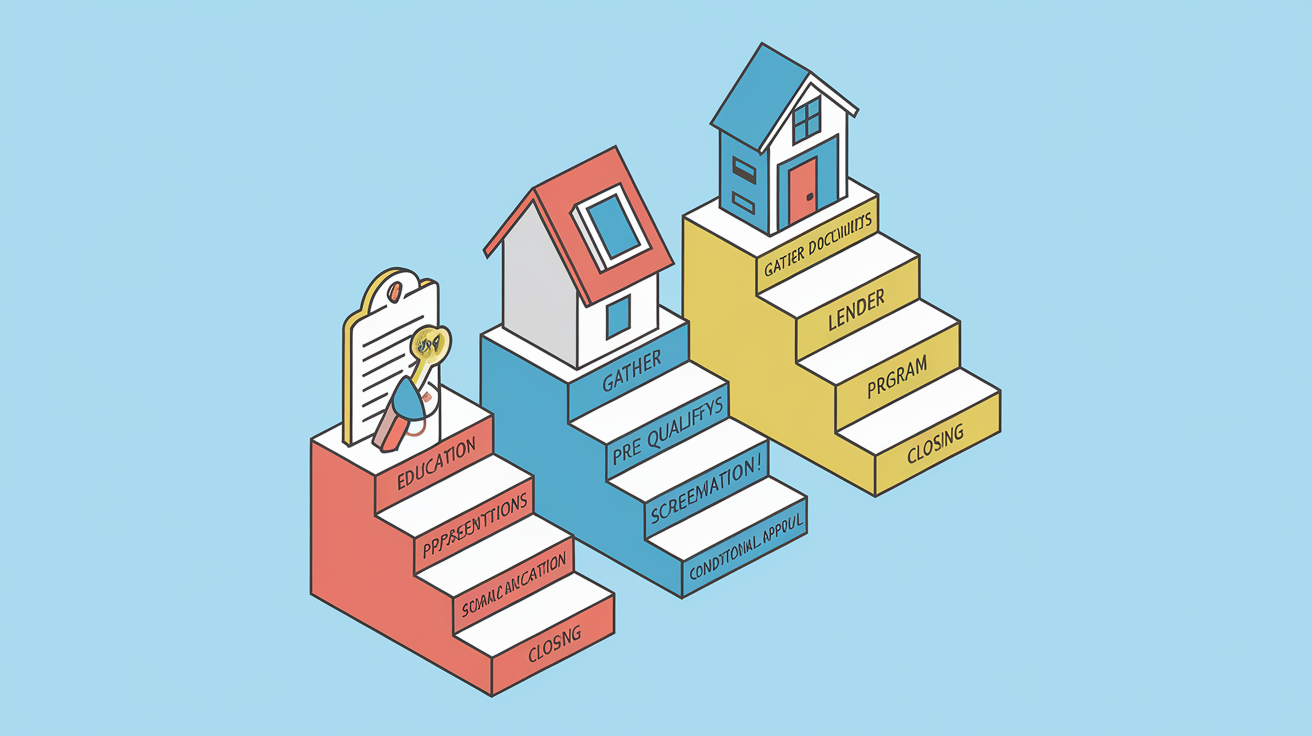
The application process moves faster when you tackle steps in order and keep your paperwork organized. Missing one piece can stall your approval for weeks, especially during busy spring and summer buying seasons.
Here’s how to move through the process:
Complete a HUD approved homebuyer education course and save your certificate. Many programs won’t let you submit an application without it.
Check current year income limits and price caps on the program websites. Limits change every spring when HUD updates AMI figures.
Gather your full document stack. Pay stubs, W-2s, tax returns, bank statements, ID, and rental history. Organize digital copies and keep printed sets in a folder.
Select a participating lender from the program’s approved list. Not every Atlanta lender works with every program, so confirm upfront.
Submit a pre-qualification or pre-approval application with your chosen lender. This locks in your credit review and confirms your budget before you shop.
Submit your program application and include your homebuyer education certificate. Could be an interest form, online portal, or paper form. Some programs require a good faith deposit at this stage.
Attend any required virtual or in person screenings, interviews, or family selection committee meetings. Programs like Atlanta Habitat conduct home interviews as part of the approval process.
Receive conditional approval, then find an eligible property, make an offer, and complete inspections, appraisal, and underwriting. Your lender and program administrator will coordinate final approvals before closing.
Final Words
Start by running the quick eligibility check: income, credit, employment history, and first‑time buyer status. Then review income limits, credit and DTI thresholds, property price caps, residency rules, required documents, and HUD‑approved education.
Compare major local options — Georgia Dream, Invest Atlanta, PATH — and pick an approved lender to walk you through specifics.
If you follow the checklist and steps here, you’ll know exactly how to qualify for first-time homebuyer programs in atlanta, from paperwork to the application timeline. You can do this; start with pre‑approval and a short course and you’ll be ready to apply.
FAQ
Q: What credit score do I need to buy a $400,000 house?
A: The credit score you need to buy a $400,000 house is typically 620+ for a conventional loan, but many Atlanta programs and better rates ask for 640–660 or 700+. Lender, down payment, and DTI (debt-to-income ratio) also matter.
Q: What are the requirements for first-time home buyers in GA?
A: The requirements for first-time home buyers in Georgia include income limits tied to HUD AMI (area median income), a minimum credit score often around 640–660, primary-residence intent, HUD-approved homebuyer education, and stable employment and documentation.
Q: What disqualifies you as a first-time home buyer?
A: You’re disqualified as a first-time home buyer if you’ve owned a principal residence within the past 36 months; programs also deny eligibility for failing income limits, poor credit, insufficient documentation, or not intending to occupy the home.
Q: What’s the minimum down payment for a $300,000 house?
A: The minimum down payment for a $300,000 house depends on loan type: FHA 3.5% ($10,500), conventional first‑time options down to 3% ($9,000), while VA/USDA can be 0%. Atlanta DPA (down payment assistance) programs may reduce or cover it.