


Pricing your Atlanta home even a few percent too high is the fastest way to leave money on the table.
In Metro Atlanta the heaviest buyer traffic hits in the first two weeks, and a wrong price kills that momentum.
This post walks you through a clear, local-first plan—using recent comps, a CMA (comparative market analysis), practical adjustments, and pricing tactics—so you set a listing price that draws buyers and drives stronger offers.
Read on and you’ll know what numbers to pull, what to adjust, and how to pick a list price that targets maximum profit.
Determining the Right Atlanta Listing Price From Day One

Your listing price is the most important call you’ll make in the entire selling process. Price it right, and you’ll pull strong showings in the first two weeks, build real interest, and often land multiple offers. Price it wrong? Your home sits while buyers move on to newer inventory. The Atlanta REALTORS Association points out that homes priced correctly from the start get more showings and stronger offers than properties that launch too high and scramble to adjust later.
The heaviest buyer traffic hits in your first week or two. Buyers and their agents track new listings every day, and homes that grab attention early build real momentum. Overprice by even 5% and showings fall off. The story shifts. Buyers start asking what’s wrong, agents skip your property during tours, and you lose the early energy that creates competing offers.
Here’s a simple pricing formula to start: pull three to six homes similar to yours that sold in the last three months, average their sale prices, then adjust for things like condition, upgrades, and lot size. If three comparable homes closed at $380,000, $395,000, and $390,000, you’re looking at a baseline around $388,000. From there, subtract for dated finishes or add for recent renovations. That adjusted number is your target listing price. Not your wish price. Not the amount you need to clear your mortgage.
Five core steps every Atlanta seller should take before setting a listing price:
- Pull recent sold data for homes within 0.25 to 1.0 miles, sold in the last three to six months
- Review two to four active listings buyers are comparing right now. These are your direct competition
- Adjust the average sold price up or down based on your home’s condition, upgrades, lot features, and curb appeal
- Check days on market for your neighborhood. If comps are selling in under 14 days, demand is high. Over 30 days? Price more conservatively
- Set your list price at or slightly below the adjusted market value to maximize early showings and create urgency. Pricing 1–3% under can generate multiple offers
Understanding Atlanta Market Data for Your Home’s Price

Before you can price accurately, you need to know what’s actually happening in your specific Atlanta neighborhood right now. Market conditions shift month to month. What worked last spring may not work this winter. The Atlanta REALTORS Association and Federal Reserve Bank of Atlanta both track regional growth and demand, and sellers who use this data make smarter pricing decisions.
Focus on four key metrics: median sale price (what homes in your area are actually selling for), days on market (how fast properties move), active inventory (how many competing homes are listed), and the pending to active ratio (how many listings go under contract versus how many sit). If median prices are rising and days on market are dropping, you’re in a strong seller’s market and can price more confidently. If inventory is climbing and homes sit longer, you’ll need to price more carefully to stand out.
| Metric | What It Means for Pricing |
|---|---|
| Days on Market (DOM) | If most homes sell in under 14 days, demand is strong. Price at market or slightly under to trigger competition. Over 30 days signals softer demand. Price conservatively. |
| Median Sale Price | Shows the midpoint of recent sale prices in your neighborhood. Use this as your baseline, then adjust for your home’s specific features and condition. |
| Active Inventory | High inventory (more listings than usual) means more buyer choice. You need to price sharply to compete. Low inventory favors sellers and supports stronger pricing. |
| Pending to Active Ratio | If many listings go pending quickly (ratio above 0.5), buyers are acting fast. Price at market. If few go pending (below 0.3), buyers are cautious. Adjust pricing and presentation. |
Using a CMA, Appraisal, and Online Valuation Tools Together

No single valuation method gives you the complete picture. Sellers who combine a Comparative Market Analysis, a professional appraisal, and online estimate tools make the most informed pricing decisions. Each method has strengths and blind spots, so the goal is to triangulate and confirm your target range.
CMA Basics
A Comparative Market Analysis (CMA) is a report your agent creates using recently sold homes that match your property in size, age, and location. The CMA pulls sales from the last three to six months, filters for similar features, and shows what buyers actually paid. Not what sellers hoped to get. A good CMA includes three to six sold comps, two to four active listings for context, and one or two expired or withdrawn listings to show what didn’t work. The CMA is the most reliable tool because it reflects real market behavior in your exact neighborhood.
Professional Appraisal
An appraisal is an independent opinion of value completed by a licensed appraiser, typically costing $300 to $700 in Metro Atlanta. Appraisers measure the home, inspect condition, review recent sales, and apply standardized adjustments for differences like square footage, bedrooms, and upgrades. The appraiser’s number is often close to your CMA result, but appraisals focus on what a lender will accept, not what a motivated buyer might pay in a hot market. If you’re selling in a strong neighborhood with limited inventory, the appraisal may lag slightly behind actual buyer demand.
Online Estimate Tools
Zillow Zestimate, Redfin Estimate, and similar tools use algorithms based on tax records, past sales, and broad market trends. They’re fast and free, but they don’t see inside your home. If you renovated your kitchen last year or never updated the bathrooms, the online estimate won’t know. In Metro Atlanta, where neighborhood character and condition vary widely, online estimates can miss by 5–15%. Use them as a rough sanity check, not your primary pricing guide.
Here’s how to combine all three methods into one confident price:
- Start with your agent’s CMA as the foundation. It’s local, recent, and specific to buyer behavior in your area.
- Compare the CMA range to the appraisal (if you ordered one) and to online estimates. If all three align within 3–5%, you have a solid target.
- If the online estimate is significantly higher or lower, trust the CMA and appraisal. They account for condition and upgrades the algorithm can’t see.
Adjusting Comparable Sales for Atlanta Home Features
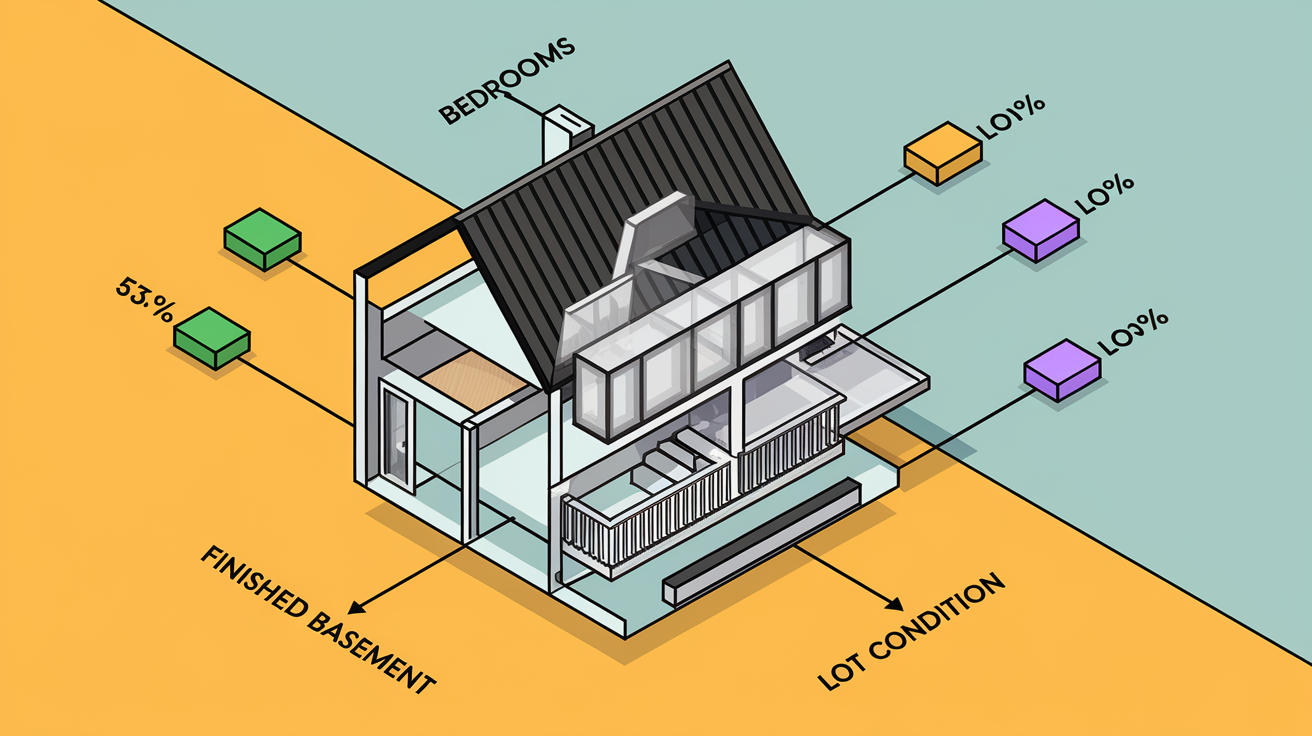
Once you have your base comps, you need to adjust for differences between those homes and yours. No two properties are identical, and buyers pay more for features they want and less for issues they’ll need to fix. Adjustments can be percentage based (for example, reduce 5% for outdated finishes) or dollar based (add $15,000 for a finished basement).
Start by comparing square footage. If a comp is 2,000 square feet and sold for $400,000, that’s $200 per square foot. If your home is 1,800 square feet, a simple calculation gives you $360,000 as a baseline. From there, adjust for layout, lot size, condition, and extras like pools or garages. A poorly designed 2,000 square foot ranch may sell for less per square foot than a well laid out 1,800 square foot home with vaulted ceilings and natural light.
| Feature | Typical Adjustment Consideration |
|---|---|
| Bedrooms / Bathrooms | Add or subtract for differences. An extra full bath may add $5,000–$15,000 depending on neighborhood. An extra bedroom adds $10,000–$25,000 in family focused areas. |
| Finished Basement | Worth roughly 50–70% of above grade square footage. A 500 sqft finished basement might add $15,000–$25,000 in value, depending on quality and legal egress. |
| Lot Size and Yard | Larger lots or desirable features (fenced yard, mature trees, level terrain) can add $5,000–$20,000. Steep or unusable lots may reduce value. |
| Garage / Parking | A two car attached garage typically adds $10,000–$20,000 in suburban Atlanta markets. Carport or no garage reduces appeal and price in family neighborhoods. |
| Condition and Updates | Deduct 5–10% for dated kitchens, old HVAC, or deferred maintenance. Add $10,000–$50,000 for high end kitchen or bath renovations completed in the last 3–5 years. |
Strategic Atlanta Pricing Approaches to Attract Buyers

Pricing isn’t just about hitting the “right” number. It’s about positioning your home to trigger the buyer behavior you want. Different pricing strategies lead to different outcomes, and the best approach depends on your timeline, your home’s condition, and current competition. Sellers who understand pricing psychology often see stronger results than those who simply match the average comp.
Pricing slightly below market can create urgency and drive multiple offers. When buyers see a well maintained home priced 1–3% under comparable listings, they assume it will move fast and often submit offers quickly to avoid losing out. This tactic works best in strong seller’s markets or when your home shows exceptionally well. For example, if comps suggest $385,000, listing at $374,900 may generate three offers in the first week, and the final sale price can exceed your initial list price.
Anchor pricing uses round numbers and perception to your advantage. Listing at $399,000 instead of $405,000 captures buyers searching up to $400,000, while $405,000 pushes you into the next price bracket where competition may be thinner but buyer volume drops. Odd number pricing (like $387,900 instead of $390,000) creates the impression of precision and value, even though the difference is small. Both tactics influence how buyers filter searches and compare listings.
Avoid the temptation to “test the market” by pricing 5–10% above comps. Overpriced homes lose momentum in the critical first two weeks, and later price cuts signal desperation. Buyers compare your listing to everything else available right now, and if your price doesn’t align with condition and features, agents skip it entirely during showing tours.
Six tactical pricing strategies used by Atlanta sellers:
- Price 1–3% under market to attract multiple offers and create competition. Best when your home is in excellent condition and inventory is low
- Price exactly at market (within 1–2% of median comps) to appeal to well qualified buyers who’ve researched values and are ready to move quickly
- Use odd number pricing ($324,900 instead of $329,000) to appear precisely valued and capture search filters just below round thresholds
- Avoid pricing above $X50,000 thresholds (like $451,000) that push you out of common search ranges. Drop to $449,900 to stay visible to more buyers
- Price slightly above market only if your home has unique features (like a large lot, premium location, or extensive recent renovations) that justify a 2–4% premium
- Never overprice by more than 5% expecting negotiation room. Buyers today are informed, and overpriced listings sit unseen while competing homes sell
How Home Condition, Upgrades, and Presentation Affect Price
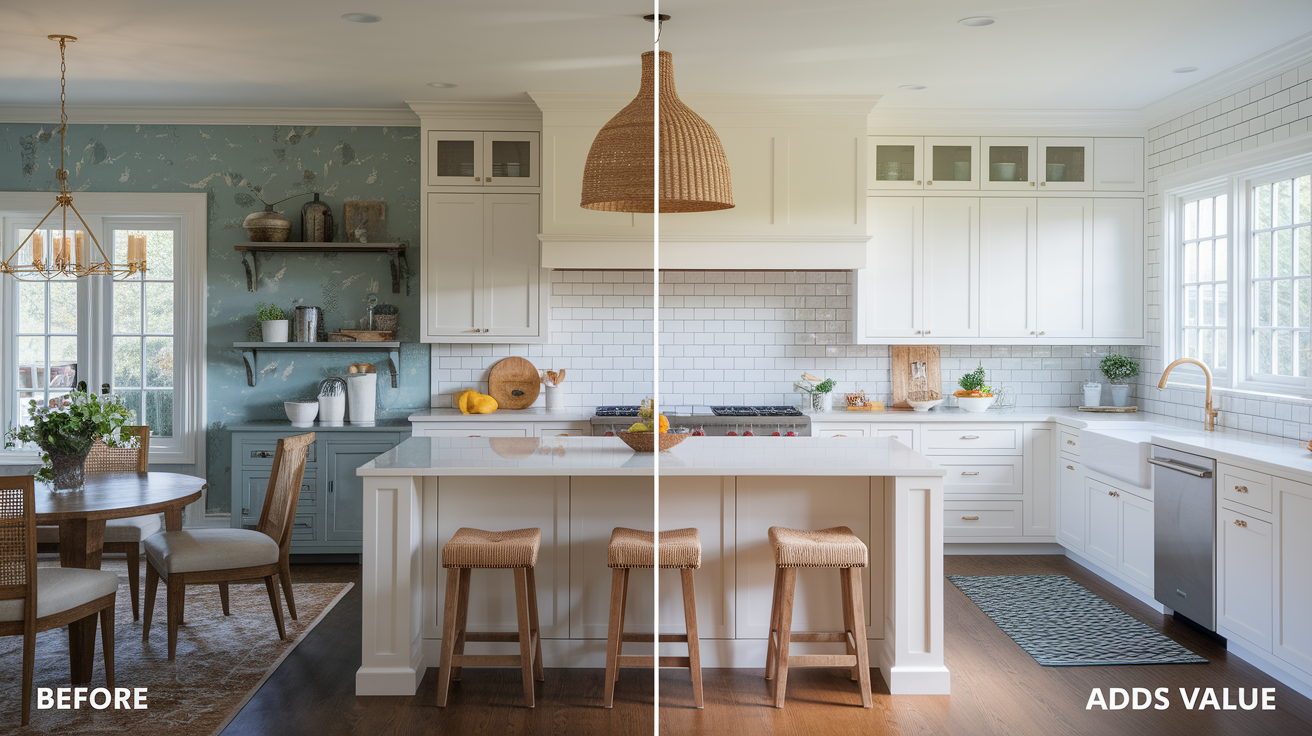
Buyers don’t just compare square footage and location. They compare how your home looks and feels against everything else in their budget. Two identical floor plans on the same street can sell for $30,000 apart if one has been updated and the other hasn’t. Condition, staging, and presentation directly impact both your listing price and the strength of offers you receive.
Recent renovations justify higher pricing, but only if buyers can see the value. A $40,000 kitchen remodel might add $25,000–$35,000 in sale price, depending on finishes and neighborhood expectations. Dated kitchens, worn carpets, or peeling exterior paint typically reduce value by 5–10% compared to move in ready comps. Staging can cost $1,000–$5,000 in Metro Atlanta, but it helps buyers visualize themselves in the space and often leads to faster offers at or above asking price. Minor repairs (fixing leaky faucets, patching drywall, refreshing paint) cost $500–$5,000 but remove objections that cause buyers to lowball or walk away.
Atlanta Buyer Expectations
Atlanta buyers today have seen hundreds of listings online before they ever schedule a showing. They compare photos, condition descriptions, and price across every home in their search. If your listing photos show clutter, dark rooms, or visible wear, buyers mentally deduct thousands before they even visit. Homes that photograph well, show clean and neutral spaces, and highlight recent updates consistently outperform similar properties that skip preparation. Professional photography, which costs around $200–$400, makes a measurable difference in click through rates and showings during your critical first week on market.
Here’s how preparation translates into pricing power:
- Fresh interior paint (cost $1,500–$3,500 for a full home) can justify listing 2–3% higher by eliminating the “fixer” perception and appealing to buyers who want move in ready
- Curb appeal improvements like trimmed landscaping, mulch, and a clean front door (cost $300–$1,000) increase showing requests and set a positive first impression that carries through the tour
- Pre listing inspection (cost $400–$600) lets you address issues before buyers find them, reducing negotiation friction and protecting your list price during the offer phase
- Staging key rooms (living room, master bedroom, kitchen) shows buyers the home’s potential and reduces time on market, which protects pricing strength
- Professional photography and virtual tour make your listing competitive online, where most buyers decide whether to schedule a showing within 30 seconds of opening the listing
Seasonal and Neighborhood Timing Considerations in Atlanta Pricing

When you list matters almost as much as how you price. Metro Atlanta’s real estate market follows predictable seasonal patterns, and buyer volume shifts based on school calendars, weather, and work schedules. Listing during the strongest months means more competition among buyers and more pricing confidence for sellers. Listing during slower periods requires sharper pricing and stronger marketing to stand out.
March through May is consistently the strongest selling season in Atlanta. Families want to close before the school year ends, weather is pleasant for moving, and tax refunds give buyers extra cash for down payments. Homes listed in this window typically see the most showings, the shortest days on market, and the highest sale price to list price ratios. November through January is the slowest season. Fewer buyers are actively searching, holidays interrupt schedules, and cold weather reduces curb appeal. If you list in winter, expect to price 2–3% more conservatively than you would in spring to compensate for lower buyer volume.
Neighborhood characteristics also shape pricing decisions. Transit access, walkability, school ratings, and proximity to job centers create premiums that vary street by street. Buyers pay more per square foot in neighborhoods with high rated schools, even if the home itself is average. New construction nearby can either help your pricing (by attracting buyers to the area) or hurt it (by offering competing inventory with builder incentives and warranties).
Key timing and location factors that influence your price include:
- List in March–May for maximum buyer competition and pricing strength. If selling in November–January, reduce your target price by 2–3% to account for seasonal softness
- School district and ratings can add 5–15% to value in Metro Atlanta. Confirm current ratings and highlight proximity to top schools in marketing materials
- Transit and walkability premiums apply in neighborhoods near MARTA stations or walkable retail. Buyers pay extra for convenience, especially in dense areas like Decatur or Midtown
- New construction competition within a mile can pressure resale pricing. If builders offer incentives (like rate buydowns or closing cost credits), you may need to price 3–5% under new builds to attract buyer interest
Calculating Net Proceeds to Finalize Your Price

Setting a listing price isn’t just about market value. It’s about knowing what you’ll actually walk away with after all costs are deducted. Many sellers focus on the sale price and forget to subtract agent commissions, closing costs, repairs, and concessions. Running a net proceeds calculation before you list helps you set realistic expectations and decide whether your target price makes financial sense.
Start with your estimated sale price, then subtract the buyer’s agent commission and your listing agent commission, typically a combined 5–6% of the sale price. On a $400,000 sale, that’s $24,000 in commission. Add another $6,000 in estimated closing costs (title fees, attorney fees, transfer taxes, prorations, and seller concessions), and your gross proceeds drop to around $370,000. From there, subtract your remaining mortgage balance and any repairs or credits negotiated during due diligence. What’s left is your actual net proceeds, the amount deposited into your account at closing.
| Cost Item | Estimated Amount |
|---|---|
| Agent Commission (5–6% total) | $20,000–$24,000 on a $400,000 sale |
| Closing Costs (title, attorney, transfer tax, prorations) | $4,000–$8,000 depending on county and transaction details |
| Seller Concessions or Repairs | $2,000–$10,000 if negotiated during inspection period |
| Staging and Pre Listing Prep | $1,000–$5,000 for staging, photography, minor repairs, and curb appeal improvements |
Making Smart Price Adjustments After Listing

Even with careful pricing, market conditions and buyer feedback sometimes require adjustments. The key is knowing when to act and how much to reduce. Waiting too long to adjust can cost you more than reducing early and regaining momentum. Sellers who monitor metrics and respond quickly typically recover faster than those who hold firm and hope for the best.
Your first 14–30 days on market are the most critical. If you’ve had fewer than one showing per week or no offers after two weeks, your price is likely too high for current competition. Review newly listed homes in your area. If three similar properties just hit the market at lower prices, buyers will tour those first and yours may sit unseen. Collect feedback from showings and your agent’s network to understand buyer objections: Is the price the issue, or is it condition, layout, or location?
When you do reduce, make it meaningful. A $2,000 price cut on a $385,000 listing won’t change buyer behavior or trigger new search alerts. A 3–5% reduction (say from $385,000 to $369,900) resets perception, moves you into a new search bracket, and signals you’re serious about selling. Plan reductions around marketing milestones: after the first open house weekend, after 14 days on market, or after 30 days if showings drop off entirely.
Follow these decision rules to adjust your price strategically:
- Track showings weekly: Aim for at least 1–3 showings per week in a balanced market. If you’re seeing zero or one showing every two weeks, reduce price by 3–5% within 14–21 days.
- Compare new competing listings: If two or three similar homes listed in the past week are priced lower than yours, reduce your price immediately to stay competitive. Don’t wait for data to confirm you’ve been priced out.
- Use buyer feedback: If multiple showings mention “overpriced for the condition” or “needs too much work,” either reduce the price or address the condition concerns with repairs and staging before cutting price.
- Implement staged reductions: Plan your first reduction at 14–21 days if no offers, your second at 30–40 days, and consider a larger reset (5–8%) if you pass 45 days on market with weak activity.
Working With a Local Atlanta Agent to Set the Best Price

Pricing your home accurately requires local knowledge, recent transaction data, and an understanding of buyer behavior in your specific neighborhood. A local Atlanta agent brings all three. Agents who specialize in Metro Atlanta submarkets know which streets command premiums, which upgrades buyers expect, and how to position your home against current competition. They also interpret data in context. Not just numbers, but what those numbers mean for your property this month.
Your agent’s CMA should include recent sold comps, active listings, expired listings, and pending sales. During the CMA review, ask your agent to explain why each comp was selected, how they adjusted for differences, and what buyer feedback they’ve heard on similar homes. A good agent will also walk your property and point out features that justify a higher price or issues that require a pricing adjustment before listing.
What to Ask During a CMA Review
Verify your agent’s pricing assumptions by asking targeted questions. Ask how many of the comps were multiple offer situations versus price reductions, since that context changes how you interpret the final sale price. Ask whether any comps included seller concessions or repair credits that reduced the net sale price below the recorded amount. Ask what current inventory levels are in your price range and how long competing listings have been sitting. These questions confirm your agent is using live market intelligence, not just pulling numbers from a database.
Key questions and considerations when working with your agent on pricing:
- Ask how recent the comps are: Comps older than three months may not reflect current buyer demand. Prioritize sales from the last 30–60 days if inventory or rates have shifted.
- Confirm adjustments for condition: Request specific dollar or percentage adjustments your agent applied for your home’s condition, upgrades, and lot features. Vague “it’s worth more because it’s nicer” isn’t enough.
- Understand days on market context: If comps sold in under 14 days, ask if they received multiple offers or sold at or above list price. If they took 45+ days, ask what pricing mistakes the sellers made.
- Review active competition together: Walk through current listings in your price range with your agent and discuss why yours is or isn’t competitively positioned against them. This exercise often reveals pricing gaps before you list.
Final Words
In the action: start by pricing to win those crucial first 1–2 weeks on market with the simple formula we outlined. Use Atlanta market metrics, a CMA, and an appraisal together, then adjust comps for real features.
Prep the house—small repairs, staging, and pro photos—choose the right season, and run a seller net sheet so your listing price makes sense.
Follow these steps on how to price my atlanta home to sell, and you’ll be in a much stronger position to attract buyers and solid offers.
FAQ
Q: What is the 3-3-3 rule in real estate?
A: The 3-3-3 rule in real estate is a quick pricing tactic: list about 3% under market to spark interest, review activity after 3 weeks, and consider a 3% price cut if showings or offers lag.
Q: How should I price my home to sell?
A: You should price your home to sell by choosing competitive market value, deciding a 1–3% undercut to drive interest, and using clean, search-friendly numbers (for example $299,900) for Atlanta buyers.
Q: How much does a realtor make off of a $300,000 house?
A: A realtor typically earns a commission percentage; on a $300,000 sale at 6% total commission, the gross commission is $18,000, often split between listing and buyer agents before brokerage splits and fees.
Q: Is Atlanta a buyers or sellers market right now?
A: Whether Atlanta is a buyers or sellers market right now depends on the neighborhood, price range, and inventory; check weeks of inventory, median price trends, and a local agent’s data for your zip code.