

Want to avoid a surprise rate jump the week before closing?
In Metro Atlanta, the smart move is to lock once you’ve finished lender shopping, have an accepted contract, and a lender’s estimated closing date.
Closings here average about 43 days, so most buyers lock between contract signing and appraisal—usually 7 to 10 days after acceptance.
Thesis: pick a 30-, 45- or 60-day lock based on your contract timeline and season; 45 days matches most Atlanta deals, 60 covers spring backlogs, and 30 fits fast, pre-underwritten closings.
Optimal Timing Strategy for Locking a Mortgage Rate in an Atlanta Home Purchase

Lock your rate once you’ve finished lender shopping, accepted an offer on a specific property, and gotten your lender’s estimated closing date. In Metro Atlanta, where closings average around 43 days, most buyers lock somewhere between contract signing and appraisal scheduling. That’s usually within the first 7 to 10 days after the contract gets accepted. This window protects you if rates climb while giving you enough certainty about your closing date to pick the right lock period without paying for extra cushion you don’t need.
Your lock timing leans heavily on your contract timeline and Atlanta’s seasonal patterns. During spring buying season (March through June), when inventory moves fast and competition heats up, appraisal and underwriting backlogs can tack on 5 to 10 days beyond the national average. If you’re closing during peak season, a 45 or 60-day lock gives you breathing room. In slower months like November through February, when fewer buyers compete and lender queues shrink, a 30 or 45-day lock usually works for standard deals.
Locking too early (before your contract is signed or before you know your lender’s processing estimate) risks paying for a longer lock than you need. You might also face extension fees if your timeline shifts. Locking too late, after rates have already jumped or just days before underwriting starts, leaves you exposed to sudden increases that can cost thousands over the loan’s life. The 43-day closing average means a 45-day lock covers most Atlanta purchases with a small buffer. A 30-day lock works for cash-heavy or pre-underwritten deals expected to close fast. And a 60-day lock makes sense when inspection or appraisal contingencies might delay closing, or when spring season backlogs are likely.
| Timeline Type | Expected Days to Close | Recommended Lock Period |
|---|---|---|
| Fast closing (strong buyer, minimal contingencies) | 25–35 days | 30-day lock |
| Standard Atlanta purchase | 38–50 days | 45- or 60-day lock |
| Delayed closing (spring season, inspection issues, appraisal backlog) | 50–70 days | 60- or 90-day lock (or extension) |
Understanding Mortgage Rate Locks for Atlanta Buyers
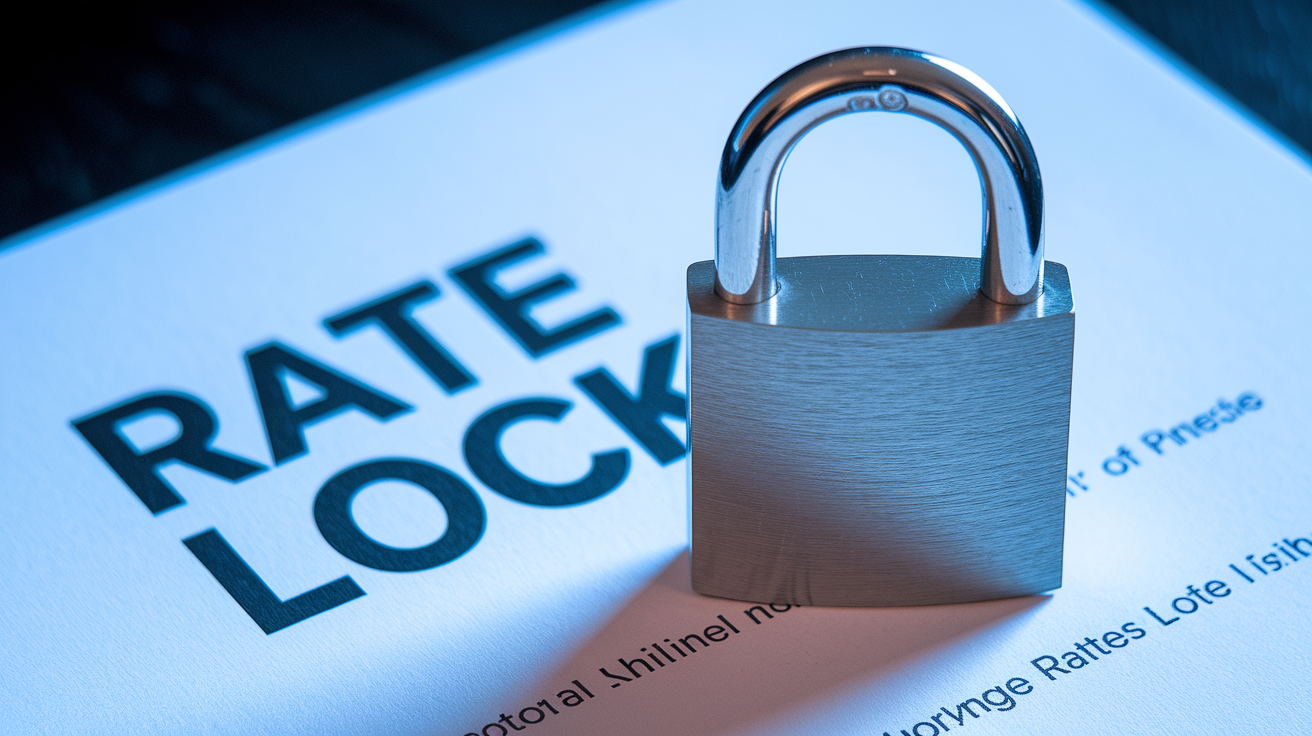
A mortgage rate lock is a written guarantee from your lender that your interest rate and loan terms won’t change between the day you lock and the day you close, as long as you close within the lock period and your application details stay accurate. For Atlanta buyers competing in a market where inventory shifts quickly and rates respond to national economic news within hours, a rate lock provides certainty. You know your monthly payment, your total interest cost, and your budget won’t get upended by a sudden rate jump the week before closing.
Five key factors can void or alter your rate lock:
Credit score changes. If your score drops due to new debt, missed payments, or credit inquiries after locking, the lender may reprice your loan or withdraw the lock.
Income or employment changes. Losing your job, switching employers, or taking unpaid leave can trigger re-underwriting and potentially void the original lock.
Appraisal issues. If the home appraises below the purchase price and you adjust the loan amount or down payment to compensate, the lock terms may change.
Loan program or term modifications. Switching from a 30-year fixed to a 15-year fixed, or from conventional to FHA, typically requires a new lock at current market rates.
Property or title problems. Discovering liens, easements, or zoning issues that delay closing beyond the lock expiration can force a relock or extension.
If your lock expires before closing, your rate floats with the daily market. Most lenders offer an extension (sometimes free for short delays, sometimes for a fee), but if rates have risen significantly, the lender may charge the worst-case relock price. That means you pay either the original locked rate or the current market rate, whichever is worse for you. Understanding your lender’s extension policy and getting lock terms in writing from day one protects you from surprise costs and keeps your closing on track.
Comparing Lock Period Durations for Atlanta Home Purchases
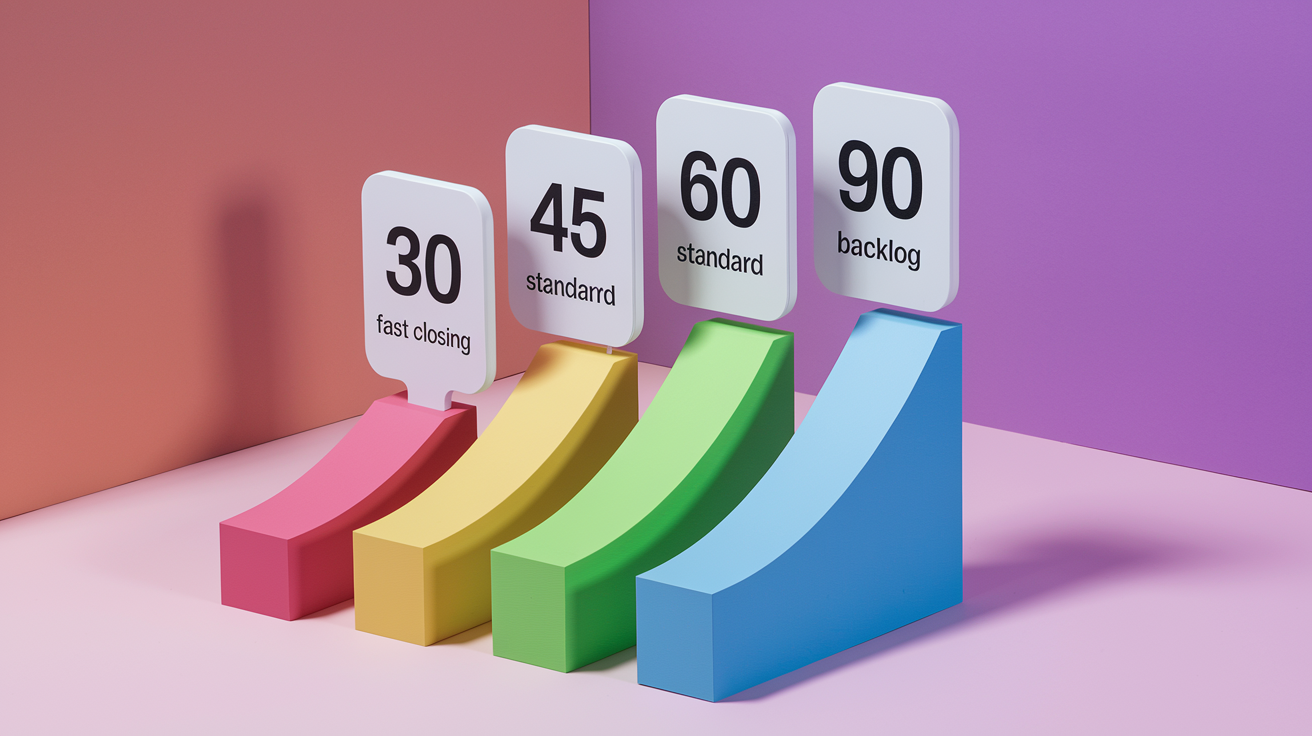
Lock period length directly affects cost. Shorter locks (30 days) usually come with the lowest rate or no added fee, because the lender carries less risk that rates will move against them. Longer locks (60, 90, or 120 days) typically cost more, either as an upfront fee (often 0.25% to 0.50% of the loan amount, which is $1,000 to $2,000 on a $400,000 mortgage) or baked into a slightly higher interest rate. For example, 7.00% for a 30-day lock versus 7.125% for a 60-day lock. Lenders price longer locks higher because they’re guaranteeing your rate for more time while market conditions can shift.
Atlanta’s 43-day average closing sits right between standard 30-day and 60-day lock windows, which is why most local buyers choose a 45-day lock when it’s available or go with a 60-day lock to cover potential delays. A 45-day lock gives you about a week of cushion beyond the average timeline, enough to absorb minor slowdowns in underwriting or a brief appraisal delay without paying for a full 60-day lock. A 60-day lock makes sense if you’re buying during the busy spring season, if your loan involves complex income documentation (self-employment, bonus income, multiple properties), or if your property is in a neighborhood where appraisers are backlogged.
Extensions become necessary when closings get delayed by inspection repairs, seller negotiations, title issues, or lender processing backlogs that push your closing date past the lock expiration. Some lenders offer one free extension of 7 to 15 days if you’ve been responsive and the delay isn’t on your side. Paid extensions typically cost 0.125% to 0.25% of the loan amount per additional 15 or 30 days. If your lender quotes a 45-day average processing time but you’re closing in May when Atlanta’s market is hot, build in extra time from the start rather than relying on extensions. It’s almost always cheaper to lock for 60 days upfront than to lock for 30 and pay two extension fees.
| Lock Length | Pros | Cons | Best For |
|---|---|---|---|
| 30 days | Lowest cost; best rate | Tight timeline; risk of needing paid extension | Fast closings, pre-underwritten loans, cash-heavy deals |
| 45 days | Matches Atlanta average close; moderate cost | Not always offered by all lenders | Standard purchases with clear timelines |
| 60 days | Comfortable buffer; covers most delays | Slightly higher rate or small upfront fee | Spring season buys, complex income docs, appraisal-prone delays |
| 90+ days | Maximum protection for long timelines | Higher cost; rate premium or larger fee | New construction, major contingencies, extended closing dates |
Step-by-Step Guide from Contract to Close in Atlanta
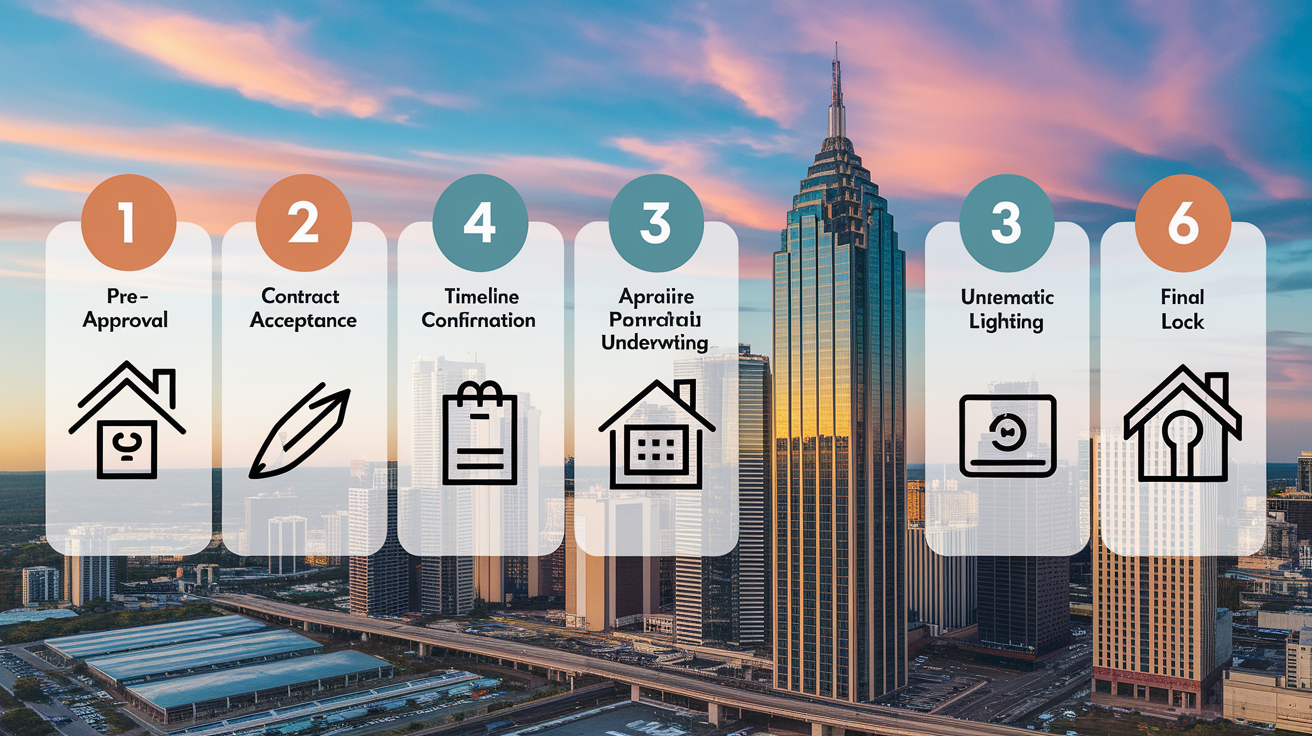
1. Pre-approval. Before you tour homes or make offers, get pre-approved by at least two lenders so you can compare rates, fees, and lock policies. Ask each lender for their current rate quote, typical lock periods offered, and their average days-to-close for borrowers with your loan type and credit profile. Don’t lock yet. You have no contract, no property address, and no firm closing date, so locking now wastes time and money.
2. Contract acceptance. Once your offer gets accepted and the purchase contract is signed, contact your chosen lender immediately to confirm the timeline. The contract’s closing date is your target, but lenders work backward from that date to build their processing schedule. This is the moment you shift from rate shopping to rate locking preparation.
3. Lender timeline confirmation. Within 1 to 2 business days after contract signing, get a written estimate from your lender detailing their expected processing time (how many days for underwriting, appraisal turnaround, and final clear-to-close). Compare that estimate against your contract closing date. If the lender says 40 days and your contract closing is 42 days out, a 45-day lock covers you. If the lender says 35 days and closing is 50 days out, you have flexibility to wait a few days and lock closer to appraisal scheduling.
4. Appraisal scheduling. As soon as your lender orders the appraisal (usually 3 to 7 days after contract acceptance), you have a concrete milestone and can lock with confidence. Most Atlanta buyers lock between contract signing and appraisal completion, because the appraisal is often the longest variable piece of the timeline. Locking before it’s ordered risks paying for extra days you don’t need.
5. Underwriting progress. Once the appraisal is complete and submitted to underwriting, your lender will issue conditions (requests for additional documentation like pay stubs, bank statements, or explanations of credit inquiries). Respond quickly. Every day of delay eats into your lock window. If conditions pile up or underwriting is slower than expected, communicate with your lender about extension options before the lock expires.
6. Final decision and lock execution. If you haven’t locked yet by the time underwriting conditions are cleared and you receive clear to close, lock immediately at the current rate. Waiting beyond this point offers no benefit and exposes you to rate increases in the final days before closing. Lock in writing, confirm the lock expiration date in an email or signed lock agreement, and verify that your closing is scheduled at least 3 to 5 days before the lock expires to allow for any last-minute document delays.
Costs, Fees, and Financial Tradeoffs in Rate Locking
Lenders structure lock costs in different ways. Many bake the cost of a standard 30 or 45-day lock into the quoted interest rate, so you pay no separate upfront fee but the rate reflects the lender’s cost of holding that guarantee. Other lenders charge an explicit lock fee, typically measured in basis points (one basis point equals 0.01%, so 25 basis points equals 0.25% of your loan amount). On a $400,000 mortgage, a 25-basis-point lock fee costs $1,000. Some lenders offer free locks for short periods and then charge incrementally for longer windows. For example, 30 days free, $500 for 45 days, $1,000 for 60 days.
The financial impact of a rate increase makes even a modest lock fee worthwhile when rates are rising. Take a $400,000 loan at 7.00% with 20% down (so $320,000 financed) on a 30-year fixed mortgage. Your monthly principal and interest payment is about $2,129. If rates rise by just 0.25 percentage points to 7.25% before you lock, your monthly payment increases to approximately $2,183, a difference of $54 per month. Over five years, that extra $54 per month totals $3,240 in additional cost. Compare that to a hypothetical 25-basis-point lock fee of $1,000. Locking saves you $2,240 over five years, and much more over the life of the loan.
Four common lender lock fees you’ll encounter:
Baked-in cost. The quoted rate already includes the cost of the lock; no separate fee, but you can’t easily compare the pure rate across lenders.
Extension fee. Charged when your closing date is delayed and you need to extend the lock beyond the original period; typically 0.125% to 0.25% of the loan amount per 15 or 30 days.
Float-down fee. An optional add-on that lets you capture a lower rate if market rates drop during your lock; usually requires an upfront payment of a few hundred dollars and a minimum rate drop threshold (often 0.25%).
Long-term lock premium. For locks longer than 60 or 90 days, lenders charge a higher upfront fee or increase the rate to compensate for extended risk (common in new construction or delayed closings).
When comparing lender offers, look beyond the headline rate. Ask for the full closing cost breakdown, the lock period included in the quote, and the cost to extend or add a float-down. A lender quoting 6.875% with no lock fee for 45 days may beat a lender quoting 6.75% if the latter charges $1,500 upfront or only offers a 30-day lock that will require a paid extension in Atlanta’s typical timeline.
Macro and Seasonal Factors That Influence Rate Lock Decisions in Metro Atlanta

Atlanta’s real estate market follows a pronounced seasonal rhythm. Spring (roughly March through early June) brings the highest inventory turnover, the most buyer competition, and the longest wait times for appraisals and underwriting. During these months, lenders and appraisers are juggling more files, which can add 5 to 10 days to the average processing time compared to slower months. If you’re under contract in April or May, assume your timeline will stretch toward the longer end of your lender’s estimate and choose a lock period that accounts for those backlogs.
Six external factors shape your overall rate lock awareness:
Market volatility. Sudden economic reports (jobs data, inflation readings, Fed announcements) can swing mortgage rates by 0.125% to 0.50% in a single week, making locking during calm periods less urgent and locking during turbulent periods more valuable.
Inflation trends. Persistent inflation pushes mortgage rates higher as lenders price in reduced purchasing power. If inflation is rising when you’re shopping, lock sooner rather than waiting.
Federal Reserve decisions. While the Fed doesn’t set mortgage rates directly, its policy signals influence the bond market that mortgage rates track. Rate hikes or hawkish Fed commentary often lead to higher mortgage rates within days.
Appraisal delays. High transaction volume in Metro Atlanta, especially in hot submarkets like East Cobb, Decatur, and Alpharetta, can stretch appraisal turnaround from the usual 7 to 10 days to 14 or more days in spring.
Lender backlog. Large national lenders and some local credit unions experience processing bottlenecks during peak season, which can delay underwriting and push your closing date closer to or past your lock expiration.
Buyer competition. More competing offers mean more deals in the pipeline simultaneously, which compounds appraiser and lender capacity constraints and makes longer lock periods a safer bet during busy months.
These factors don’t dictate your exact lock day, but they help you understand why a lender’s timeline estimate in February might be 38 days and in May might be 48 days for the same loan type. Being aware of Atlanta’s seasonal and economic context lets you choose lock length intelligently and avoid the trap of assuming every closing will hit the 43-day average regardless of market conditions or time of year.
Managing Risks: Locking Too Early vs. Too Late

Locking too early (before you have a signed contract or a firm closing date) exposes you to several risks. You might pay for a 60-day lock when your actual closing happens in 35 days, wasting money on unused lock time. Your appraisal might come in low, forcing you to renegotiate the purchase price or increase your down payment, which changes the loan amount and can void the original lock. Your credit score could shift due to normal activity (paying off a car loan, opening a new card for furniture), and if the lender re-pulls credit before closing, a score drop may require a new rate quote at worse terms or additional underwriting that delays closing past your lock expiration.
Locking too late means you gamble that rates won’t rise between your contract acceptance and the moment you finally lock. If rates climb from 6.68% to 7.00% while you wait (an increase that happened in a matter of weeks during certain periods in 2023 and 2024), you’ll pay significantly more over the life of the loan, potentially thousands of dollars in extra interest that a timely lock would have avoided. The worst timing error is waiting until just days before closing to lock, because at that point you have no cushion. If something delays the closing by even a few days, your lock expires and you either pay the current higher rate or pay an emergency extension fee to preserve the old rate. To avoid these errors, lock once you have a contract, a lender timeline, and confidence that your closing date is realistic given current market conditions and your loan complexity.
Float-Down Options and Extensions for Atlanta Buyers

A float-down option is an add-on to your rate lock that allows you to capture a lower market rate if rates drop by a specified amount (typically at least 0.25 percentage points) during your lock period. Float-downs usually cost a few hundred dollars upfront or a small percentage of the loan, and they’re typically available only once. You can’t keep floating down multiple times as rates fall. For Atlanta buyers locking in a volatile rate environment or during a period when the Federal Reserve is signaling possible rate cuts, a float-down can provide peace of mind. You’re protected if rates rise, but you’re not completely locked out if rates fall.
Four common scenarios where float-downs or extensions apply in Atlanta:
Spring season delays. You locked for 45 days in early April expecting a mid-May closing, but appraisal and underwriting backlogs push closing to early June. You need a 15-day extension to avoid relock penalties.
Rate drop after locking. You locked at 7.00% with a float-down option in March, and by late April market rates have fallen to 6.625%. You exercise the float-down, pay the fee, and your new locked rate becomes 6.625%.
Inspection repairs. The home inspection reveals roof issues; the seller agrees to make repairs but needs 20 extra days. You negotiate a free or low-cost extension with your lender to keep the lock active through the delayed closing.
Title or survey problems. A title search uncovers an old lien or easement that takes extra time to resolve. You extend the lock rather than let it expire and risk a relock at a higher rate if the market has moved against you.
Local Lender Policies and Atlanta-Specific Rate Lock Tips

Lender policies on rate locks vary widely, even among institutions serving the same Metro Atlanta market. Some national banks and online lenders allow you to lock a rate as early as pre-approval, which can be useful if you’re relocating to Atlanta and want certainty before you even tour homes. But that approach is risky because your timeline is completely uncertain. Most local credit unions, regional banks, and mortgage brokers in Atlanta prefer to lock rates only after you have a signed purchase contract and a property address, which protects both you and the lender from paying for locks that expire unused.
Five comparison questions every Atlanta buyer should ask lenders before locking:
What is your average processing time from contract to closing for a loan like mine? Use this number to choose your lock length. If the lender says 40 days, lock for 45 or 60 days, not 30.
Do you offer free extensions, and under what conditions? Some lenders will extend your lock for free if the delay is on their side (underwriting backlog, appraisal vendor delay); others charge for any extension regardless of cause.
What does a float-down option cost, and what’s the minimum rate drop required? If the fee is $500 and the required drop is 0.375%, compare that cost to the likelihood and size of rate decreases during your lock window.
Can I lock at pre-approval, or do I need a signed contract? Knowing the lender’s lock policy helps you plan your rate shopping and avoid locking too early with one lender when another requires a contract first.
What are your extension fees, and can I lock in writing before I pay an application fee? Get the lock agreement in writing with clear start and end dates, and confirm all fees upfront so there are no surprises if your closing is delayed.
Final Words
Deciding whether to lock now or wait? Aim to lock after you’re under contract and your lender gives a realistic closing date — that simple step avoids most surprises.
We covered what a rate lock does, common 30–60 day windows, Atlanta’s ~43‑day average close, spring appraisal/backlog issues, and the cost tradeoffs of early locks or extensions.
For most buyers, confirm timelines and pick a 30–45–60 day window that fits your closing plan — that’s the practical answer to when to lock a mortgage rate in an atlanta home purchase. You’ll head into closing more confident.
FAQ
Q: What is the 3 7 3 rule in mortgage?
A: The 3 7 3 rule in mortgage is not a widely recognized industry term; if a lender mentions it, ask for specifics. In Atlanta, base your lock decision on the contract-to-close timeline (about 43 days).
Q: At what point can you lock in a mortgage rate?
A: You can lock in a mortgage rate once you have an accepted contract and your lender confirms the estimated closing date and processing timeline—typically after lender shopping and before appraisal in Atlanta.
Q: What is the 2% rule for refinancing?
A: The 2% rule for refinancing means consider refinancing when the new interest rate is about 2 percentage points lower than your current rate, so savings likely cover closing costs within a reasonable time.
Q: What day of the week is best to lock in a mortgage rate?
A: There isn’t a consistently best day of the week to lock in a mortgage rate; markets move daily. Lock on a weekday when your lender can process it and you have a confirmed closing timeline.