


Is Buckhead still the safest luxury bet in Atlanta—or is intown winning on value and lifestyle?
Short answer: both, but for different reasons.
Forecasts point to price stability and low-to-mid single-digit gains through 2026.
Buckhead keeps higher absolute prices, big lots, and prestige buyers.
Intown pockets (Virginia-Highland, Morningside, Old Fourth Ward) trade yard space for walkability and tighter inventory.
Investment edge goes to turnkey, well-marketed homes in premier pockets; fixer-uppers usually sit longer.
This post shows the price trends and where investment opportunities look strongest.
Current Forecast Outlook for the Luxury Housing Market in Buckhead and Intown Atlanta

Buckhead and intown Atlanta luxury markets are settling into price stability with modest appreciation through 2026. After the post-pandemic surge and the mortgage-rate slowdown that followed, things are normalizing. Buckhead’s average home price sits near $900,000, with luxury properties regularly pushing into multi-million dollar territory. Recent year-over-year appreciation measured around 5%. Independent forecasts for comparable North Atlanta submarkets point to 4–7% annual gains, and early signals suggest Buckhead will track within the low-to-mid single digits alongside national luxury trends that recently decelerated to roughly 4% annually.
Inventory levels across the Atlanta metro are rising year-over-year according to Georgia MLS data. Prices have held steady in established luxury corridors rather than softening. Well-prepared listings in North Atlanta’s luxury tier continue to attract strong offers within the first 30–45 days, which tells you demand is still there even as buyer selectivity increases. Turnkey, move-in-ready homes command premiums. Properties requiring renovation face longer days on market because buyers hesitate over cost and timeline unknowns. The National Association of REALTORS® anticipates improved existing-home sales in 2026 as mortgage rates stabilize, a trend that should benefit both Buckhead and intown neighborhoods where buyers prioritize connectivity to employment hubs and lifestyle amenities.
The 6–24 month trajectory reflects a balanced market. Moderate price growth is more likely than either steep appreciation or meaningful declines, with high-end properties in prestige enclaves and walkable intown pockets expected to outperform baseline projections.
Near-term projections for Buckhead and intown luxury markets:
- Price movement: expect low-to-mid single-digit appreciation (3–6%) in the base case, with turnkey homes and premier addresses outperforming.
- Demand trends: corporate relocations, downsizers, and well-capitalized local move-up buyers will remain the dominant profiles. Speculative and investor demand stays muted.
- Luxury absorption rate expectations: inventory will stabilize but not oversupply. Well-priced, professionally marketed listings should continue to contract within 30–60 days.
- Interest rate influence: mortgage-rate stabilization by mid-2026 should improve qualified-buyer volume and reduce payment-shock reluctance at the high end.
- Inventory stabilization: rising listings provide more options without triggering price pressure, as underlying household formation and relocation demand absorb new supply gradually.
Buckhead Luxury Real Estate Market Conditions and Value Drivers

Buckhead remains Atlanta’s most recognized luxury residential hub, anchored by prestige addresses along West Paces Ferry, Tuxedo Park, and Chastain Park. These neighborhoods command pricing premiums driven by lot size, mature landscaping, privacy, and proximity to premier shopping and dining corridors like Buckhead Village and Phipps Plaza. Record sales continue to occur when homes are priced with appraisal-level discipline and presented in turnkey condition. Corporate relocations, particularly executives moving into medical, tech, and financial sectors, sustain a steady stream of qualified buyers willing to write strong offers quickly.
The buyer pool in Buckhead has shifted toward cash-heavy or high-down-payment purchasers, alongside local move-up families leaving intown condos or starter homes. Limited new luxury condo development through 2024 has kept resale inventory dominant. The planned Elyse Buckhead tower will introduce a new pricing tier and amenity benchmark once delivered. Older single-family homes requiring renovation attract interest but face longer market times and more negotiation, while updated estates on larger lots continue to move efficiently.
Buckhead-specific value drivers:
- Prestige corridors: West Paces Ferry, Northside Drive, and Tuxedo Park deliver the highest absolute dollar values and attract legacy-focused buyers.
- Buyer composition: mix of corporate relocations, empty-nesters seeking one-level living, and affluent local move-ups. Cash or large down payments are common.
- Inventory character: limited new construction and constrained buildable lots support pricing for well-maintained resales. Turnkey homes vastly outperform fixer opportunities.
- Pricing sensitivity: buyers expect appraisal-supported pricing. Aspirational testing results in extended days on market and eventual reductions.
- Condo pipeline effects: planned Elyse Buckhead tower will set new benchmarks for amenity-rich high-rise living and may shift some single-family buyer interest.
- Local economic stability: Buckhead’s concentration of corporate headquarters, medical facilities, and professional services provides durable employment support for luxury demand.
Intown Atlanta Luxury Market Trends and Neighborhood-Level Dynamics

Intown Atlanta neighborhoods (Virginia Highland, Ansley Park, Morningside, Old Fourth Ward, and parts of Midtown) attract a distinct luxury buyer profile centered on walkability, BeltLine access, and connectivity to central employment corridors. These areas have seen price stability through 2024 and into 2025. Turnkey single-family homes and updated condos are moving quickly while units requiring renovation linger. Walkability premiums are measurable, especially in pockets near the BeltLine, Piedmont Park, and established restaurant/retail districts. Buyers often trade larger lot sizes or privacy for proximity to daily amenities and shorter commutes.
Midtown luxury condos illustrate the intown dynamic clearly. Full-service towers with concierge, parking, and modern finishes see steady absorption. Older buildings or units needing cosmetic updates face longer days on market and more cautious offers. Buyers in intown areas skew toward downsizers leaving suburban homes, young executives prioritizing urban lifestyles, and relocating professionals who want immediate walkability without car dependence. Limited new condo development supports pricing for well-maintained inventory, and the BeltLine’s continued expansion adds long-term value tailwinds to adjacent neighborhoods.
Single-family luxury homes in Virginia Highland, Ansley Park, and Morningside command pricing in the $1–$3 million range depending on size, condition, and proximity to parks or commercial nodes. These areas see tighter inventory than Buckhead but also smaller lot sizes and less privacy, making them best suited for buyers who prioritize lifestyle and convenience over estate-style seclusion.
| Neighborhood | Typical Luxury Price Range | Average Days on Market | Key Value Drivers |
|---|---|---|---|
| Virginia Highland | $1.2M – $2.5M | 35–50 days | Walkability, BeltLine access, neighborhood character, dining/retail proximity |
| Midtown (condos) | $600K – $1.8M | 40–60 days (turnkey faster) | High-rise amenities, Piedmont Park access, central location, lower maintenance |
| Old Fourth Ward | $800K – $2M | 30–55 days | BeltLine frontage, new construction, urban energy, investment appreciation potential |
Strategic Comparison of Buckhead and Intown Atlanta Luxury Markets

Buckhead and intown Atlanta luxury markets serve overlapping but distinct buyer priorities. Understanding those differences helps buyers and investors allocate capital more effectively. Buckhead delivers higher absolute price points and larger lot sizes, making it the natural choice for buyers seeking traditional estate living, privacy, and prestige addresses. Average home prices near $900,000 with frequent extensions into seven and eight-figure ranges reflect a buyer base willing to pay premiums for school access, lot size, and established neighborhood reputation. Intown areas, by contrast, typically trade lot size and privacy for walkability, shorter commutes, and access to cultural and dining amenities. Price-per-square-foot is often elevated in highly walkable pockets, but total purchase prices moderate due to smaller homes and condos.
Inventory behavior also diverges. Buckhead continues to see selective high-end buyer demand and constrained new supply, which supports pricing stability even as metro-wide inventory rises. Intown neighborhoods with strong BeltLine connectivity or park adjacency show similar tightness. Intown condos in older buildings or those requiring updates face longer market times and softer pricing. Buyers prioritizing connectivity to Buckhead and Midtown job hubs increasingly weigh commute efficiency against lifestyle preferences, and the decision often hinges on whether the household values outdoor space and privacy more than walkable urban convenience.
Five steps to analyze and weigh Buckhead vs. intown luxury submarkets:
- Value premiums: compare price per square foot and total home price across similar condition/age properties. Buckhead usually commands higher PPSF in prestige corridors, while intown walkable pockets show elevated PPSF for smaller homes.
- Walkability differences: score daily errands, dining, and park access using actual travel time and car-dependency tests. Intown neighborhoods typically score higher for pedestrian accessibility.
- Buyer pool profiles: Buckhead attracts more traditional luxury buyers (executives, empty-nesters, families seeking estate homes), while intown draws urban-focused downsizers, young professionals, and lifestyle-driven relocations.
- Supply nuances: verify new-construction pipeline, lot availability, and condo project timelines. Limited supply in both areas supports pricing, but intown has more condo options and Buckhead more single-family scarcity.
- Comp selection: use building-specific or street-level comps rather than broad neighborhood averages. Micro-location (view, proximity to parks, BeltLine access, prestige street) drives material pricing variance within each submarket.
Key Economic and Financial Indicators Shaping the 6–24 Month Forecast

Interest-rate movement remains the single largest external force influencing Buckhead and intown luxury markets. National luxury home price growth decelerated to roughly 4% year-over-year as mortgage rates elevated through 2022–2024, and buyer psychology at the high end became more cautious. The expectation of rate stabilization heading into 2026 (reflected in National Association of REALTORS® projections) should gradually improve qualified-buyer volume and reduce payment-shock hesitation. Luxury buyers are less rate-sensitive than mid-market buyers, though. Many Buckhead and intown transactions involve cash or jumbo financing with substantial down payments, insulating this segment from rate volatility more than entry-level markets.
Employment strength and corporate relocation activity provide the durable demand foundation for Buckhead and Midtown corridors. Atlanta’s continued growth in Fortune 500 headquarters, medical complexes, and technology employers supports steady relocation inflows, particularly among executives and senior professionals seeking proximity to office hubs. These relocations often target Buckhead for single-family estate living or intown neighborhoods for walkable urban lifestyles, and they typically close quickly once employment transitions are confirmed. Local job market stability matters more for sustained luxury demand than speculative investor activity. Atlanta’s diversified economy provides downside protection even if broader national conditions soften.
Renovation costs and timeline uncertainty continue to shape buyer behavior at the luxury level. Turnkey homes command measurable premiums because buyers avoid construction delays, contractor management, and cost overruns that became common post-pandemic. Properties requiring kitchen, bath, or systems updates attract interest but face longer days on market and more negotiation, particularly if the work requires months of disruption. This dynamic favors sellers who invest in pre-listing updates (targeted paint, lighting, landscaping, and minor cosmetic refreshes) over those who test the market with deferred maintenance or outdated finishes. The gap between turnkey and fixer-upper absorption rates is wider now than in previous market cycles, and that pattern is expected to persist through 2026.
Scenario-Based Luxury Housing Market Projections for Buckhead and Intown Atlanta
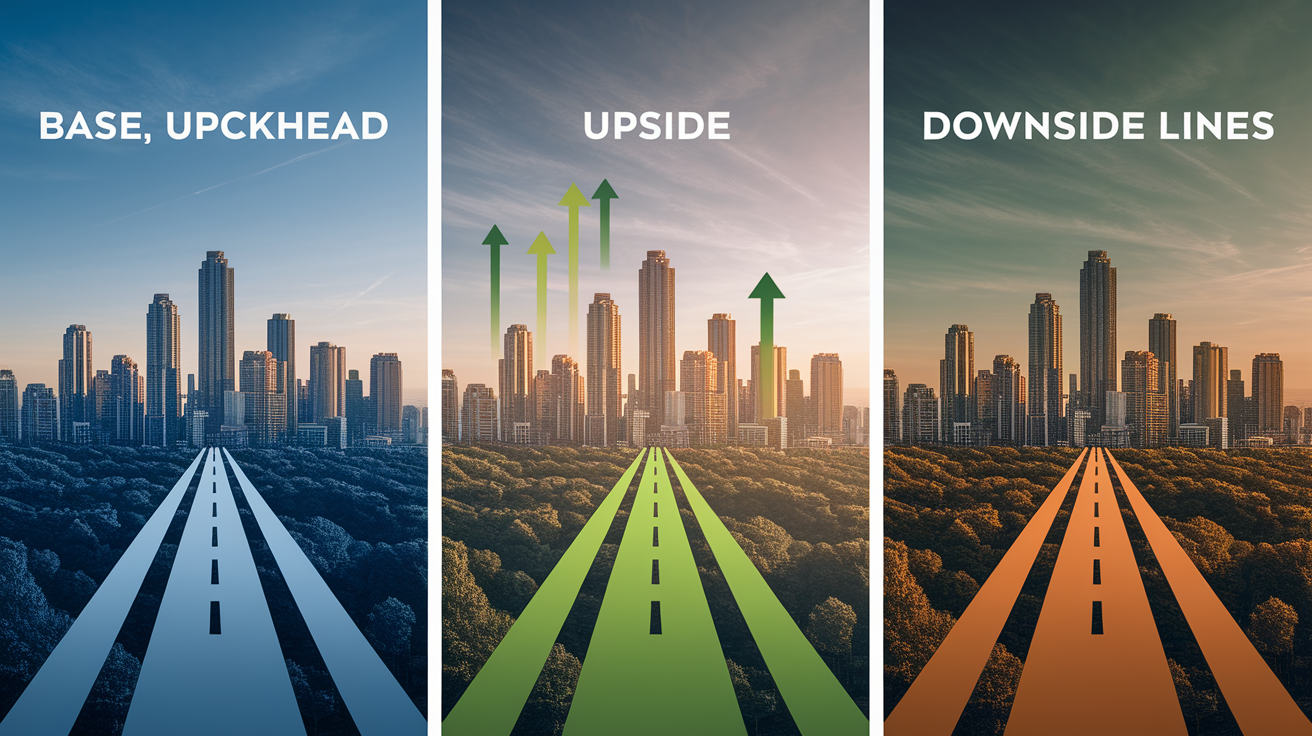
Scenario planning helps buyers and investors understand how varying economic and policy conditions might influence luxury home values over the next 6–24 months. The base case reflects the most probable path given current fundamentals: mortgage-rate stabilization, steady employment, and normalized inventory. Upside and downside cases illustrate the sensitivity of Buckhead and intown markets to faster-than-expected rate cuts or economic slowdowns. All three scenarios assume that underlying household formation, corporate relocations, and Atlanta’s economic diversity provide a floor beneath luxury demand, making steep declines unlikely even in adverse conditions.
Buyers and sellers can use these scenarios to time decisions, evaluate hold-versus-sell tradeoffs, and set realistic expectations for negotiation and pricing. Investors should stress-test acquisition assumptions against the downside case to ensure positive cash flow or acceptable carry costs if appreciation stalls temporarily.
Base Case
The base case projects low-to-mid single-digit appreciation across Buckhead and intown luxury markets. Buckhead sees modest gains in the 3–5% range and high-demand intown pockets potentially reach 4–6% as inventory stabilizes and turnkey homes continue to outperform. Interest rates plateau or decline modestly through 2026, improving qualified-buyer volume without triggering a rush of demand. Days on market normalize to 30–60 days for well-prepared listings, and sellers who price with appraisal discipline and invest in pre-listing updates see strong outcomes. Inventory rises but doesn’t oversupply the market, as household formation and corporate relocations absorb new listings gradually. Buyer composition remains weighted toward move-up locals, downsizers, and corporate relocations, with limited speculative or investor activity. This scenario reflects steady, durable growth rather than explosive gains or corrections.
Upside Case
The upside case envisions gains approaching 10% in best-in-class Buckhead and intown properties if several favorable conditions align. Substantial in-migration from higher-cost coastal markets (particularly tech workers and executives relocating from California, New York, and Boston) accelerates demand beyond current projections. Faster-than-expected mortgage-rate cuts bring more financed buyers into the luxury tier, and limited new construction constrains supply further. Turnkey homes on prestige streets or with BeltLine adjacency see bidding competition return, and days on market compress to under 30 days for top inventory. This scenario requires coordination of external tailwinds: robust job growth, aggressive Federal Reserve easing, and continued national recognition of Atlanta as a relocation destination. It’s plausible but less likely than the base case given current macroeconomic uncertainty and the national luxury slowdown observed in 2023–2024.
Downside Case
The downside case anticipates flat pricing with more negotiation, longer days on market, and increased seller concessions, though not steep declines. In this scenario, mortgage rates remain elevated or rise slightly, employment growth slows, and corporate relocations decelerate. Inventory continues to climb as more sellers list to capture perceived equity, and buyer caution intensifies. Days on market extend to 60–90 days even for well-prepared homes, and buyers routinely negotiate inspection repairs, closing cost credits, or rate buydowns. Properties requiring renovation or located in less walkable pockets see material price reductions to attract offers. Despite these headwinds, underlying desirability of Buckhead and intown neighborhoods prevents significant value erosion. Prices move sideways rather than down, and sellers who remain flexible on terms and realistic on pricing still close transactions. This scenario reflects market friction rather than collapse. Patient sellers can wait for conditions to improve rather than accepting distressed pricing.
Luxury Buyer and Seller Strategy Guide for Buckhead and Intown Atlanta

Buyers entering Buckhead or intown luxury markets should prioritize turnkey inventory and realistic pricing expectations informed by recent comparable sales. Prequalification with a lender experienced in Atlanta luxury transactions (particularly jumbo loans and condo project approvals) prevents financing delays and strengthens offer competitiveness. When evaluating condos, verify project-level lender eligibility, HOA reserve health, and owner-occupancy ratios early in the due diligence process to avoid surprises at closing. Tour properties with a focused must-have list (single-level living, deeded parking, outdoor space, school zone) and be prepared to move decisively on well-priced turnkey units, which continue to sell fastest even as inventory rises.
Sellers should price using appraisal-style comparable analysis across Buckhead, Midtown, and surrounding submarkets, adjusting for lot size, condition, school zone, and style rather than testing aspirational numbers. Pre-listing investment in targeted updates (professional paint, modern lighting, landscaping, minor kitchen or bath refreshes) delivers measurable returns in faster sales and stronger offers. Professional photography, video, and digital marketing are no longer optional at the luxury tier. They materially impact buyer perception and showing volume. Flexibility on contract terms, inspection timelines, and closing dates provides negotiation leverage when multiple similar listings compete for the same buyer pool.
Investors should evaluate hold-versus-sell decisions by modeling carry costs (mortgage, taxes, insurance, HOA, maintenance) against expected appreciation in base, upside, and downside scenarios. Properties requiring significant renovation face longer timelines and higher costs, making turnkey acquisitions safer in a market where buyer selectivity remains elevated. Condo investors must scrutinize building financials, reserve studies, and rental policies to ensure positive cash flow and exit liquidity.
Actionable strategy checklist for Buckhead and intown luxury transactions:
- Pricing realism: use recent closed comps within the same school zone, lot-size range, and condition tier. Avoid aspirational testing that extends days on market.
- Prep/staging essentials: invest in professional decluttering, neutral paint, modern fixtures, and outdoor space enhancement. Luxury buyers expect move-in-ready presentation.
- Comps to use: pull sales from the last 90–180 days across Buckhead, Midtown, Virginia Highland, and comparable intown areas, adjusting for square footage, lot size, and finishes.
- Negotiation leverage: buyers gain flexibility with rising inventory. Request inspection repairs, closing cost credits, or rate buydowns. Sellers maintain leverage with turnkey condition and strategic pricing.
- Closing flexibility: offering adjustable close dates or rent-back options can differentiate offers in competitive situations or accelerate deals when sellers face timing constraints.
- Condo documentation readiness: request full condo docs (bylaws, budgets, reserve studies, insurance certificates, board minutes) early. Verify project-level lender approval and owner-occupancy ratios before finalizing offers.
Final Words
Weighing current sales, inventory, and buyer demand shows steady pricing and selective appetite in Buckhead and intown neighborhoods. Turnkey luxury homes move faster; renovation-needed listings sit longer.
Expect moderate appreciation over 6-24 months, with Buckhead seeing slightly stronger dollar gains and intown keeping walkability premiums. Interest-rate shifts and relocation flows are the main wildcards.
For a clear picture, watch inventory, days on market, and buyer profiles; that’s the heart of the luxury housing market forecast buckhead and intown atlanta. With prepared listings and smart pricing, the outlook stays positive.
FAQ
Q: What is the 6–24 month forecast for Buckhead and Intown Atlanta luxury housing?
A: The 6–24 month forecast for Buckhead and Intown Atlanta predicts stable to moderate appreciation—mid single-digit gains—steady inventory, and stronger demand for turnkey listings that sell faster than renovation-needing homes.
Q: Are luxury prices expected to rise or stay flat in the near term?
A: Luxury prices are expected to rise modestly in the near term, with mid single-digit appreciation likely in Buckhead and steady pricing plus premiums for turnkey intown properties.
Q: How will inventory changes affect luxury buyers and sellers?
A: Inventory increases will give buyers more choice and negotiating leverage, while sellers should prepare homes well to stand out—turnkey listings will continue to attract quicker contracts and fewer price cuts.
Q: How long are luxury homes taking to go under contract in North Atlanta?
A: Luxury homes in North Atlanta are typically going under contract within about 30–45 days when well-prepared, while renovation-needing units often sit longer and face more negotiations.
Q: Which Buckhead neighborhoods lead luxury demand and why?
A: Buckhead neighborhoods like Tuxedo Park, West Paces Ferry, and Chastain Park lead demand because of prestige, lot privacy, top schools, and proximity to Buckhead shopping and dining corridors.
Q: What kinds of buyers are active in Buckhead and Intown luxury markets?
A: Buckhead attracts corporate relocations, cash buyers, and prestige seekers; intown buyers include downsizers, executives, and those prioritizing walkability and BeltLine access.
Q: How do intown condos compare to single-family homes on pricing and days on market?
A: Intown condos show price stability but often longer days on market if they need renovations; turnkey single-family homes typically command faster sales and stronger buyer interest.
Q: How will interest rate movements influence luxury market activity?
A: Interest rate movements influence luxury buyer psychology by affecting monthly carrying costs; stable or falling rates tend to boost demand, while rising rates may slow purchase pace and increase concessions.
Q: What should sellers do to sell a luxury home faster in Buckhead or Intown?
A: Sellers should present turnkey condition, invest in professional imagery and staging, price against recent comps, and highlight privacy, lot size, and neighborhood amenities to shorten time on market.
Q: How should buyers or investors compare Buckhead versus Intown luxury opportunities?
A: Buyers and investors should weigh value premiums, walkability versus prestige, buyer pool profiles, local supply dynamics, and recent comparable sales to decide which submarket fits their goals.
Q: What practical first steps should a luxury buyer take in Metro Atlanta?
A: Luxury buyers should get lender pre-approval, define priorities (walkability, schools, privacy), review recent comps across Buckhead and intown pockets, and plan inspections or condo eligibility checks early.