


Think moving farther out always saves you money? Think again.
In Metro Atlanta, that $70k–$100k price gap between intown and outer counties often disappears once you add gas, car wear, tolls, and the hours stuck on I‑285 or GA‑400.
This post runs 2024–26 price forecasts, commute math, and salary-to-housing checks so you can see the true tradeoffs between Perimeter, inner suburbs, and OTP counties.
By the end you’ll have a simple checklist to pick locations that actually save you money — or the ones that cost you time instead.
Metro Atlanta vs Outer‑Suburb Affordability Comparison
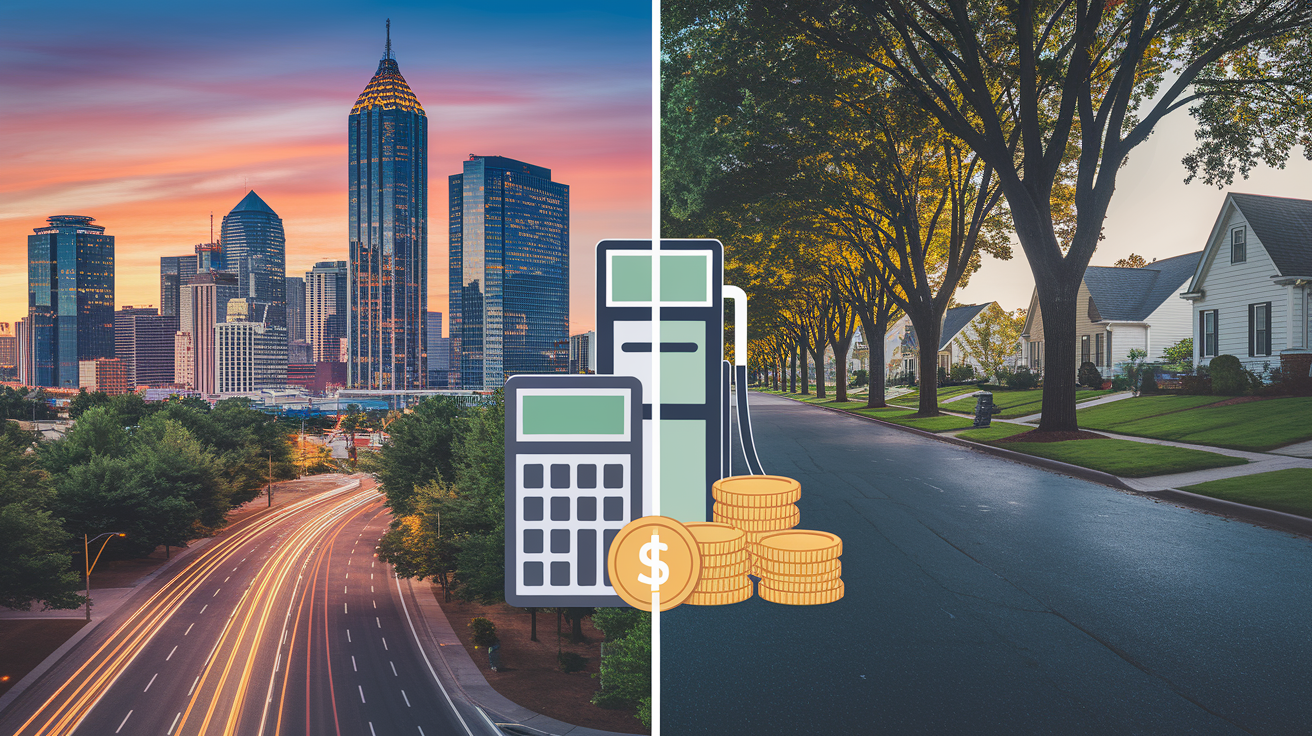
The question everyone asks is whether moving farther out actually saves money once you add gas, time, and what your car goes through. In Atlanta, the answer depends on where you draw the line between “inner suburb” and “outer county,” and whether your job is inside the Perimeter or out near those northern business clusters.
Central neighborhoods within five miles of downtown run around $425,000 to $450,000. Inner suburbs like Decatur, Sandy Springs, and Smyrna sit between $380,000 and $420,000. Push out another fifteen or twenty miles into Cherokee, Forsyth, or southern Henry County, and you’re looking at $310,000 to $350,000. That $70,000 to $100,000 gap feels meaningful until you start calculating fuel, car wear, and the hours you’ll lose to traffic every week.
Rent eats income the same way. If you’re making $75,000 and spending $1,800 on rent in the city, that’s roughly 29 percent of what you bring in. Move to an outer suburb where rent drops to $1,400, and the ratio improves to 22 percent. But if your commute adds forty miles a day, you’ll burn through half that savings in gas and maintenance. Price growth through 2026 looks modest across the metro, somewhere between 1 and 3 percent a year, with slightly better gains near transit and softer numbers in areas where people depend on long highway drives.
| Area | 2024 Median Home Price | 2026 Forecasted Price | Rent‑to‑Income Ratio (Median) |
|---|---|---|---|
| Central Atlanta (Intown) | $440,000 | $455,000 | 29% |
| Inner Suburbs (Decatur, Smyrna, Sandy Springs) | $395,000 | $405,000 | 26% |
| Mid‑Distance Suburbs (Marietta, Alpharetta, Duluth) | $365,000 | $375,000 | 24% |
| Outer North (Cherokee, Forsyth) | $330,000 | $340,000 | 22% |
| Outer South (Henry, Coweta) | $315,000 | $325,000 | 21% |
| Outer West (Douglas, Paulding) | $305,000 | $315,000 | 20% |
Inflation is still a thing through 2026, but wage growth in business and tech has tracked just ahead of housing costs. That creates a narrow window where affordability isn’t improving fast, but it’s not collapsing either. What matters is whether you can absorb the hidden costs of distance without giving up quality of life or pushing your total housing and transportation spend above 40 percent.
Neighborhood‑Level Forecasts Across the Metro Area

Kirkwood and East Atlanta Village keep posting the strongest gains. Forecasts point to 4 to 6 percent appreciation through 2026 as infrastructure wraps up and more walkable retail fills in. These neighborhoods were well below the metro median as recently as 2020, but buyers want proximity to downtown without downtown pricing, and that’s pushed values up faster than the regional average.
Gwinnett’s suburban corridors around Lawrenceville and Buford show steady 1 to 2 percent growth, backed by solid school ratings and all those employers along I‑85. Cobb County’s older neighborhoods near the Silver Comet Trail are cooling after years of rapid climbs. Inventory’s rising enough to stop bidding wars, but not enough to drop prices. South Fulton and Clayton County remain your most affordable bets close to the airport and southern job centers, with prices holding flat or creeping up 1 percent a year as buyers weigh commute savings against school concerns.
Northern Fulton, including Alpharetta and Johns Creek, still commands premium pricing because of top schools and corporate campuses. But appreciation is slowing to around 2 percent as inventory builds and interest rates keep some move-up buyers waiting. Paulding and Cherokee counties offer the deepest discounts for single-family homes, but appreciation stays muted at 1 to 2 percent. These areas depend heavily on long commutes and stay sensitive to gas swings or slowdowns that reduce relocation activity.
Affordability improvements are concentrated in neighborhoods that either overbuilt during the pandemic or are seeing delayed infrastructure finally catch up. Areas gaining relative affordability include Collier Heights, where median prices sit under $300,000 despite being intown. Parts of South DeKalb near I‑20, where inventory has risen faster than buyer absorption. Western Gwinnett that never experienced the same price surge as closer suburbs.
Five zones where affordability should improve through 2026:
Collier Heights and western Atlanta neighborhoods getting bond-funded street and park upgrades. South DeKalb along Memorial Drive, where inventory is growing faster than demand. Western Gwinnett near Norcross, stabilizing after rapid appreciation and seeing more balanced supply. Southern Henry County, where new builds are adding supply faster than people are moving in. Parts of Douglas and Paulding counties, where price ceilings reflect commute distance and job access.
Commute Cost Analysis: Driving, Gas, and Transit

A ten-mile round trip costs about $150 a month when you count fuel, oil changes, tire wear, and what your car loses in value. Current metro Atlanta gas prices sit near $3.10 a gallon. Push that trip to twenty-five miles, and monthly cost climbs to around $350. A forty-five-mile daily commute runs closer to $600 per month, and that’s before you factor in the value of time spent in the car or wear on brakes and suspension from stop-and-go traffic.
MARTA coverage stays concentrated inside the Perimeter and along the northern rail line to Doraville. That limits transit as a real money-saving option for most suburban buyers. Employer transit benefits exist at larger downtown firms, but adoption is low outside the central business district. If your job sits near a MARTA station and your home does too, monthly transit costs drop to around $95 for an unlimited pass. But that applies to a small fraction of households.
Six pieces of commute cost to include in your housing budget:
Fuel at current pump prices, calculated per mile based on your car’s EPA rating. Maintenance including oil, filters, brakes, and tires that wear faster with highway mileage. Depreciation, which goes up with annual mileage and cuts your resale value. Tolls on express lanes, which can add $4 to $8 per day if you use them to save time. Time value, figured by multiplying commute hours by a chunk of your hourly wage. Transit costs if applicable, including rail passes, station parking, or bus fares.
Annual numbers for typical commutes look like this. A ten-mile round trip costs roughly $1,800 per year. A twenty-five-mile commute runs about $4,200 annually. A forty-five-mile daily drive hits $7,200 or more. Those numbers shift your real housing budget by several hundred dollars a month, which directly affects whether that suburban discount actually saves you money.
Salary‑to‑Housing Ratios and Household Budget Benchmarks

Mortgage lenders typically approve buyers who keep housing costs below 28 percent of gross monthly income. But that guideline doesn’t include transportation. A household earning $75,000 should try to keep total housing plus commute costs under $2,500 per month. If your mortgage payment is $1,800, that leaves only $700 for cars, gas, insurance, and maintenance.
Atlanta’s median household income sits around $86,000 for the city and closer to $75,000 across the broader metro. At those levels, a monthly housing budget of $1,750 to $2,150 lines up with standard debt-to-income ratios. If your commute adds $400 per month, your realistic housing budget drops to $1,350 to $1,750. That shifts you from inner suburbs to outer counties, or from ownership to renting.
The tradeoff gets sharper as salary decreases. Households earning $50,000 can afford roughly $1,165 per month for housing under the 28 percent rule. But a long commute that costs $500 monthly leaves only $665 for rent or mortgage, property tax, insurance, and HOA dues. That’s tough to achieve anywhere in metro Atlanta without roommates or serious cost cutting.
| Salary Tier | Recommended Max Housing Cost | Achievable Areas | Tradeoff Notes |
|---|---|---|---|
| $50,000 | $1,165/month | Outer counties, shared housing, or small rentals | Long commutes erase savings; consider transit access or remote work |
| $75,000 | $1,750/month | Mid‑distance suburbs, older intown condos, southern metro | Balance commute cost against home size and school quality |
| $100,000 | $2,335/month | Inner suburbs, select intown neighborhoods, northern Gwinnett | Short commute protects budget for other priorities |
| $150,000+ | $3,500/month | Decatur, Vinings, Brookhaven, Johns Creek, premium intown | Commute flexibility allows focus on lifestyle and schools |
Affordability Zones and Commuting Tradeoff Map Explanation
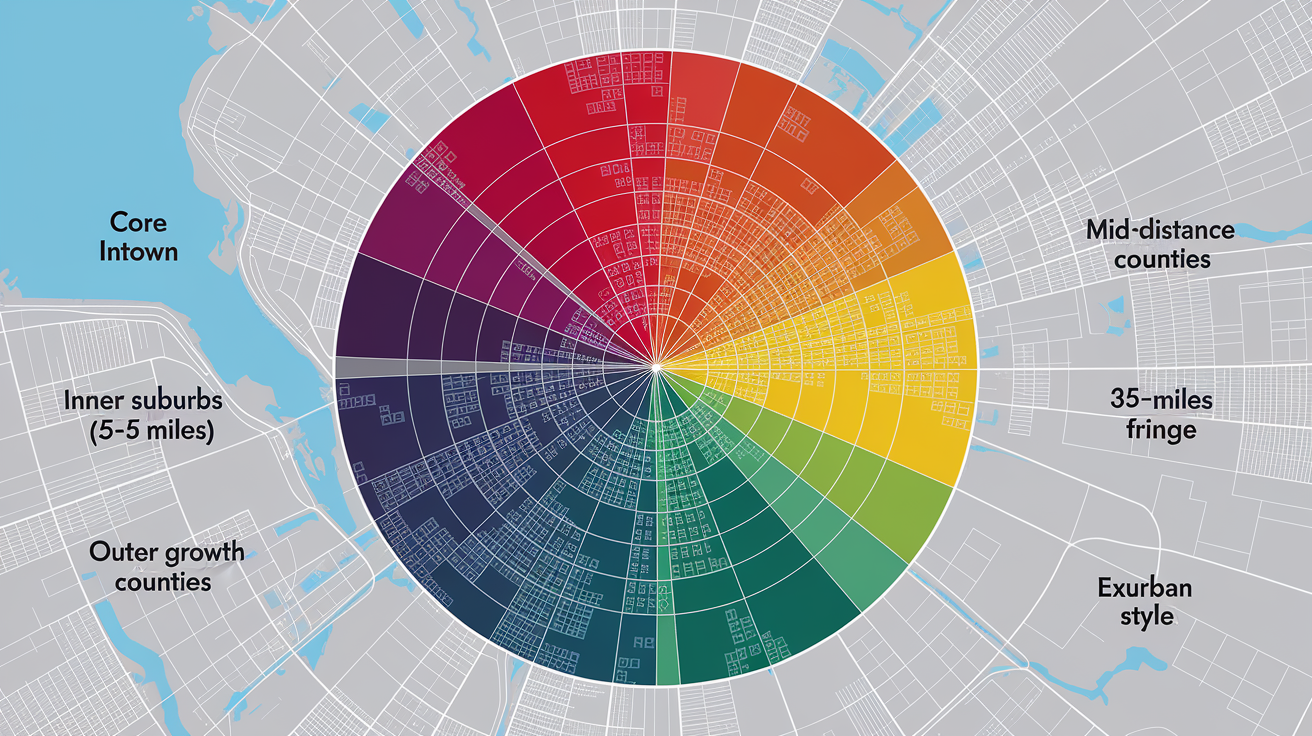
Metro Atlanta’s affordability landscape forms rough concentric rings. Most expensive homes cluster inside the Perimeter and along the northern arc from Buckhead through Sandy Springs to Alpharetta. As you move outward, each ring trades lower prices for longer commute times. But the trade isn’t uniform because job centers sit scattered across the metro instead of all being downtown.
The first ring, within five miles of downtown or Midtown, offers the shortest commutes to central employers. Median prices run above $400,000, and rents top $1,600 for one bedroom. Inventory stays tight, and competition remains strong among buyers who want walkability and MARTA access. The second ring, roughly five to fifteen miles out, includes inner suburbs like Decatur, East Point, and Chamblee. Prices range from $350,000 to $420,000, and commute times stretch to 25 to 40 minutes depending on traffic.
Five affordability and commute zones radiating from central Atlanta:
Core intown (0 to 5 miles) brings highest prices, shortest commutes, best transit access, tightest inventory. Inner suburbs (5 to 15 miles) offer moderate prices, manageable commutes, limited transit, strong school options. Mid-distance suburbs (15 to 25 miles) deliver lower prices, 35 to 50 minute commutes, car dependency, family orientation. Outer growth counties (25 to 35 miles) feature significant discounts, 50 to 70 minute commutes, newer construction, limited services. Exurban fringe (35 plus miles) shows lowest prices, 70 plus minute commutes, gas sensitivity, lifestyle tradeoffs.
The third and fourth rings cover most suburban growth, where prices drop into the $300,000 to $360,000 range but commute times can top an hour during peak periods. These zones attract buyers chasing yard space and newer construction, but the savings shrink once transportation costs and time get factored in. The outermost ring, beyond thirty-five miles, offers the deepest discounts but depends entirely on tolerance for long drives and stable gas prices.
Quality‑of‑Life Factors Beyond Cost
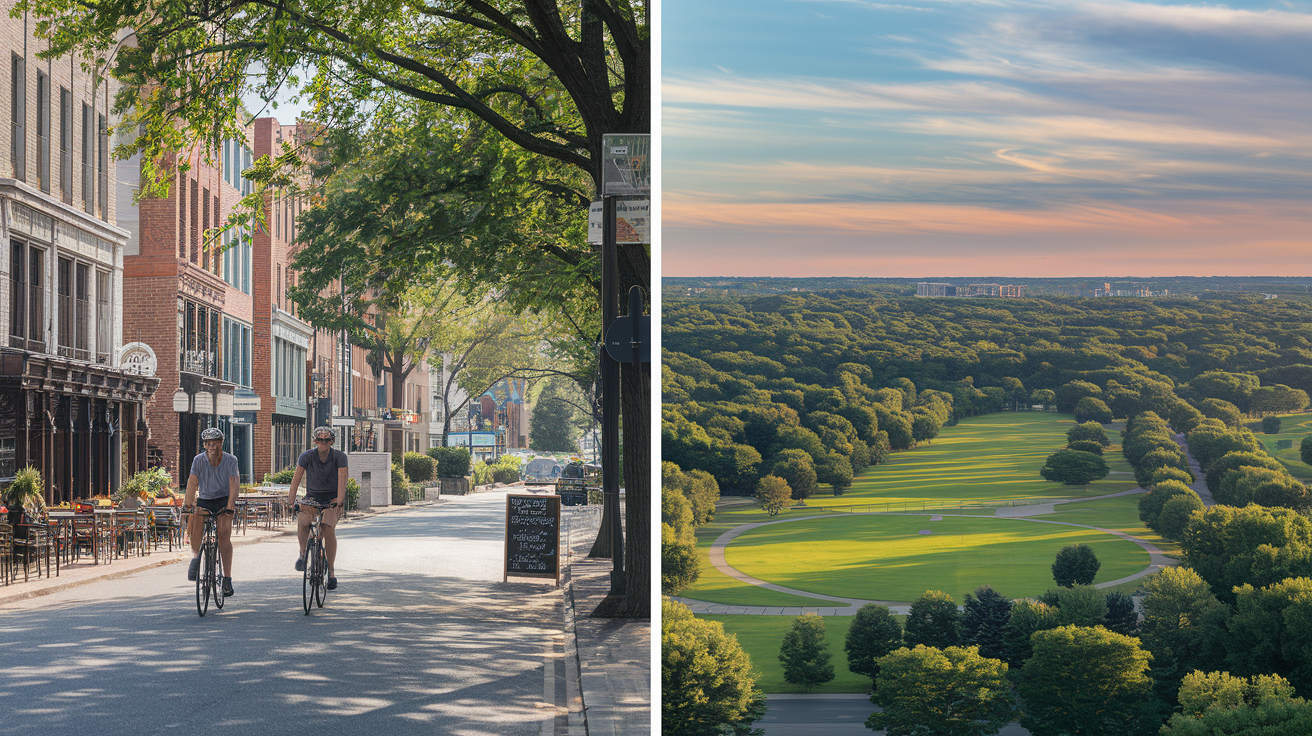
School quality shifts sharply across the metro. Top districts concentrate in northern Fulton, parts of Cobb, and pockets of Gwinnett. Families willing to commute from Cherokee or Forsyth often cite school rankings as their main reason, accepting longer drives for higher test scores and better extracurriculars. Intown neighborhoods offer walkable retail and restaurant density, but schools can be hit or miss, and parents sometimes weigh private tuition against the cost of moving farther out.
Green space and parks are more plentiful in outer suburbs, where land costs allowed larger developments with trails and recreation. Intown areas like Kirkwood and Candler Park have smaller but well-used parks, and bond funding is adding trails and greenways that boost property values and improve daily life. Congestion is a reality for anyone commuting into the central business district or along I‑85 and I‑75 during rush hours. Reverse commuters heading outbound from the city often find lighter traffic and shorter travel times.
Walkability drops sharply once you leave intown neighborhoods and transit corridors. Most outer suburbs require a car for every errand, which adds cost and limits spontaneous activity. Households with young children or retirees often want proximity to medical services, grocery stores, and community centers. That can make the intown premium worth paying even if the home is smaller or older.
Budget‑Based Living Recommendations
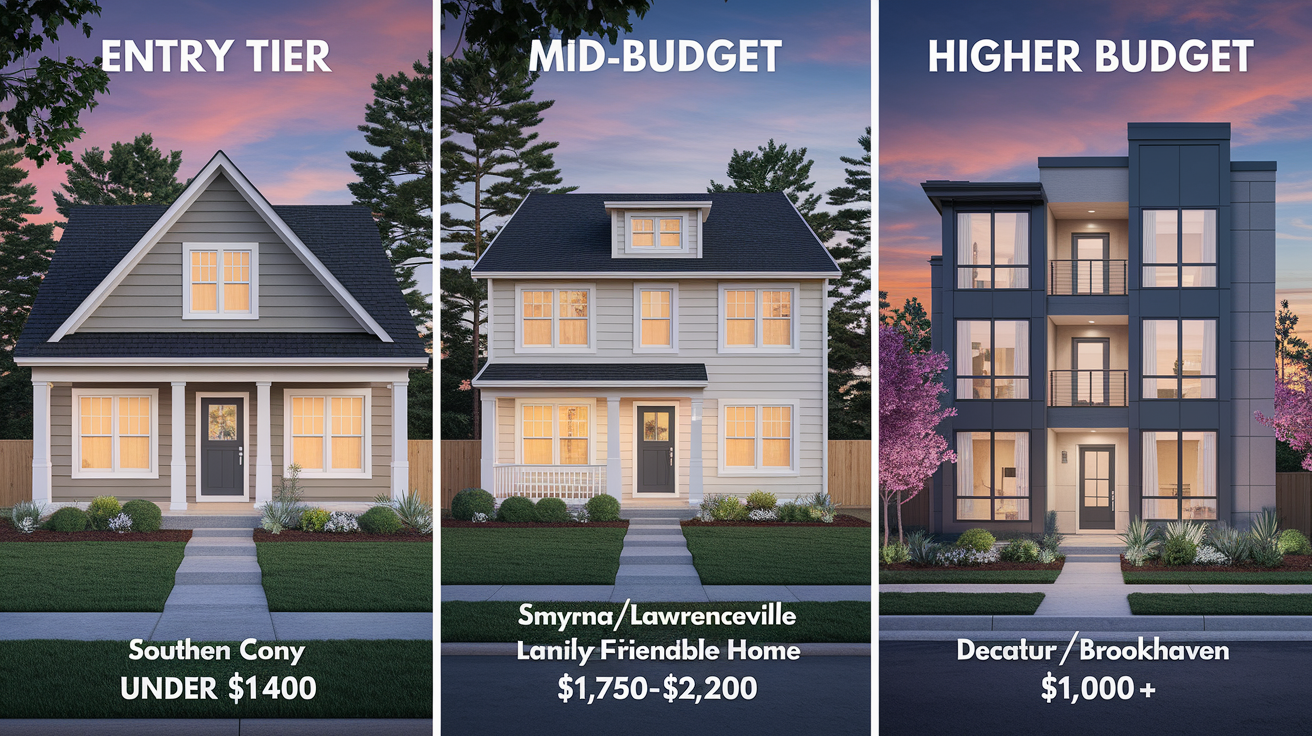
Entry buyers working with household incomes around $50,000 to $65,000 should look at areas where total monthly costs, including commute, stay below $1,400. That budget usually points toward southern Henry County, western Douglas or Paulding, or older condos in South DeKalb. Expect commutes of 45 to 60 minutes if your job is central, and plan to hold the property for at least five years to ride out slower appreciation and avoid transaction costs eating into equity. Affordability outlook for these zones stays stable, with modest 1 to 2 percent annual gains and the chance that infrastructure investment or employer relocation could speed things up.
Mid-budget households earning $75,000 to $100,000 can target inner suburbs like Smyrna, parts of Gwinnett near Lawrenceville, or South Fulton near Camp Creek. Monthly housing costs in the $1,750 to $2,200 range leave room for a 25 to 35 minute commute and occasional discretionary spending. These neighborhoods offer balanced inventory, reasonable school options, and appreciation in the 2 to 3 percent range. Buyers in this tier should go for homes in good condition to avoid competing against investors or dealing with deferred maintenance that wipes out the purchase discount.
Higher-budget buyers with incomes above $120,000 can access Decatur, Vinings, Brookhaven, and northern Fulton locations where commutes stay under 30 minutes and schools consistently rank near the top. Monthly housing costs can stretch to $3,000 or more, but shorter commutes preserve time and reduce wear on your car. Appreciation in these areas is projected at 3 to 4 percent annually, with stronger demand during economic slowdowns. Main tradeoff is smaller lot sizes or older home styles compared to new construction farther out, but resale tends to be easier and neighborhood stability runs higher.
Entry tier ($50,000 to $65,000 income) should target southern Henry, Paulding, or South DeKalb, expect 45 to 60 minute commutes, hold long term for 1 to 2 percent annual gains. Mid budget ($75,000 to $100,000 income) can focus on Smyrna, Lawrenceville, or South Fulton, 25 to 35 minute commutes, 2 to 3 percent appreciation likely, prioritize condition and school ratings. Higher budget ($120,000 plus income) should consider Decatur, Brookhaven, or northern Fulton, under 30 minute commutes, 3 to 4 percent gains, trade lot size for location and resale strength.
Final Words
We jumped right into metro vs outer‑suburb prices, neighborhood forecasts, commute costs, income ratios, affordability zones, and budget‑based recommendations.
Bottom line: a lower sticker price farther out can be eaten by longer drives and higher annual commute costs, so run the numbers for your schedule and I‑285 patterns. Use this affordability forecast metro atlanta and commute tradeoffs overview to see where your money actually goes.
If you want, start with a quick budget map and a pre‑approval so your search feels realistic and calm.
FAQ
Q: Do farther suburbs actually save money after accounting for commute costs?
A: Farther suburbs can save on home price and taxes, but commute costs (fuel, tolls, wear, time) often cut savings; whether you net-save depends on distance, gas, and remote-work flexibility.
Q: How do metro Atlanta median prices compare to outer‑suburb prices?
A: Metro Atlanta median prices run higher near the core; outer suburbs typically show 20–40% lower medians in 2024, though county demand pockets can narrow that gap quickly.
Q: What salary‑to‑housing ratio should Atlanta households use to decide where to live?
A: Use housing under about 30% of gross income as a benchmark; 35–40% can work for higher earners, but expect tradeoffs like less savings or longer commutes.
Q: What are the main commute cost components to include when comparing locations?
A: The main commute cost components are fuel, vehicle maintenance, depreciation, tolls, parking/time‑value, and transit fares or pass costs if you use MARTA or employer shuttles.
Q: How much does a 10‑, 25‑, or 45‑mile commute cost annually in Atlanta?
A: A 10‑mile commute typically costs roughly $2,000–$4,000 a year, 25 miles about $4,500–$8,000, and 45 miles roughly $9,000–$16,000, depending on fuel, days driven, and tolls.
Q: Which neighborhoods or zones are forecasted to show the strongest affordability improvements?
A: The strongest affordability improvements look likely in outer Gwinnett and Henry pockets, south DeKalb corridors, some south Fulton areas, select exurban Forsyth pockets, and stabilizing intown infill zones.
Q: How should I weigh non‑financial factors like schools and walkability when choosing metro vs suburb?
A: Weigh schools, walkability, parks, and services by your household needs: pick suburbs for larger yards and schools, intown for walkability and transit, and check actual commute windows.
Q: For different budgets, where should I realistically look in Metro Atlanta?
A: For entry budgets try outer Gwinnett, Henry, and southern Cobb; mid budgets suit inner suburbs like Decatur or Edgewood; higher budgets buy intown neighborhoods or premium suburbs like Alpharetta.
Q: How do inflation and projected price growth affect affordability forecasts through 2026?
A: Inflation and price growth can erode commute savings; steady gains in high‑demand counties may offset lower sticker prices farther out, so compare net annual cost changes, not just sale price.
Q: What household income benchmarks indicate I can afford to live farther out?
A: Households earning above the metro median—roughly $75k–$90k depending on county—and with flexible work options are likelier to absorb longer commutes without exceeding 30% housing cost guidelines.